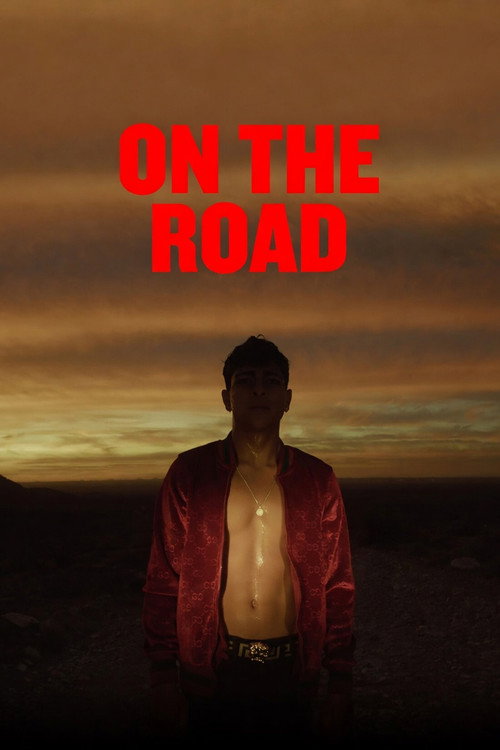
On the Road (2026)
Directed by David Pablos
Yes — On the Road is woke, scoring 62 out of 100 on our wokeness meter.
David Pablos's On the Road arrives from the Chihuahua desert bearing the Orizzonti Award for Best Film at Venice, the Queer Lion, and the full weight of Mexico's Oscar hopes, which is a considerable amount of freight for a film about two men who cannot talk about their feelings.
Consciousness Markers
The film's entire dramatic engine runs on queer male intimacy, closeted sexuality, and gay sex work in a violently heteronormative environment. It won the Queer Lion at Venice and was explicitly positioned in queer film showcases. This is not incidental LGBTQ+ content; it is the point.
The film is cast entirely with Mexican actors, including a non-professional lead from Ciudad Juárez chosen for regional authenticity. This is less a casting ideology statement and more a production necessity, but the deliberate centering of marginalized, working-class northern Mexican identity as the film's primary representational frame earns a moderate score.
The film is steeped in a specific regional Mexican identity and depicts systemic poverty and marginalization in the north. This is more ethnographic realism than racial consciousness-raising in the 2020s activist sense, but the deliberate framing of brown, working-class bodies as the subject of serious arthouse attention registers here.
Director Pablos has spoken openly about machismo damaging male emotional health, and that thesis is visible in the film's architecture. Critics note the film earns its points through atmosphere rather than speeches, keeping the sermonizing quotient lower than the subject matter might invite. The lecture energy is present but restrained.
The film depicts economic desperation, sex work as survival, and the brutal exploitation of the trucking underclass. These are structural critiques of poverty rather than explicit anti-capitalist messaging, but the film does not let the system off the hook.
The film interrogates machismo and toxic masculinity at some length, which has a feminist-adjacent intellectual lineage. However, the lens is trained on male emotional damage and male intimacy rather than women's agency or experience. The feminist score is modest.
There is no evidence of climate themes in the film. The Chihuahua desert is a backdrop, not a metaphor for ecological crisis.
There is no evidence of body positivity themes in the film. Explicit sexuality is present, but in the context of danger and power dynamics rather than affirmation.
No evidence of neurodivergence themes in the film's content or critical discourse.
The film is a contemporary thriller with no historical revisionism. It is set in the present and makes no claims about the past.
Why it received this score
David Pablos's On the Road arrives from the Chihuahua desert bearing the Orizzonti Award for Best Film at Venice, the Queer Lion, and the full weight of Mexico's Oscar hopes, which is a considerable amount of freight for a film about two men who cannot talk about their feelings. The setup is economical: a young sex worker named Veneno (the Spanish word for "poison," which the film considers a thesis statement) insinuates himself into the cab of a taciturn trucker named Muñeco, and the two proceed to drive through a landscape of meth, violence, and suppressed tenderness until something breaks. Pablos is working in the tradition of queer cinema that uses genre machinery to smuggle in emotional content that the characters themselves are incapable of expressing, and he is reasonably good at it.
The film's progressive credentials are substantial and largely earned. The LGBTQ+ content is not decorative: male intimacy, gay sex work, and the specific psychic cost of desire in a hyper-masculine subculture are the film's actual subject, not its backdrop. The Variety critic called it "hormonal and hard-boiled," which is accurate and also sounds like a description of the truckers themselves. Where the film resists the more earnest impulses of its festival-circuit pedigree is in its refusal to redeem anyone cleanly or to let the camera linger on suffering as uplift. The machismo critique is present but delivered through behavior rather than dialogue, which is the polite way of saying the film does not stop to explain itself to you. This is a courtesy not all socially conscious cinema extends.
What keeps the social consciousness score from reaching the upper atmosphere is precisely this restraint. The lecture energy is low. The racial consciousness is more regional realism than activist framework. The feminist-adjacent critique of toxic masculinity is real but filtered entirely through male interiority, leaving women in the film's periphery. Diego Luna's production company is involved, which one notes for the record without drawing conclusions. The film is, by the standards of contemporary arthouse cinema, a serious and unsentimental piece of work. It has opinions. It simply has the decency to let them emerge from the story rather than announce themselves at the door.
Analysis generated by our Consciousness Algorithm
Synopsis
Veneno, a rebellious young drifter, frequents roadside diners where he sleeps with truck drivers. Urgently needing a ride, he meets Muñeco, a hard-edged driver who keeps to himself. He convinces Muñeco to take him deep into the hyper-masculine world of long-haul trucking across the north of Mexico. As they travel together and an unexpected intimacy builds between them, shadows from Veneno's past resurface, putting both their lives at risk.
Questions about On the Road
Is On the Road woke?
Yes — On the Road is woke, scoring 62 out of 100 on our wokeness meter. That earns it a verdict of Woke.
What makes On the Road woke?
4 of the 10 markers register at 30 or above, led by LGBTQ+ Themes (85), Representation Casting (55) and Lecture Energy (30). On LGBTQ+ Themes: The film's entire dramatic engine runs on queer male intimacy, closeted sexuality, and gay sex work in a violently heteronormative environment.
How does On the Road compare to other 2026 movies?
It ranks #61 of the 800 films from 2026 we've scored; their average is 23. The wokest is Between Us (89).
How is the Woke Score calculated?
An AI-assisted process researches the film and its reception, scores it 0–100 on ten markers, then combines those into one 0–100 Woke Score. It measures a specific set of 2020s cultural themes, not film quality.