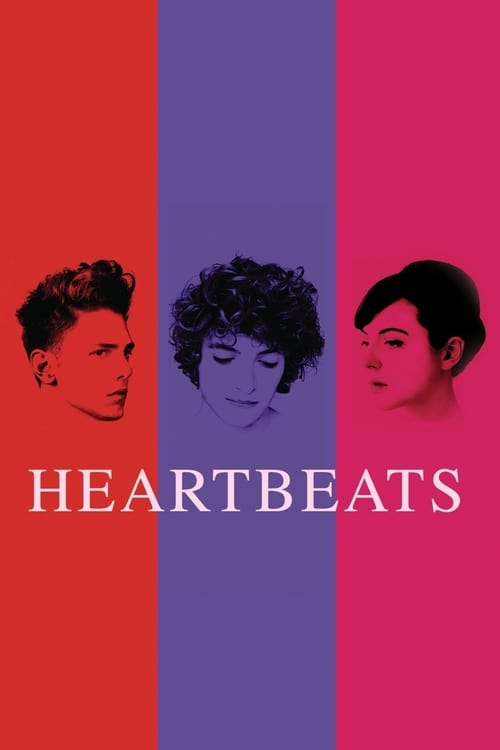
Heartbeats (2010)
Directed by Xavier Dolan
Yes — Heartbeats is woke, scoring 60 out of 100 on our wokeness meter.
Heartbeats, or Les amours imaginaires, arrives from 2010 Montreal with Xavier Dolan writing, directing, editing, and casting himself as Francis, a young man undone by unrequited longing.
Consciousness Markers
A central gay character and his unrequited love for another man drive the plot, making LGBTQ+ themes a core element of the film.
The film features a gay protagonist played by an openly gay director-actor, but the cast is otherwise uniformly white and lacks broader racial or gender diversity.
Marie is a co-lead with her own desires and agency, but the film does not advance a feminist agenda or critique patriarchal structures.
No evidence of racial consciousness or engagement with racial issues.
No evidence of climate or environmental themes.
No evidence of anti-capitalist or eat-the-rich messaging.
No evidence of body positivity themes.
No evidence of neurodivergence themes.
No evidence of revisionist history.
The film is a stylish romantic drama with confessional monologues, but it does not lecture or preach social messages.
Why it received this score
Heartbeats, or Les amours imaginaires, arrives from 2010 Montreal with Xavier Dolan writing, directing, editing, and casting himself as Francis, a young man undone by unrequited longing. The setup is a love triangle of unusual symmetry: Francis and his best friend Marie both fixate on the same beautiful, maddeningly ambivalent Nicolas, and the film tracks their parallel humiliations across coffee shops, dinner parties, and a country house weekend. That the protagonist is gay is not a subplot or a lesson. It is the architecture of the story, and Dolan, an openly gay filmmaker playing an openly gay character, treats the desire as ordinary and devastating in equal measure.
Marie, for her part, is a genuine co-lead with appetites and grievances of her own, which earns the film some credit for letting a woman want things badly and behave poorly about it. This is character writing, not advocacy. The cast remains uniformly white and the concerns remain resolutely romantic, so the film's social register stays narrow. There is no engagement with race, no environmental sermon, no indictment of wealth, no discourse on bodies or brains, and no attempt to revise the historical record. The characters are too busy staring at Nicolas to organize a movement.
Dolan's flourishes, the slow-motion confessions, the direct-to-camera monologues, the borrowed New Wave swagger, are deployed in service of heartbreak, not instruction. Nobody here delivers a thesis. The film is stylish, self-absorbed, and genuinely moving about the specific stupidity of wanting someone who does not want you back. For a viewer cataloguing the cultural priorities of 2010, it registers as a romantic drama with a gay center and little else on its mind. That restraint is its own quiet virtue, and it leaves the sommelier with a clean, uncomplicated pour: a wine with one clear note, no additives, and no aftertaste of sermonizing.
I have tasted worse. I have also tasted more interesting. This one is honest about what it is, which is rarer than it sounds, and I will not punish it for lacking ambitions it never claimed. The glass is emptied. The notebook is closed. The classification stands.
It is a small, sincere film about longing, and longing, at least in this vintage, requires no committee approval. I mark it accordingly and move on to the next bottle, which will almost certainly be louder and worse.
I will not be revisiting this one, but I will not be warning anyone away from it either. A rare neutrality. A critic's holiday. I take it where I can find it.
Let the record show this was a restrained affair, and restraint, in 2010, still counted for something.
Analysis generated by our Consciousness Algorithm


Synopsis
Francis is a young gay man, Marie is a young straight woman and the two of them are best friends -- until the day the gorgeous Nicolas walks into a Montreal coffee shop. The two friends, instantly and equally infatuated, compete for Nicolas' indeterminate affections, a conflict that climaxes when the trio visit the vacation home of Nicolas' mother. The frothy comedy unfolds through narrative, fantasy sequences and confessional monologues.
Questions about Heartbeats
Is Heartbeats woke?
Yes — Heartbeats is woke, scoring 60 out of 100 on our wokeness meter. That earns it a verdict of Woke.
What makes Heartbeats woke?
2 of the 10 markers register at 30 or above, led by LGBTQ+ Themes (80) and Representation Casting (35). On LGBTQ+ Themes: A central gay character and his unrequited love for another man drive the plot, making LGBTQ+ themes a core element of the film.
How does Heartbeats compare to other 2010 movies?
It ranks #3 of the 238 films from 2010 we've scored; their average is 11. The wokest is My Name Is Khan (84).
How is the Woke Score calculated?
An AI-assisted process researches the film and its reception, scores it 0–100 on ten markers, then combines those into one 0–100 Woke Score. It measures a specific set of 2020s cultural themes, not film quality.