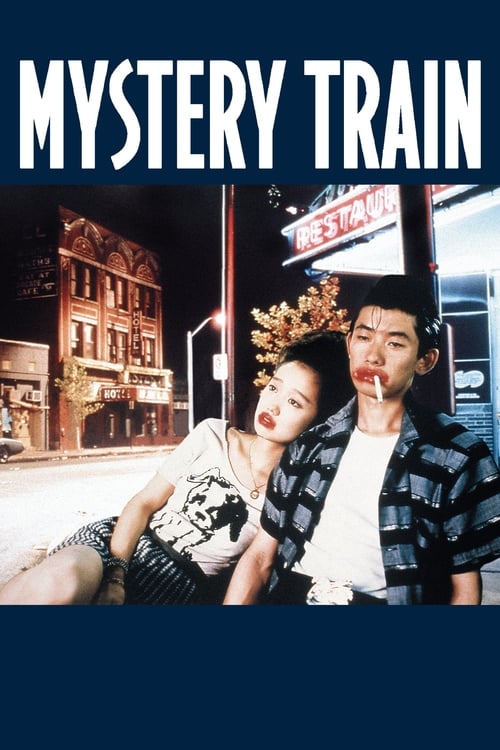
Mystery Train (1989)
Directed by Jim Jarmusch
No — Mystery Train is not woke, scoring 10 out of 100 on our wokeness meter.
Jim Jarmusch's Mystery Train arrives in Memphis for a single night and breaks itself into three stories, each one circling the same dilapidated hotel, the same missing television, the same Elvis portrait on the wall.
Consciousness Markers
The film centers a Japanese couple, an Italian widow, and Black hotel staff, but this multiculturalism is auteur idiosyncrasy rather than deliberate demographic representation casting.
A liquor store clerk hurls a racial slur at Will, prompting Johnny's shooting, and Black characters anchor the hotel framing device, but race is texture rather than thesis.
Women feature as protagonists in two segments, but the film offers no feminist argument or gendered critique.
Jarmusch's deadpan, observational style avoids moralizing or direct address; the film never lectures its audience.
No LGBTQ+ characters or themes appear anywhere in the triptych.
No environmental themes or climate concerns are present.
The film is indifferent to economics; the thieves' motives are personal, not a critique of capital.
No body positivity themes or messaging.
No neurodivergence themes or characters.
No historical revisionism; the film is a contemporary-set anthology with no historical claims.
Why it received this score
Jim Jarmusch's Mystery Train arrives in Memphis for a single night and breaks itself into three stories, each one circling the same dilapidated hotel, the same missing television, the same Elvis portrait on the wall. A Japanese couple on a pilgrimage of the pop-culture variety, an Italian widow hauling a coffin, and a trio of accidental thieves drift through the same intersection without ever quite colliding. The camera is patient. The jokes are dry. Nothing is explained to us, which is the film's most admirable quality and also the reason it resists the classification exercise we undertake here.
The cast is a polyglot assortment, and the hotel's night clerk and bellboy are Black, but this is auteur casting instinct, not a demographic program. Women carry two of the three segments, though the film offers no argument about gender and seems unaware that one could be made. A liquor store clerk's racial slur triggers the shooting in the final story, and the moment lands with blunt force, but race here is texture, a fact of Memphis, not a thesis. The thieves rob for whiskey and panic, not as an indictment of capital. The climate goes unmentioned, the body goes unmentioned, the mind's wiring goes unmentioned. Everyone is broke, drunk, or lovesick, and the film finds this sufficient.
Jarmusch's deadpan observational manner leaves no room for sermons. He never addresses the audience, never explains the moral, never instructs. The result is a film that predates the cultural vocabulary we now apply to it and would likely decline the application. Memphis is a city of ghosts, and the film treats it as one, which is a poetic position and not a political one. We are left with a triptych that is charming, wry, and entirely indifferent to the ideological expectations of a later decade.
Analysis generated by our Consciousness Algorithm


Synopsis
In Memphis, Tennessee, over the course of a single night, the Arcade Hotel, run by an eccentric night clerk and a clueless bellboy, is visited by a young Japanese couple traveling in search of the roots of rock; an Italian woman in mourning who stumbles upon a fleeing charlatan girl; and a comical trio of accidental thieves looking for a place to hide.
Questions about Mystery Train
Is Mystery Train woke?
No — Mystery Train is not woke, scoring 10 out of 100 on our wokeness meter. That earns it a verdict of Ultra Based.
Does Mystery Train have any woke elements?
1 of the 10 markers register at 30 or above, led by Representation Casting (30). On Representation Casting: The film centers a Japanese couple, an Italian widow, and Black hotel staff, but this multiculturalism is auteur idiosyncrasy rather than deliberate demographic representation casting.
How does Mystery Train compare to other 1989 movies?
It ranks #24 of the 68 films from 1989 we've scored; their average is 10. The wokest is Do the Right Thing (72).
How is the Woke Score calculated?
An AI-assisted process researches the film and its reception, scores it 0–100 on ten markers, then combines those into one 0–100 Woke Score. It measures a specific set of 2020s cultural themes, not film quality.