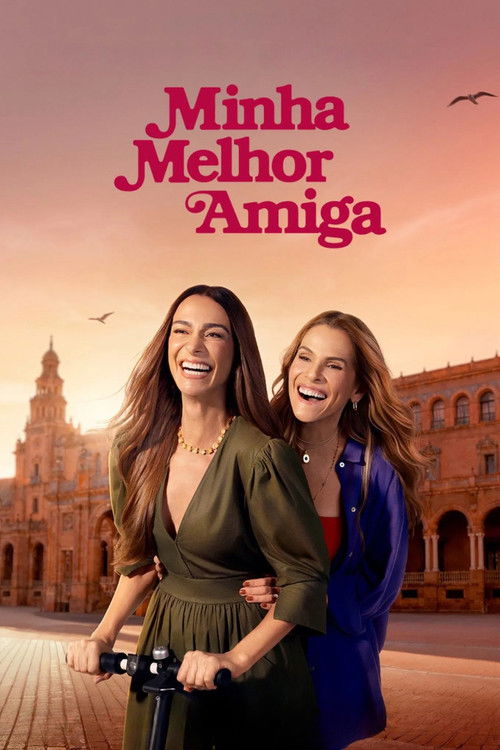
My Best Friend (2026)
Directed by Susana Garcia
No — My Best Friend is not woke, scoring 11 out of 100 on our wokeness meter.
There is a moment in the life of every middle-aged woman when the children leave and the house goes quiet.
Consciousness Markers
The film features two middle-aged female leads and a predominantly Brazilian cast, but this appears to be natural casting for a Brazilian production rather than a deliberate diversity initiative.
The story centers on female friendship and empty-nest syndrome, but it does not appear to advance an explicit feminist agenda or critique patriarchal structures.
No LGBTQ+ characters, relationships, or themes are indicated in the available metadata or research.
No racial themes, commentary, or consciousness are present in the overview or research summary.
There is no indication of climate change, environmentalism, or ecological themes.
The film does not appear to critique capitalism, wealth inequality, or class structures.
No body positivity themes or messaging are suggested by the available information.
No neurodivergent characters or themes are indicated in the metadata or research.
The film is a contemporary comedy and does not engage in historical revisionism.
The overview suggests a lighthearted comedy focused on friendship and romance, with no apparent didactic or lecture-like messaging.
Why it received this score
There is a moment in the life of every middle-aged woman when the children leave and the house goes quiet. Brazilian cinema has decided this moment deserves a comedy. My Best Friend takes two friends, two teen daughters, and an airplane to Portugal, and returns with love, fun, and a refreshed sense of friendship. The title promises nothing and delivers exactly that. The premise is thin, the geography is generous, and the jokes arrive on schedule. Here is a film comfortable in its own skin, which is either a virtue or an absence of ambition, depending on the hour.
On the ledger of contemporary social consciousness, this is a quiet entry. The leads are women in their middle years, a small statement in an industry that prefers them younger and quieter, and the ensemble is Brazilian because the production is Brazilian. Neither choice arrives with a speech attached. The friendship at the center is warm and unexamined, offered without commentary on patriarchy, markets, or the planet. Set firmly in the present, the film makes no claims upon the past. No character pauses to explain the correct position on anything. The comedy carries its themes the way a beach bag carries a towel.
The film offers craft and charm, deployed without agenda. It is not indifferent to the world. It has other business. Audiences seeking instruction will leave unfulfilled. Audiences seeking ninety pleasant minutes in the sun will be served. The vintage is light, low in tannin, best consumed without ceremony. Any sequel should resist the urge to improve us. Classified, filed, and set aside.
Analysis generated by our Consciousness Algorithm


Synopsis
When empty nest syndrome hits, two BFFs follow their teen daughters to Portugal and find love, fun and a whole new meaning of friendship along the way.
Critic Reviews
“More a celebration of movement and music than a parable for our over-communicative, friend-lite, acquaintance-rich society.”
“If sex, gangsters, and killing Nazis are three of the most enlivening topics in the movies, then let us count friendship as one of the most tiresome, right up there with grooming horses and sharing for sheer thrills.”
Questions about My Best Friend
Is My Best Friend woke?
No — My Best Friend is not woke, scoring 11 out of 100 on our wokeness meter. That earns it a verdict of Ultra Based.
Does My Best Friend have any woke elements?
Very few. None of the 10 markers reaches 30, the level where a marker counts as present; the highest is Representation Casting at 25.
How does My Best Friend compare to other 2026 movies?
It ranks #440 of the 800 films from 2026 we've scored; their average is 23. The wokest is Between Us (89).
How is the Woke Score calculated?
An AI-assisted process researches the film and its reception, scores it 0–100 on ten markers, then combines those into one 0–100 Woke Score. It measures a specific set of 2020s cultural themes, not film quality.