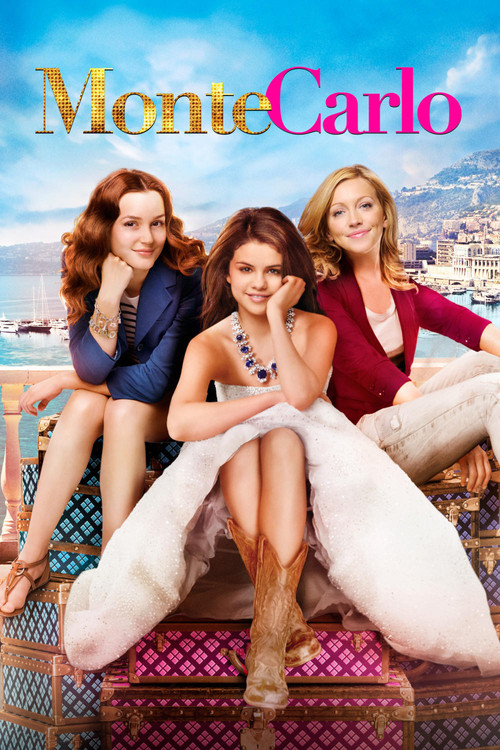
Monte Carlo (2011)
Directed by Thomas Bezucha
No — Monte Carlo is not woke, scoring 14 out of 100 on our wokeness meter.
Monte Carlo arrives with the modest ambition of a summer postcard and the moral compass of a duty-free catalogue.
Consciousness Markers
A female-led caper built on female friendship, with Emma rejecting a marriage proposal and later spurning an arrogant prince, though it remains a conventional wish-fulfillment rom-com rather than a statement picture.
The three leads are women and Selena Gomez is Mexican-American, but the cast is otherwise overwhelmingly white and the characters are not coded with any ethnic specificity.
There is a faint moral about self-respect over social status and Emma's disillusionment with a snobbish prince's treatment of waitresses, but the film mostly luxuriates in the wealth and glamour it nominally critiques.
A mild, understated moral about self-respect is delivered at the end, but the film never preaches or lectures its audience.
No LGBTQ+ characters, themes, or subtext appear anywhere in the film.
The film engages no racial themes whatsoever; its cast and concerns are uniformly white and class-based.
No environmental or climate content of any kind.
No body-positivity themes; the film trades heavily on conventional glamour and couture imagery.
No neurodivergent characters or themes are present.
No historical revisionism; the film is a contemporary mistaken-identity comedy.
Why it received this score
Monte Carlo arrives with the modest ambition of a summer postcard and the moral compass of a duty-free catalogue. Three young women from Texas, one of them mistaken for a British heiress, are whisked from a disappointing Paris tour into a Monaco suite paid for by someone else's trust fund. The film is built on female friendship and a female ensemble, and it treats both as a given rather than a cause. Selena Gomez, Leighton Meester, and Katie Cassidy carry the thing capably. The cast around them is otherwise a wall of white European wealth, and nobody in the script seems to notice or care, which is its own kind of statement, though probably not an intentional one.
Where the film gestures toward progressive feeling, it does so gently and then returns to the couture. Emma declines a marriage proposal, then declines a prince who is rude to waitresses, and the picture concludes that self-respect outranks social status. This arrives in the final minutes with the solemnity of a fortune cookie. The film spends two hours ogling yachts, Bulgari necklaces, and hotel suites, then asks us to admire the righteous soul beneath the surface. Vulture flagged the contradiction at the time. The contradiction has not aged into depth.
On the ledger of specific modern markers, most columns sit empty. No queer characters, no racial themes, no climate anxiety, no body-positivity messaging, no neurodivergent representation, no historical revisionism. What remains is a mild sermon about being true to yourself, preached at a volume that would not wake a sleeping child. It is a harmless, pretty, forgettable film, and it knows precisely how little it wants to say.
Analysis generated by our Consciousness Algorithm


Synopsis
Three young women vacationing in Paris find themselves whisked away to Monte Carlo after one of the girls is mistaken for a British heiress.
Questions about Monte Carlo
Is Monte Carlo woke?
No — Monte Carlo is not woke, scoring 14 out of 100 on our wokeness meter. That earns it a verdict of Ultra Based.
Does Monte Carlo have any woke elements?
1 of the 10 markers register at 30 or above, led by Feminist Agenda (30). On Feminist Agenda: A female-led caper built on female friendship, with Emma rejecting a marriage proposal and later spurning an arrogant prince, though it remains a conventional wish-fulfillment rom-com rather than a statement picture.
How does Monte Carlo compare to other 2011 movies?
It ranks #65 of the 245 films from 2011 we've scored; their average is 11. The wokest is Paul (68).
How is the Woke Score calculated?
An AI-assisted process researches the film and its reception, scores it 0–100 on ten markers, then combines those into one 0–100 Woke Score. It measures a specific set of 2020s cultural themes, not film quality.