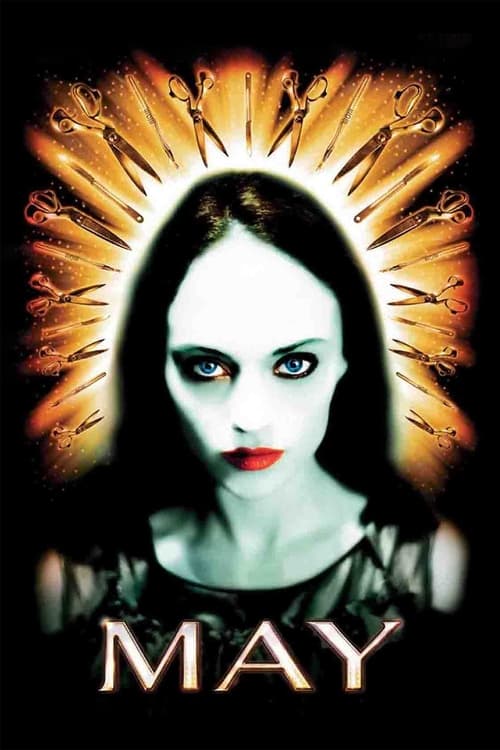
May (2003)
Directed by Lucky McKee
No — May is not woke, scoring 12 out of 100 on our wokeness meter.
May arrives from 2002 with the confidence of a film that knows exactly what it is and no interest in explaining itself to anyone.
Consciousness Markers
Polly is explicitly bisexual and pursues May, with a same-sex flirtation and a polyamorous household depicted; the content is present but treated as character texture rather than a thematic statement.
The cast centers on a female lead and includes a bisexual supporting character and a protagonist with a visible physical difference (a lazy eye), but these are organic to the story rather than deliberate diversity casting.
A female protagonist drives the film, but she is a deranged serial killer in a psychological horror character study, not a vehicle for feminist critique or empowerment.
The film is a moody character study that shows rather than tells, offering no moralizing or didactic messaging to the audience.
No racial themes, commentary, or consciousness appear anywhere in the film.
No environmental or climate themes are present.
No economic critique or class-based messaging appears in the film.
The film concerns obsession with physical perfection and self-mutilation, the opposite of body-positivity messaging; the lazy eye is a source of trauma, not affirmation.
May's social awkwardness and delusions are framed as madness culminating in murder, not as an affirming or destigmatizing portrayal of neurodivergence.
The film is a contemporary fictional horror story with no historical revisionism.
Why it received this score
May arrives from 2002 with the confidence of a film that knows exactly what it is and no interest in explaining itself to anyone. Angela Bettis plays the title character, a veterinary assistant whose childhood corrective lenses never quite corrected the deeper problem, which is that other people are not dolls and cannot be assembled to specification. Lucky McKee's debut concerns itself with obsession, isolation, and the specific loneliness of a woman who has been told all her life that she is difficult to look at. The film is a character study first and a slasher second, and it earns its final image, a moment of tenderness that most directors would not have the nerve to attempt.
The supporting cast includes Anna Faris as Polly, a colleague whose bisexuality and casual polyamorous household are presented as ordinary facts of her life, not as a statement. This is texture, not thesis. The film's lead is a woman, but she is a woman who murders five people and sews them into a companion, which complicates any reading of the material as empowerment. May's lazy eye is a source of childhood cruelty and adult shame, and the film treats it as such, which places it at some distance from any affirmation of the body. Her social awkwardness curdles into delusion and violence, framed as madness, not as a condition deserving of accommodation.
What remains is a moody, patient piece of work that shows its hand through imagery and lets the audience draw conclusions. There is no sermon here, no lesson delivered to the cheap seats. The film's politics, such as they are, amount to a woman wanting to be seen and being unable to arrange it. That is a thin platform for a movement and a sturdy one for a horror film. Cult status was the correct outcome.
Analysis generated by our Consciousness Algorithm


Synopsis
A socially awkward veterinary assistant with a lazy eye and obsession with perfection descends into depravity after developing a crush on a boy with perfect hands.
Questions about May
Is May woke?
No — May is not woke, scoring 12 out of 100 on our wokeness meter. That earns it a verdict of Ultra Based.
Does May have any woke elements?
1 of the 10 markers register at 30 or above, led by LGBTQ+ Themes (35). On LGBTQ+ Themes: Polly is explicitly bisexual and pursues May, with a same-sex flirtation and a polyamorous household depicted; the content is present but treated as character texture rather than a thematic statement.
How does May compare to other 2003 movies?
It ranks #51 of the 150 films from 2003 we've scored; their average is 12. The wokest is Mona Lisa Smile (60).
How is the Woke Score calculated?
An AI-assisted process researches the film and its reception, scores it 0–100 on ten markers, then combines those into one 0–100 Woke Score. It measures a specific set of 2020s cultural themes, not film quality.