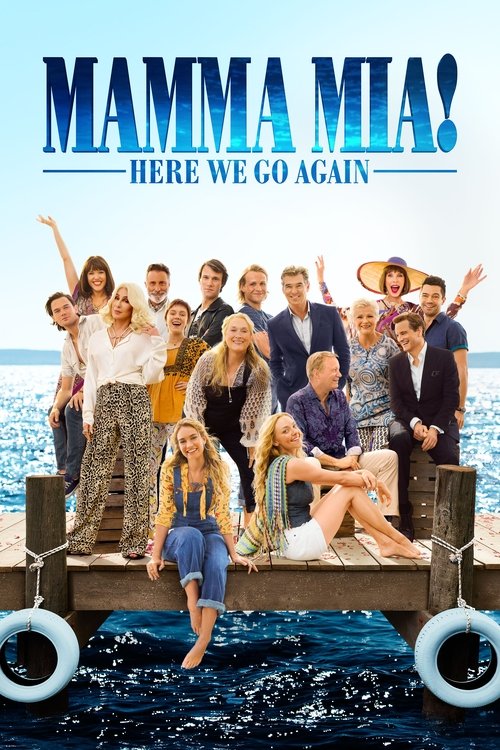
Mamma Mia! Here We Go Again (2018)
Directed by Ol Parker
No — Mamma Mia! Here We Go Again is not woke, scoring 12 out of 100 on our wokeness meter.
The sequel-prequel jukebox apparatus returns with a sun-dappled Greek island, a catalog of ABBA standards, and a plot that alternates between 1979 and a mournful present.
Consciousness Markers
The film centers on female characters, female friendship, and single motherhood, but it does not advance an explicit feminist political agenda.
The cast includes some international and minority actors (Andy García, Omid Djalili, Naoko Mori) in minor roles, but the film is not driven by a diversity casting agenda.
No LGBTQ+ themes or characters are present in the narrative.
Race is not a theme; the story is set in a predominantly white Greek island milieu with no racial commentary.
No environmental or climate change themes.
No critique of capitalism or wealth inequality; the hotel reopening is a personal endeavor.
No body positivity themes; a minor character uses a fat suit for comedic effect.
No neurodivergent characters or themes.
The film is a fictional musical with no historical revisionism.
The film is escapist entertainment and does not lecture the audience on social issues.
Why it received this score
The sequel-prequel jukebox apparatus returns with a sun-dappled Greek island, a catalog of ABBA standards, and a plot that alternates between 1979 and a mournful present. The film assembles an ensemble that includes a few international and minority performers in minor roles, but the engine is nostalgia, not a diversity mandate. Female friendship, single motherhood, and maternal legacy provide a soft feminist hum. The screenplay never converts that hum into an explicit political program. This is a film about women made for people who enjoy musicals, not a treatise on gender equity.
The contemporary progressive checklist remains mostly untouched. No LGBTQ romance, no racial reckoning, no climate sermon, no critique of capital. The hotel reopening is a personal project financed by grief and memory. A minor character appears in a fat suit for comedic effect, which effectively cancels any body positivity reading. Neurodivergence is absent. History is not revised. The year 1979 exists as a backdrop for flared trousers and familiar hooks. The film has no interest in lecturing. Its lecture energy is zero. It wants us to sway, cry a little, and leave.
As a piece of social consciousness, this is a lightweight vintage. It earns a modest nod for casting a few non-white faces and for placing women at the center, but it does so without argument or instruction. The result is escapism with a clear conscience, not a manifesto. The sequel-prequel structure mirrors past and present, yet the mirror reflects only romance, missed connections, and the durable cash value of a Swedish pop catalog. We classify it accordingly: harmless, melodic, and ideologically becalmed.
Analysis generated by our Consciousness Algorithm


Synopsis
Five years after meeting her three fathers, Sophie Sheridan prepares to open her mother’s hotel. In 1979, young Donna Sheridan meets the men who each could be Sophie’s biological father.
Questions about Mamma Mia! Here We Go Again
Is Mamma Mia! Here We Go Again woke?
No — Mamma Mia! Here We Go Again is not woke, scoring 12 out of 100 on our wokeness meter. That earns it a verdict of Ultra Based.
Does Mamma Mia! Here We Go Again have any woke elements?
1 of the 10 markers register at 30 or above, led by Feminist Agenda (30). On Feminist Agenda: The film centers on female characters, female friendship, and single motherhood, but it does not advance an explicit feminist political agenda.
How does Mamma Mia! Here We Go Again compare to other 2018 movies?
It ranks #169 of the 325 films from 2018 we've scored; their average is 20. The wokest is Return (92).
How is the Woke Score calculated?
An AI-assisted process researches the film and its reception, scores it 0–100 on ten markers, then combines those into one 0–100 Woke Score. It measures a specific set of 2020s cultural themes, not film quality.