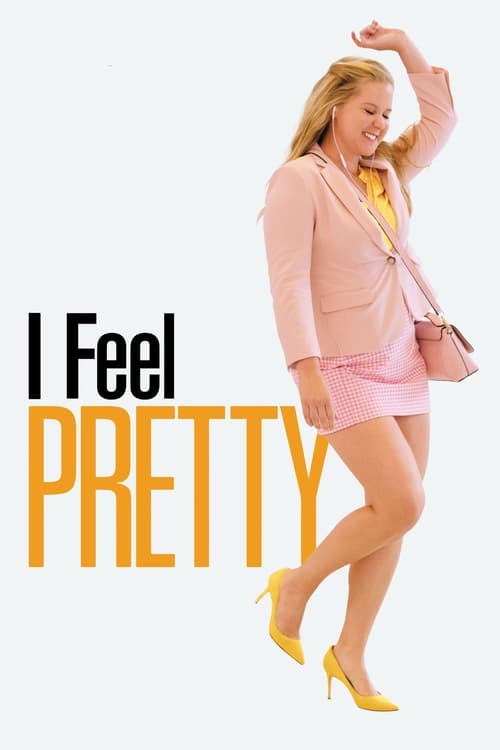
I Feel Pretty (2018)
Directed by Abby Kohn
Yes — I Feel Pretty is woke, scoring 72 out of 100 on our wokeness meter.
The head injury is the engine of the thing.
Consciousness Markers
The central plot and climax revolve around body positivity, self-acceptance, and rejecting unrealistic beauty standards, though critics noted the film's execution sometimes undercuts its message.
The film explicitly tackles women's body image, self-worth, and societal beauty standards, culminating in a speech about female self-acceptance and a collage of diverse women.
The film builds to an impassioned, moralizing speech about women accepting themselves, delivering its message with direct, preachy energy.
Female-led comedy with a plus-size star and a racially diverse supporting cast, including Sasheer Zamata, Naomi Campbell, and Adrian Martinez, though their roles are not defined by identity.
The cosmetics industry is portrayed as out of touch with everyday women, but the critique is mild and the film ends with corporate success rather than systemic indictment.
No LGBTQ+ characters or themes are present.
Race is not a thematic concern; the diverse cast exists without commentary on racial issues.
No environmental or climate-related content.
No neurodivergent characters or themes.
No historical revisionism; the story is contemporary fiction.
Why it received this score
The head injury is the engine of the thing. Renee Bennett, a woman of ordinary appearance and deep self-doubt, strikes her skull and wakes convinced she has become beautiful. She has not. The joke, such as it is, lives in the gap between her perception and everyone else's, and the film spends most of its running time in that gap, cheerfully, before deciding it has a lesson to deliver.
The picture's real investment is in body image, and it commits to that theme with a sincerity that borders on the sermon. Renee's arc bends toward a public confession of self-acceptance, staged at a cosmetics launch, complete with a collage of real women and an address to the room about loving what you see in the mirror. The message arrives without irony or restraint. The beauty industry takes a moderate drubbing for its narrow standards, though the drubbing ends in a promotion, a thriving product line, and a warm reconciliation with the executives who run the place. The critique of capital here is decorative.
Elsewhere the film keeps its cultural ambitions narrow. Its supporting cast is diverse in a casual way, and race never becomes a subject of the screenplay. There is no queer presence, no environmental conscience, no interest in neurodivergence, no engagement with history. The remainder is a feminist comedy about a woman learning to like herself, made by women, and criticized from several directions for how it went about it. Critics found it muddled. Audiences graded it kindly. The film wants to say something true about self-worth and mostly does, loudly, at the end, in a conference room.
Analysis generated by our Consciousness Algorithm
Part of


Synopsis
A head injury causes a woman to develop an extraordinary amount of confidence and believe she's drop dead gorgeous.
Questions about I Feel Pretty
Is I Feel Pretty woke?
Yes — I Feel Pretty is woke, scoring 72 out of 100 on our wokeness meter. That earns it a verdict of Woke.
What makes I Feel Pretty woke?
4 of the 10 markers register at 30 or above, led by Body Positivity (85), Feminist Agenda (75) and Lecture Energy (65). On Body Positivity: The central plot and climax revolve around body positivity, self-acceptance, and rejecting unrealistic beauty standards, though critics noted the film's execution sometimes undercuts its message.
How does I Feel Pretty compare to other 2018 movies?
It ranks #8 of the 325 films from 2018 we've scored; their average is 20. The wokest is Return (92).
How is the Woke Score calculated?
An AI-assisted process researches the film and its reception, scores it 0–100 on ten markers, then combines those into one 0–100 Woke Score. It measures a specific set of 2020s cultural themes, not film quality.