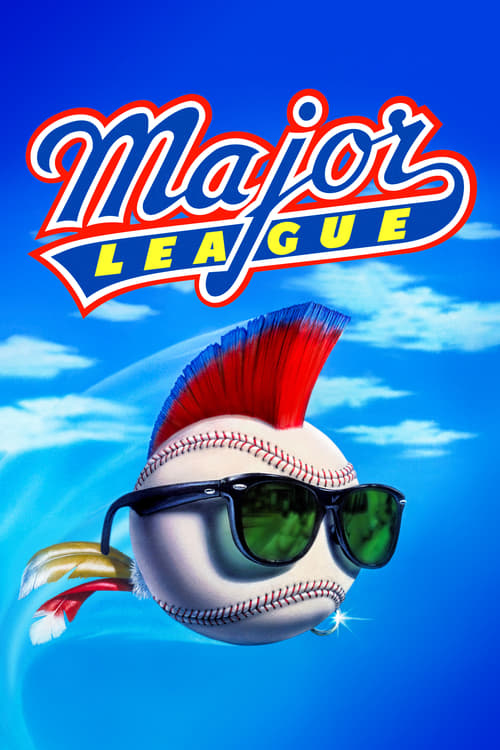
Major League (1989)
Directed by David S. Ward
No — Major League is not woke, scoring 12 out of 100 on our wokeness meter.
Major League arrives from 1989, a year when a baseball comedy could assemble an integrated roster and think nothing of it.
Consciousness Markers
A notably integrated cast for 1989, with Wesley Snipes and Dennis Haysbert in prominent supporting roles and a Cuban slugger in the lineup, though the diversity is presented as unremarkable ensemble texture rather than a statement.
The plot hinges on a wealthy owner sabotaging her own team to trigger a lease escape clause and relocate for profit, and Roger Dorn's portfolio obsession is mocked, but the film's sympathies are with winning, not with dismantling ownership.
Black and Latino players are central to the roster, but the film engages no racial themes; Pedro Cerrano's voodoo practice is played for broad ethnic comedy rather than commentary.
Rachel Phelps is a female team owner wielding real power, but she is coded as the scheming villain, and Rene Russo's Lynn exists chiefly as the protagonist's romantic prize.
The opening montage scores somber images of Cleveland's industrial landscape to Randy Newman's 'Burn On,' an ode to the polluted Cuyahoga River catching fire, but this is atmospheric local color, not an environmental argument.
The film is a raunchy underdog sports comedy that preaches only the timeless sermon of teamwork and grit, with no social messaging.
No LGBTQ+ characters, themes, or subtext of any kind appear in the film.
No body-positivity themes or messaging are present.
Ricky Vaughn's poor eyesight is a physical ailment corrected by glasses, not a neurodivergence narrative.
The film is a fictionalized sports story with no historical revisionism; it invents a pennant run rather than reinterpreting real events.
Why it received this score
Major League arrives from 1989, a year when a baseball comedy could assemble an integrated roster and think nothing of it. Wesley Snipes and Dennis Haysbert hold prominent supporting roles, and a Cuban slugger anchors the middle of the order, yet the film treats this as ordinary clubhouse texture. No speeches accompany the lineup card. Pedro Cerrano's voodoo shrine to Jobu is mined for broad ethnic comedy, which is its own kind of period detail, and the movie never pauses to interrogate what it has done.
The plot concerns Rachel Phelps, a widow who inherits the Cleveland Indians and schemes to lose her way to Miami. Here is a film whose engine is owner malfeasance, a lease escape clause, and a portfolio-obsessed third baseman mocked for caring more about his money than the game. The sympathies land on winning, not on the arrangement that produced the villain. Ms. Phelps wields genuine power, and the script codes her as the antagonist for holding it. Rene Russo's Lynn waits in the stands to hold up a bare hand at the climax. The romantic resolution is a ring removed, nothing more.
The opening montage sets somber images of Cleveland's industrial waterfront to Randy Newman's "Burn On", a song about the Cuyahoga River catching fire. It is mood, not argument. Elsewhere the film offers no body politics, no neurological self-discovery, no rewritten history. Ricky Vaughn's wildness is corrected by an optometrist. The sermon, delivered by a manager aboard a rundown bus, is teamwork and grit, a creed old enough to vote. Everything else is a curveball that never breaks.
Analysis generated by our Consciousness Algorithm


Synopsis
When Rachel Phelps inherits the Cleveland Indians from her deceased husband, she's determined to move the team to a warmer climate—but only a losing season will make that possible, which should be easy given the misfits she's hired. Rachel is sure her dream will come true, but she underestimates their will to succeed.
Questions about Major League
Is Major League woke?
No — Major League is not woke, scoring 12 out of 100 on our wokeness meter. That earns it a verdict of Ultra Based.
Does Major League have any woke elements?
1 of the 10 markers register at 30 or above, led by Representation Casting (38). On Representation Casting: A notably integrated cast for 1989, with Wesley Snipes and Dennis Haysbert in prominent supporting roles and a Cuban slugger in the lineup, though the diversity is presented as unremarkable ensemble texture rather than a statement.
How does Major League compare to other 1989 movies?
It ranks #18 of the 68 films from 1989 we've scored; their average is 10. The wokest is Do the Right Thing (72).
How is the Woke Score calculated?
An AI-assisted process researches the film and its reception, scores it 0–100 on ten markers, then combines those into one 0–100 Woke Score. It measures a specific set of 2020s cultural themes, not film quality.