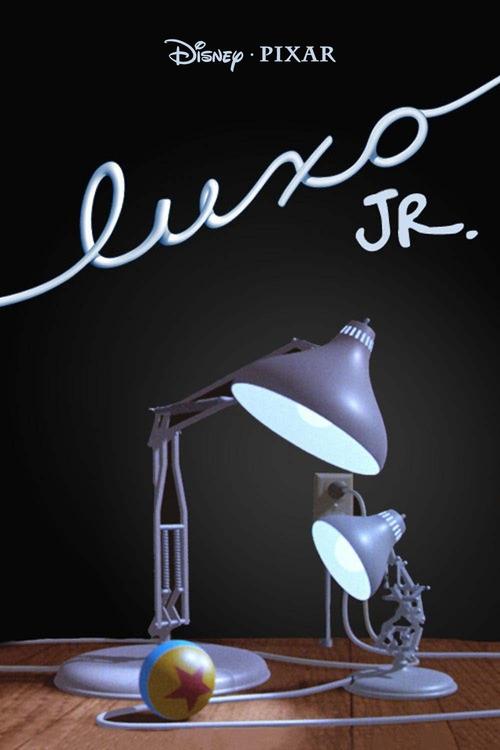
Luxo Jr. (1986)
Directed by John Lasseter
No — Luxo Jr. is not woke, scoring 0 out of 100 on our wokeness meter.
Luxo Jr. runs one hundred and twenty seconds and contains no dialogue, no human beings, and no stated thesis.
Consciousness Markers
The short features two faceless desk lamps and no human casting, so there is no representation casting element.
No LGBTQ+ themes, characters, or subtext appear in this two-minute animated short.
The parent-child dynamic between Luxo Sr. and Luxo Jr. is not framed through feminist themes or gender politics.
There is no engagement with racial consciousness, racial identity, or racial justice.
The film has no environmental or climate-related message.
There is no critique of capitalism, wealth inequality, or corporate power in the short.
The film does not address body image, size acceptance, or body positivity.
No neurodivergence, mental health, or neurodiversity themes are present.
The short does not revise or reinterpret historical events or figures.
The film tells a simple wordless story with no preachy or lecture-like messaging.
Why it received this score
Luxo Jr. runs one hundred and twenty seconds and contains no dialogue, no human beings, and no stated thesis. A large desk lamp watches a small desk lamp destroy a ball, then watches it acquire a larger ball. That is the entire dramatic architecture. The film was produced in 1986 as a technical demonstration for SIGGRAPH, and it remains the origin point of the hopping lamp that precedes every Pixar feature, a mascot born from a shadow-mapping experiment and a colleague's infant son.
Viewed through the lens of contemporary social consciousness, the short is a barren field. Its cast consists of two faceless appliances, so questions of representation never arise, and neither lamp is given a gender, an identity, or an interior life beyond filial exuberance. There is no engagement with racial justice, no environmental lament, no critique of the corporate machinery that funded it. The lamps own nothing and want nothing, which makes them poor candidates for an economic parable. The parent-child dynamic is affectionate and unexamined, and the film declines to interrogate it.
What the short does possess is craft, and a certain innocent confidence in the expressive power of a bouncing polygon. Lasseter's achievement lies in making us feel something for two pieces of office furniture without a single line of sermonizing. There is no message, no moral, no instruction for the audience to absorb and repeat. It is simply a small story told well, which in the current climate reads almost as a provocation. We are left with the uncomfortable suspicion that a wordless lamp can carry more emotional weight than most films that spend two hours explaining themselves.
Analysis generated by our Consciousness Algorithm
Part of

Synopsis
A baby lamp finds a ball to play with and it's all fun and games until the ball bursts. Just when the elder Luxo thinks his kid will settle down for a bit, Luxo Jr. finds a ball ten times bigger.
Questions about Luxo Jr.
Is Luxo Jr. woke?
No — Luxo Jr. is not woke, scoring 0 out of 100 on our wokeness meter. That earns it a verdict of Ultra Based.
Does Luxo Jr. have any woke elements?
No. All 10 markers score zero.
How does Luxo Jr. compare to other 1986 movies?
It ranks #47 of the 62 films from 1986 we've scored; their average is 7. The wokest is Star Trek IV: The Voyage Home (42).
How is the Woke Score calculated?
An AI-assisted process researches the film and its reception, scores it 0–100 on ten markers, then combines those into one 0–100 Woke Score. It measures a specific set of 2020s cultural themes, not film quality.