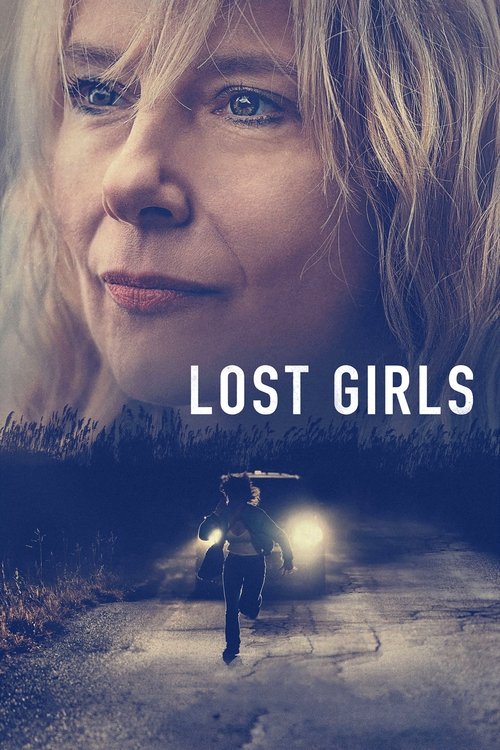
Lost Girls (2020)
Directed by Liz Garbus
No — Lost Girls is not especially woke, scoring 27 out of 100 on our wokeness meter.
Lost Girls arrives with the grim patience of a case file that has been left open too long.
Consciousness Markers
The story centers on a mother's fight for her missing daughter and exposes how sex workers are ignored by law enforcement, giving it a clear feminist-adjacent critique of gendered neglect.
The film carries a social-awareness message about police neglect and stigma against sex workers, though it remains a restrained drama rather than a preachy lecture.
The film is female-led and includes some diverse supporting cast members, but casting largely follows the real-life subjects rather than pursuing a modern diversity mandate.
The film revisits a true-crime case to center victims often dismissed as prostitutes, but it does not substantially rewrite historical events through a modern ideological lens.
The film contrasts a gated Long Island community with marginalized murdered sex workers, but it does not advance an explicit anti-capitalist or eat-the-rich thesis.
There are no LGBTQ+ characters, themes, or subplots in the film.
The film's social critique focuses on class, profession, and police inaction rather than race or racial identity.
There is no climate-related content or environmental messaging.
There is no body-positivity theme or messaging.
There is no exploration of neurodivergence or neurodiverse characters.
Why it received this score
Lost Girls arrives with the grim patience of a case file that has been left open too long. Liz Garbus directs this adaptation of Robert Kolker's nonfiction book with a steady, unsensational hand. Amy Ryan plays Mari Gilbert, a mother whose missing daughter, Shannan, leads her into a confrontation with police indifference and a gated Long Island community that would prefer its ugly secrets remain buried. The film is female-led, and its supporting cast includes faces that reflect the real people involved. It does not, however, go out of its way to construct a modern diversity showcase. There is no LGBTQ subplot, no climate allegory, no body-positivity thread, and no neurodivergent character study. These are absences, not failures. The movie has a narrower purpose.
That purpose is a muted critique of gendered neglect. Mari's search exposes how sex workers are treated as disposable, how law enforcement moves slowly when the victims are poor, addicted, or working in the shadows. The film's anger is real but controlled. It notices the contrast between the wealth of the barrier islands and the marginalization of the murdered women, though it stops short of an explicit eat-the-rich thesis. Race is not the organizing lens here. Class, profession, and institutional failure are. The story revisits a true-crime case to center victims who were often dismissed in life and in press coverage, but it does not bend historical events into a contemporary ideological parable. Its social awareness is present, and its lecture energy is kept on a low flame.
The result is a somber, well-acted procedural with a conscience. It resists easy catharsis, which is admirable, and it avoids turning tragedy into a sermon. The film's progressive instincts are genuine but modest, rooted in a mother's grief and a system's neglect. It belongs to an older tradition of issue drama: angry, restrained, and content to let the audience draw its own conclusions. A respectable vintage, if not a bold one.
Analysis generated by our Consciousness Algorithm


Synopsis
When Mari Gilbert's daughter disappears, police inaction drives her own investigation into the gated Long Island community where Shannan was last seen. Her search brings attention to over a dozen murdered prostitutes.
Questions about Lost Girls
Is Lost Girls woke?
No — Lost Girls is not especially woke, scoring 27 out of 100 on our wokeness meter. That earns it a verdict of Based.
Does Lost Girls have any woke elements?
3 of the 10 markers register at 30 or above, led by Feminist Agenda (50), Lecture Energy (35) and Representation Casting (30). On Feminist Agenda: The story centers on a mother's fight for her missing daughter and exposes how sex workers are ignored by law enforcement, giving it a clear feminist-adjacent critique of gendered neglect.
How does Lost Girls compare to other 2020 movies?
It ranks #59 of the 227 films from 2020 we've scored; their average is 21. The wokest is One Night in Miami... (83).
How is the Woke Score calculated?
An AI-assisted process researches the film and its reception, scores it 0–100 on ten markers, then combines those into one 0–100 Woke Score. It measures a specific set of 2020s cultural themes, not film quality.