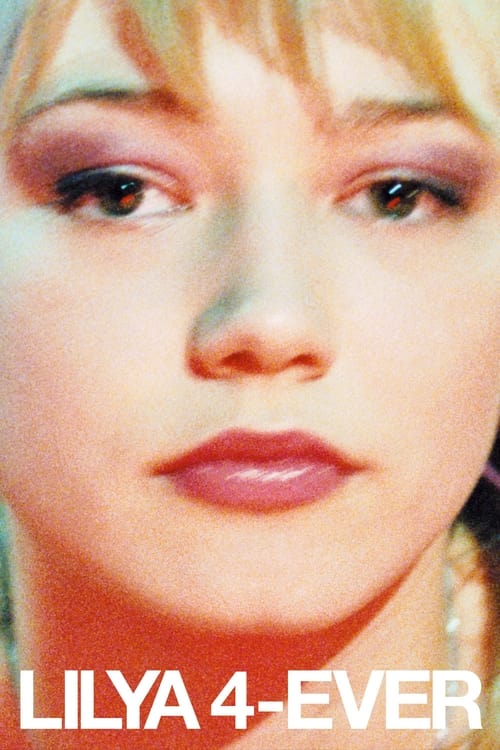
Lilya 4-ever (2002)
Directed by Lukas Moodysson
No — Lilya 4-ever is not woke, scoring 0 out of 100 on our wokeness meter.
There is a temptation, when confronted with a film like Lilya 4-ever, to reach for the apparatus of modern cultural diagnosis and find it empty.
Consciousness Markers
The cast is composed of Eastern European actors appropriate to the post-Soviet setting, but this is naturalistic authenticity rather than modern representation casting.
No LGBTQ+ themes or characters are present.
The film depicts the exploitation of a teenage girl but offers no feminist empowerment narrative or explicit critique of patriarchy in the modern woke sense.
No racial consciousness themes or commentary are present.
No environmental or climate themes are present.
The film shows poverty and criminal exploitation but does not advance an anti-capitalist or eat-the-rich message.
No body positivity themes are present.
No neurodivergence themes or characters are present.
The film is based on a true case but does not engage in historical revisionism.
The film is a grim social realist tragedy that shows rather than lectures, with no preachy didactic energy.
Why it received this score
There is a temptation, when confronted with a film like Lilya 4-ever, to reach for the apparatus of modern cultural diagnosis and find it empty. Lukas Moodysson's 2002 tragedy follows a teenage girl in an unnamed post-Soviet republic as her mother emigrates to America without her, leaving her to squalor, betrayal, and eventually a trafficker who sells her a Swedish dream that resolves into a locked apartment in Malmo. The film is grim, precise, and entirely uninterested in consolation. It wants us to watch, and then it wants us to stop watching. That is the whole of its argument.
What we do not find here is any of the contemporary furniture we have grown accustomed to cataloguing. The cast is Eastern European because the story is Eastern European, an authenticity of place that owes nothing to a casting brief. The suffering of Lilya is the suffering of a specific girl in a specific collapse, not a platform for empowerment or a lecture on patriarchy. There are no racial themes, no climate anxieties, no body-positive rejoinders, no neurodivergent arcs. Poverty is present, but Moodysson does not convert it into a slogan about capital. There is no villain called Society, only a pimp named Witek and an aunt who takes the better flat.
The film was loosely drawn from the real case of Danguole Rasalaite, and it does not embellish that record into myth or moral. It simply shows. The angel Volodya, the Rammstein, the two endings that offer heaven or a second chance, these are the film's only indulgences, and they are gestures of grief, not instruction. A lesser picture would have told us what to feel. This one hands us the world as a present and lets us decide whether to accept it. We decline, and the credits roll, and the classification is complete: nothing to report, which is its own kind of report.
Analysis generated by our Consciousness Algorithm


Synopsis
In a struggling post-Soviet community, Lilya a teenage girl is abandoned when her mother moves to the United States with her boyfriend. Facing neglect and poverty, she meets Andrei, who offers her a job in Sweden, giving her hope for a better life — and a journey that will change everything.
Questions about Lilya 4-ever
Is Lilya 4-ever woke?
No — Lilya 4-ever is not woke, scoring 0 out of 100 on our wokeness meter. That earns it a verdict of Ultra Based.
Does Lilya 4-ever have any woke elements?
No. All 10 markers score zero.
How does Lilya 4-ever compare to other 2002 movies?
It ranks #129 of the 150 films from 2002 we've scored; their average is 12. The wokest is Far from Heaven (78).
How is the Woke Score calculated?
An AI-assisted process researches the film and its reception, scores it 0–100 on ten markers, then combines those into one 0–100 Woke Score. It measures a specific set of 2020s cultural themes, not film quality.