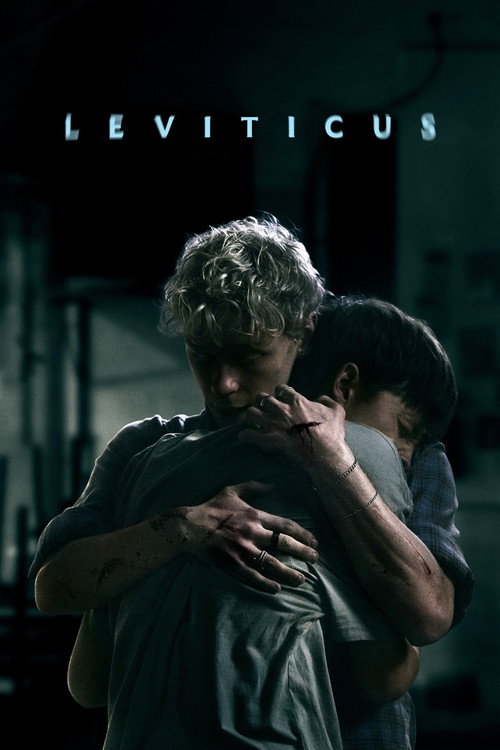
Leviticus (2026)
Directed by Adrian Chiarella
Yes — Leviticus is woke, scoring 60 out of 100 on our wokeness meter.
Adrian Chiarella's Leviticus arrives from Sundance with a monster that wears the face of the boy you love, which is a tidy piece of engineering.
Consciousness Markers
The film is explicitly a 'queer social horror' centered on a forbidden gay romance and a supernatural gay-exorcism ritual; LGBTQ+ identity is the core text, not a subplot.
The two romantic leads are male teens locked in a secret queer romance, carrying the emotional weight of the entire film; the cast also includes a notably diverse ensemble.
The critique of conversion therapy and homophobia is delivered through genre allegory and atmosphere rather than direct moralizing, which critics noted as emotionally grounded rather than preachy.
The setting is a devout evangelical town and one lead carries a non-Anglo name, but race is not examined or thematized — the film's concern is sexuality, not racial consciousness.
Female characters exist (Arlene, Izzie, Jessica) but function as plot agents rather than vehicles for any feminist thesis; the narrative is about two boys.
No environmental or climate content whatsoever.
No anti-capitalist or class-based critique; the antagonist framework is religious repression, not economic power.
No body-positivity themes present.
No neurodivergence themes or characters present.
A contemporary original story with no historical reworking or revisionist reframing.
Why it received this score
Adrian Chiarella's Leviticus arrives from Sundance with a monster that wears the face of the boy you love, which is a tidy piece of engineering. Two teenagers in an evangelical Victorian town, Naim and Ryan, conduct a secret romance until a jealous act of outing delivers them to a deliverance healer and a ritual that convulses, purges, and fails. The entity that follows is not subtle in its metaphor. It is loneliness with teeth. The film's romantic leads are both boys, and the entire emotional load rests on their shoulders, which is a casting decision and a narrative one at once. Joe Bird and Stacy Clausen carry it without flinching.
The horror here is theological, not economic. No one in this town is crushed by markets or landlords. They are crushed by Leviticus, by parents who believe suffering is a form of love, and by a healer who sells deliverance by the hour. Arlene, Izzie, and the detective move the plot along, though none of them are asked to argue a thesis about womanhood. Naim's name suggests a family from somewhere other than rural Victoria, and the film lets that sit without commentary. Race is not its subject. Sexuality is, entirely and unapologetically, and the exorcism sequences make the point through the body instead of the pulpit.
The film declines to lecture. There is no scene where a character explains the moral of the story to the audience, and critics have noted the restraint. The allegory does the work. No climate anxiety, no class warfare, no body-positive subplot, no neurodivergent arc, no historical revision. Just two boys, a bus ticket, and something invisible that wants them dead. It is a lean, patient piece of genre filmmaking. The credits roll on Frank Ocean, which is its own kind of benediction.
Analysis generated by our Consciousness Algorithm


Synopsis
Two teenage boys must escape a violent entity that takes the form of the person they desire most: each other.
Questions about Leviticus
Is Leviticus woke?
Yes — Leviticus is woke, scoring 60 out of 100 on our wokeness meter. That earns it a verdict of Woke.
What makes Leviticus woke?
3 of the 10 markers register at 30 or above, led by LGBTQ+ Themes (100), Representation Casting (62) and Lecture Energy (32). On LGBTQ+ Themes: The film is explicitly a 'queer social horror' centered on a forbidden gay romance and a supernatural gay-exorcism ritual; LGBTQ+ identity is the core text, not a subplot.
How does Leviticus compare to other 2026 movies?
It ranks #88 of the 800 films from 2026 we've scored; their average is 23. The wokest is Between Us (89).
How is the Woke Score calculated?
An AI-assisted process researches the film and its reception, scores it 0–100 on ten markers, then combines those into one 0–100 Woke Score. It measures a specific set of 2020s cultural themes, not film quality.