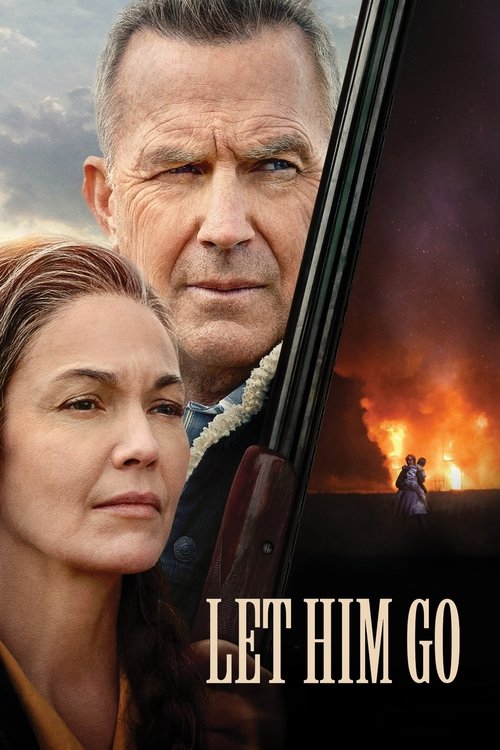
Let Him Go (2020)
Directed by Thomas Bezucha
No — Let Him Go is not woke, scoring 8 out of 100 on our wokeness meter.
Let Him Go arrives from Focus Features in 2020 with the quiet confidence of a film that knows precisely which audience it serves.
Consciousness Markers
Diane Lane's Margaret is the driving force behind the rescue and proves the most resolute figure, but the film frames this as maternal grit within a conventional revenge-thriller structure rather than any feminist argument.
The cast is overwhelmingly white, with a lone Native American supporting character (Peter Dragswolf) who aids the leads; he exists naturally in the story without commentary.
A Native American character offers shelter and aid, but the film makes no racial commentary or social critique; his presence is incidental to the plot.
The film is a genre thriller that plays its violence and grief straight, with no preachy or didactic messaging directed at the audience.
No LGBTQ+ characters or themes of any kind appear in the film.
No environmental or climate themes are present.
No economic or class critique; the antagonists are an abusive clan, not a stand-in for capital.
No body-positivity themes are present.
No neurodivergent characters or themes are depicted.
The 1961-1963 setting is period backdrop for a fictional novel's plot, not a revisionist reframing of history.
Why it received this score
Let Him Go arrives from Focus Features in 2020 with the quiet confidence of a film that knows precisely which audience it serves. Thomas Bezucha adapts Larry Watson's novel into a neo-Western that moves from a Montana ranch to the badlands of North Dakota, where a retired sheriff and his wife go looking for a grandson held by a clan that has taken the phrase off the grid as a personal challenge. Kevin Costner does the weathered lawman with practiced economy. Diane Lane does the grieving mother with more. The result is a genre piece that respects its own machinery.
Margaret Blackledge is the engine here. She packs the bags, brings the revolver, and refuses every invitation to give up, and Lane plays her with a resolve that carries the picture. The film treats this as maternal grit inside a familiar revenge structure. It never argues a thesis about it. A young Native American man, Peter Dragswolf, offers food and shelter along the way, and the screenplay lets him be helpful without turning him into a symbol or a lesson. The Weboys are abusers, not metaphors for anything larger. No economic critique attaches to them.
The film's refusals are as interesting as its actions. It plays its violence straight, lets the blood fall where it may, and never once turns to the camera to explain the moral. The 1961 to 1963 setting is texture, not argument. There is no sermon, no messaging, no reaching for the cultural moment. It is a well-made, grim, old-fashioned picture about grief and stubbornness, and it seems content to be exactly that.
Analysis generated by our Consciousness Algorithm
Part of


Synopsis
Following the loss of their son, a retired sheriff and his wife leave their Montana ranch to rescue their young grandson from the clutches of a dangerous family living off the grid in the Dakotas.
Questions about Let Him Go
Is Let Him Go woke?
No — Let Him Go is not woke, scoring 8 out of 100 on our wokeness meter. That earns it a verdict of Ultra Based.
Does Let Him Go have any woke elements?
Very few. None of the 10 markers reaches 30, the level where a marker counts as present; the highest is Feminist Agenda at 20.
How does Let Him Go compare to other 2020 movies?
It ranks #160 of the 227 films from 2020 we've scored; their average is 21. The wokest is One Night in Miami... (83).
How is the Woke Score calculated?
An AI-assisted process researches the film and its reception, scores it 0–100 on ten markers, then combines those into one 0–100 Woke Score. It measures a specific set of 2020s cultural themes, not film quality.