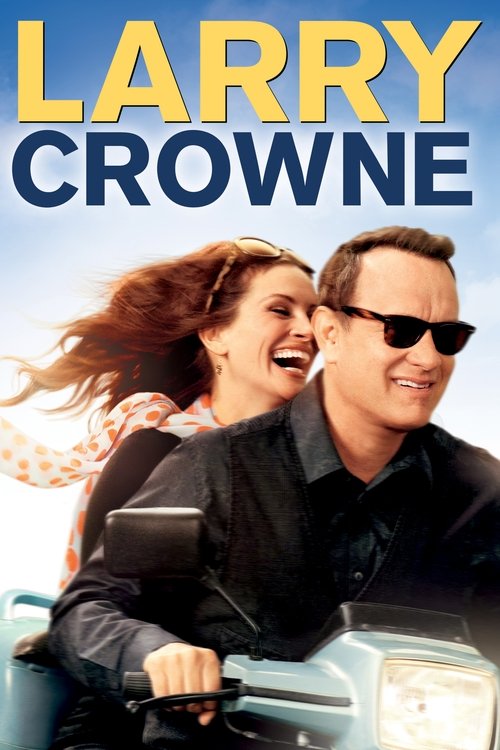
Larry Crowne (2011)
Directed by Tom Hanks
No — Larry Crowne is not woke, scoring 17 out of 100 on our wokeness meter.
Larry Crowne arrives in 2011 as a star vehicle idling in neutral.
Consciousness Markers
An ensemble that includes Taraji P. Henson, Gugu Mbatha-Raw, Cedric the Entertainer, Wilmer Valderrama, Pam Grier, and George Takei, mostly cast in ordinary roles without commentary. There is diversity on screen, but it is unremarked and not a programmatic statement.
Larry is fired by a big-box retailer that discards a loyal veteran for lack of a degree, and the film dwells on unemployment, foreclosure, and economic precarity. The critique is mild and reformist rather than an eat-the-rich polemic.
Mercedes is a dissatisfied wife who eventually leaves her freeloading husband and rediscovers her professional passion, but the film is a conventional star-vehicle rom-com with no feminist thesis.
A community-college economics course figures in the plot but the film never lectures its audience on policy or morality; it is a gentle character comedy.
The cast is multiethnic but race is never a subject of the film; the economy and self-improvement are the concerns, not racial consciousness.
No LGBTQ+ characters, relationships, or themes anywhere in the story.
No environmental themes; scooters appear as a practical economy measure, not a climate statement.
No body-positivity themes or messaging present.
No neurodivergent characters or themes.
No historical revisionism; the film is a contemporary, apolitical slice-of-life.
Why it received this score
Larry Crowne arrives in 2011 as a star vehicle idling in neutral. Tom Hanks directs and stars as a middle-aged Navy veteran dismissed from a big-box retailer for the crime of lacking a college degree. The film watches him lose his footing, buy a scooter, and enroll at a community college. There is unemployment here, and foreclosure, and the quiet indignity of a man selling his possessions on the lawn. The critique of corporate loyalty is real but soft, a complaint registered politely at the customer service desk. Nobody storms a boardroom. The wealthy are not devoured. They are simply not seated at the table.
The supporting ensemble is notably multiethnic, with Taraji P. Henson, Gugu Mbatha-Raw, Cedric the Entertainer, Wilmer Valderrama, Pam Grier, and George Takei filling out the frame. Race is never the subject. These performers exist inside the story without comment, which is pleasant and also inert. Julia Roberts plays Mercedes, a wife worn down by a freeloading husband, and she eventually leaves him and remembers that she likes teaching. It is a modest arc, and the film has no interest in pushing it further. There are no LGBTQ characters, no environmental themes, no body-positive messaging, no neurodivergent figures. A community college economics course figures in the plot and never once lectures the audience about policy.
This is a contemporary, apolitical slice of life, a romance for an audience the studio later confirmed was mostly over fifty. It is gentle, well-mannered, and almost aggressively harmless. The film's cultural footprint is faint, which is its own kind of statement. A mild vintage. Drinkable. Forgettable.
Analysis generated by our Consciousness Algorithm


Synopsis
When he suddenly finds himself without his long-standing blue-collar job, Larry Crowne enrolls at his local college to start over. There, he becomes part of an eclectic community of students and develops a crush on his teacher.
Questions about Larry Crowne
Is Larry Crowne woke?
No — Larry Crowne is not woke, scoring 17 out of 100 on our wokeness meter. That earns it a verdict of Ultra Based.
Does Larry Crowne have any woke elements?
1 of the 10 markers register at 30 or above, led by Representation Casting (32). On Representation Casting: An ensemble that includes Taraji P.
How does Larry Crowne compare to other 2011 movies?
It ranks #45 of the 245 films from 2011 we've scored; their average is 11. The wokest is Paul (68).
How is the Woke Score calculated?
An AI-assisted process researches the film and its reception, scores it 0–100 on ten markers, then combines those into one 0–100 Woke Score. It measures a specific set of 2020s cultural themes, not film quality.