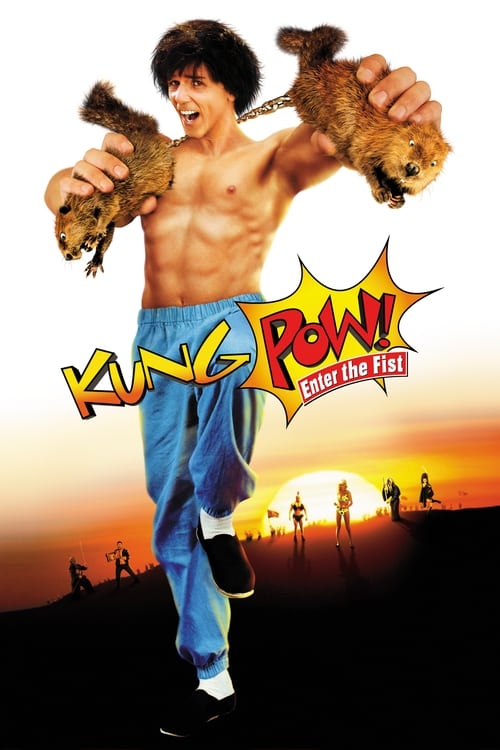
Kung Pow: Enter the Fist (2002)
Directed by Steve Oedekerk
No — Kung Pow: Enter the Fist is not woke, scoring 0 out of 100 on our wokeness meter.
Kung Pow: Enter the Fist arrives from 2002 as a curiosity of collage.
Consciousness Markers
The cast is largely Asian due to the recycled 1976 source footage, but the film makes no modern representational argument; Oedekerk digitally inserts himself over the Asian lead for comedy, which is not the 2020s representation-casting marker.
No LGBTQ+ themes, characters, or subtext.
Female characters exist as romantic interests or absurd jokes (Whoa, Ling), with no feminist agenda or gender-justice commentary.
The film spoofs dubbing and Hong Kong martial arts tropes but does not engage racial consciousness or social-justice racial themes.
No climate or environmental themes.
No eat-the-rich or anti-capitalist critique.
No body-positivity themes; physical gags are absurdist, not body-acceptance advocacy.
Characters like Wimp Lo and Master Tang are comedic grotesques, not neurodivergence representation or advocacy.
No historical revisionism; it is a martial-arts spoof with no historical argument.
No preachy lecture or moral instruction; the film is deliberately silly and non-didactic.
Why it received this score
Kung Pow: Enter the Fist arrives from 2002 as a curiosity of collage. Steve Oedekerk takes Tiger & Crane Fists, a 1976 Hong Kong martial arts picture, and stitches himself into its frame with digital head replacements and a re-dubbed cast that speaks in deliberate nonsense. The result is a sustained prank on dubbing conventions and revenge plots. The Chosen One seeks Master Pain, who later renames himself Betty, and encounters a one-breasted woman named Whoa, a sentient tongue, and a lion in the sky. It is silly, abrasive, and committed to its own logic.
The film's cultural posture is essentially null. Its Asian cast is inherited from source footage, not assembled for a modern representational argument. Oedekerk pastes his own face over the original lead for comic effect, which is the opposite of a casting statement. No LGBTQ themes surface. Women exist as romantic interests or absurdist punchlines, and the film has no interest in gender justice. Race enters only as a target of dubbing parody, not as a subject of consciousness or critique. Climate concerns are absent. Capitalism is not indicted, since the villains are French aliens and a cow with martial arts training. Body acceptance and neurodivergence advocacy are absent. Wimp Lo and Master Tang are grotesques, not case studies. History is not revised, because there is no history here to revise, only recycled footage and new jokes about milk.
The film never lectures. It is too busy having a man fight an udder. That absence of sermonizing is its one accidental virtue, though the film does not intend it. It intends to be stupid, and it succeeds with a dedication that borders on the monastic. The final product is a cult artifact for those who enjoy dubbing jokes and prolonged absurdity. For cultural classification, it is a blank slate. No progressive sensibilities are advanced, no social instruction is offered, and no modern cause is served. There is only Steve Oedekerk, a cow, and a tongue that flies into space. The purity of that emptiness is its own legacy.
Analysis generated by our Consciousness Algorithm


Synopsis
A movie within a movie, created to spoof the martial arts genre. Writer/director Steve Oedekerk uses contemporary characters and splices them into a 1970s kung-fu film, weaving the new and old together. As the main character, The Chosen One, Oedekerk sets off to avenge the deaths of his parents at the hands of kung-fu legend Master Pain. Along the way he encounters some strange characters.
Questions about Kung Pow: Enter the Fist
Is Kung Pow: Enter the Fist woke?
No — Kung Pow: Enter the Fist is not woke, scoring 0 out of 100 on our wokeness meter. That earns it a verdict of Ultra Based.
Does Kung Pow: Enter the Fist have any woke elements?
No. All 10 markers score zero.
How does Kung Pow: Enter the Fist compare to other 2002 movies?
It ranks #129 of the 150 films from 2002 we've scored; their average is 12. The wokest is Far from Heaven (78).
How is the Woke Score calculated?
An AI-assisted process researches the film and its reception, scores it 0–100 on ten markers, then combines those into one 0–100 Woke Score. It measures a specific set of 2020s cultural themes, not film quality.