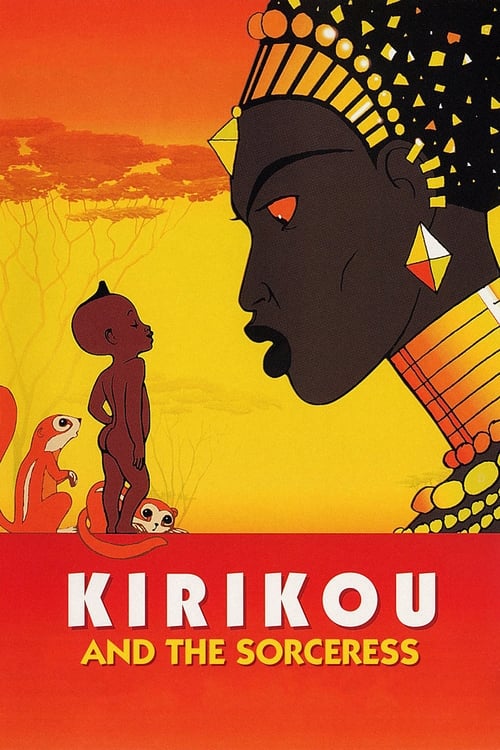
Kirikou and the Sorceress (1998)
Directed by Michel Ocelot
No — Kirikou and the Sorceress is not especially woke, scoring 25 out of 100 on our wokeness meter.
Michel Ocelot's Kirikou and the Sorceress arrives from 1998, a French-language animated feature assembled across six studios in five countries and drawn from West African folk tales collected by a colonial administrator in 1912.
Consciousness Markers
The film features an entirely Black African cast and characters, with French voices recorded by Senegalese actors and English dubbing by Black South Africans, reflecting deliberate cultural authenticity.
No LGBTQ+ themes or characters are present.
The powerful sorceress Karaba is an antagonist, and the story does not engage with feminist themes or gender politics.
The film is set in a West African village but does not comment on race, racism, or racial identity.
The dried-up spring is a plot device, not a climate change allegory or environmental crusade.
No anti-capitalist or eat-the-rich themes are present.
No body positivity themes or messaging are present.
No neurodivergence themes or characters are present.
The film is a fantasy based on West African folktales, not a historical revision.
The film tells a simple folk tale without didactic or preachy messaging.
Why it received this score
Michel Ocelot's Kirikou and the Sorceress arrives from 1998, a French-language animated feature assembled across six studios in five countries and drawn from West African folk tales collected by a colonial administrator in 1912. A newborn boy speaks from the womb, walks moments after birth, and sets out to confront the sorceress Karaba, who has dried the village spring and carried off the men. The animation favors flat color and clean line, inspired by Henri Rousseau and Egyptian relief. It is a small film, made for a modest sum, and it has aged into something like a classic.
The casting decisions deserve their due. Ocelot recorded the French voices in Dakar with Senegalese actors and schoolchildren, then directed the English dub in South Africa with Black performers. The music came from Youssou N'Dour, the instruments from the kora and balafon, the closing song sung in Wolof. This is deliberate cultural specificity, and it registers. What the film does not do is comment on any of it. The village is a village. Nobody explains the significance of the casting. The story treats its setting as a place, not as a statement.
Which leaves the rest of the ledger quiet. Karaba is a villain with a poisoned thorn in her back, and the resolution is a healing, not a reckoning with gender. The dried spring is a monster's thirst, nothing more. Kirikou has no magic and wins by cleverness and persistence. The film ends and nobody has been instructed in anything. It is a folk tale told plainly, and folk tales, whatever their virtues, are not sermons. We are left with a charming artifact and very little to argue about, which is its own kind of relief.
Analysis generated by our Consciousness Algorithm


Synopsis
Drawn from elements of West African folk tales, it depicts how a newborn boy, Kirikou, saves his village from the evil witch Karaba.
Questions about Kirikou and the Sorceress
Is Kirikou and the Sorceress woke?
No — Kirikou and the Sorceress is not especially woke, scoring 25 out of 100 on our wokeness meter. That earns it a verdict of Based.
Does Kirikou and the Sorceress have any woke elements?
1 of the 10 markers register at 30 or above, led by Representation Casting (60). On Representation Casting: The film features an entirely Black African cast and characters, with French voices recorded by Senegalese actors and English dubbing by Black South Africans, reflecting deliberate cultural authenticity.
How does Kirikou and the Sorceress compare to other 1998 movies?
It ranks #12 of the 118 films from 1998 we've scored; their average is 12. The wokest is Show Me Love (60).
How is the Woke Score calculated?
An AI-assisted process researches the film and its reception, scores it 0–100 on ten markers, then combines those into one 0–100 Woke Score. It measures a specific set of 2020s cultural themes, not film quality.