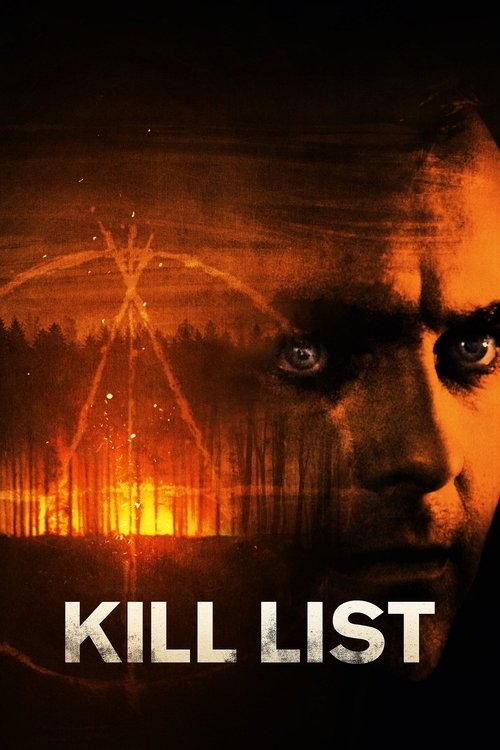
Kill List (2011)
Directed by Ben Wheatley
No — Kill List is not woke, scoring 5 out of 100 on our wokeness meter.
Ben Wheatley's Kill List arrives with a reputation for dread and a final act that treats narrative coherence as a disposable luxury.
Consciousness Markers
Wheatley cited recession and the erosion of the social contract as background themes, and the cult is revealed to include powerful figures like an MP and professionals, but this is atmospheric dread rather than explicit eat-the-rich advocacy.
Jay's PTSD from a botched Kyiv mission is a central character driver, but it is portrayed as traumatic disturbance rather than framed through a neurodivergence-acceptance lens.
The cast is uniformly white British with no deliberate diversity casting; characters exist as written without any representational commentary.
No LGBTQ+ characters, relationships, or themes appear anywhere in the film.
Shel is a domestic figure who ultimately becomes a sacrificial victim; the film offers no feminist framing or gender-power critique.
Race is entirely absent as a subject; the film's anxieties are domestic, economic, and occult rather than racial.
No environmental or climate themes are present in the narrative.
The film's brutal violence and bodily horror run entirely counter to any body-positive messaging.
The film is a contemporary fictional horror-thriller with no historical revisionism.
Wheatley deliberately avoids exposition and ambiguity is the point; the film lectures no one and offers no moral instruction.
Why it received this score
Ben Wheatley's Kill List arrives with a reputation for dread and a final act that treats narrative coherence as a disposable luxury. The film follows Jay, an ex-soldier turned hitman, as a contract unravels into cult horror. It is a nasty, effective piece of work. It is also, by the standards of contemporary social consciousness, a barren landscape. The film has no interest in representation as a project. It has no interest in moral instruction. It simply wants to put the viewer through the emotional mangler, and it succeeds.
The cast is uniformly white British. No LGBTQ themes appear. Race never enters the frame as a subject. Climate anxiety is absent. The film's attitude toward the body is hostile: infection, hammer blows, disembowelment. Shel is a wife and mother who becomes a sacrifice, and the film offers no feminist counter-reading. Jay's PTSD is central, but it is treated as a traumatic disturbance, not as neurodivergence to be accommodated. There is no sermon here. Wheatley dislikes exposition and lets ambiguity do the work. The result is a film that refuses to explain itself, which is the opposite of lecture energy.
The only faint progressive tremor is economic. Wheatley has mentioned recession and the erosion of the social contract, and the cult includes an MP and professionals. That suggests a vague distrust of elites. It is atmospheric dread, not eat-the-rich advocacy. The film ends with a crowned hitman and a dead family, which is not a policy proposal. Kill List remains a grim genre exercise, politically mute and proud of it. A sommelier of social relevance would find little to swirl. The vintage is bitter, bloody, and entirely of its own making.
Analysis generated by our Consciousness Algorithm


Synopsis
Nearly a year after a botched job, a hitman takes a new assignment with the promise of a big payoff for three killings. What starts off as an easy task soon unravels, sending the killer into the heart of darkness.
Questions about Kill List
Is Kill List woke?
No — Kill List is not woke, scoring 5 out of 100 on our wokeness meter. That earns it a verdict of Ultra Based.
Does Kill List have any woke elements?
Very few. None of the 10 markers reaches 30, the level where a marker counts as present; the highest is Eat the Rich at 15.
How does Kill List compare to other 2011 movies?
It ranks #165 of the 245 films from 2011 we've scored; their average is 11. The wokest is Paul (68).
How is the Woke Score calculated?
An AI-assisted process researches the film and its reception, scores it 0–100 on ten markers, then combines those into one 0–100 Woke Score. It measures a specific set of 2020s cultural themes, not film quality.