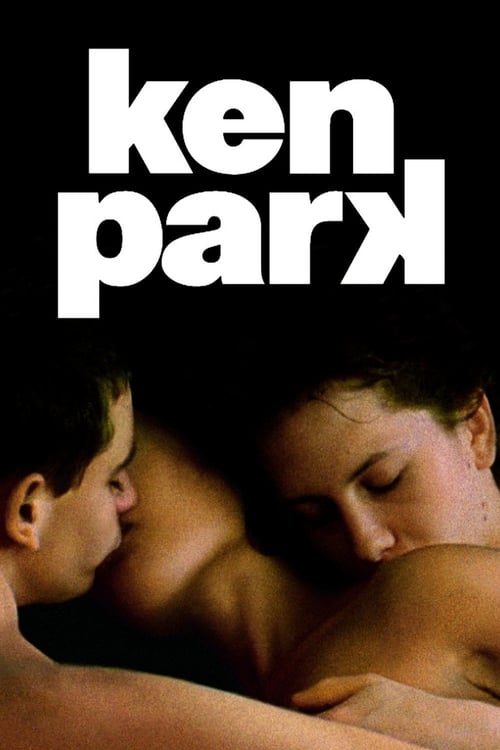
Ken Park (2003)
Directed by Larry Clark
No — Ken Park is not woke, scoring 9 out of 100 on our wokeness meter.
Ken Park arrives with a reputation that precedes it, banned in Australia, unshown in the United States since a single Telluride screening, and possessed of a title character who exists chiefly to shoot himself in a skate park and thereby bookend ninety minutes of suburban rot.
Consciousness Markers
The cast is naturally multiethnic (Tiffany Limos, Julio Oscar Mechoso, Mike Apaletegui), but the film makes no self-conscious gesture toward representation and never comments on it.
The film provokes and shocks rather than moralizes; it has no didactic message to deliver to the audience.
The only same-sex content is the father's predatory assault on Claude, framed as abuse rather than identity; there is no LGBTQ+ theme or affirmation.
Larry Clark's leering, exploitative gaze on teenage bodies and the reduction of Peaches to an object of paternal fixation is the opposite of a feminist agenda.
Race is entirely absent as a subject; the film's dysfunction is suburban and colorblind without any racial consciousness.
No environmental or climate content whatsoever.
The film wallows in personal pathology and abuse; it offers no economic critique or eat-the-rich framing.
A pregnant body appears, but as a site of discomfort and quasi-incestuous fixation, not body-positive celebration.
Tate's instability is rendered as sadistic criminal pathology, not as neurodivergence to be understood or affirmed.
No historical revisionism; the film is a contemporary fictional provocation.
Why it received this score
Ken Park arrives with a reputation that precedes it, banned in Australia, unshown in the United States since a single Telluride screening, and possessed of a title character who exists chiefly to shoot himself in a skate park and thereby bookend ninety minutes of suburban rot. Larry Clark and Edward Lachman train the camera on Visalia, California, and on four adolescents who knew the dead boy, and the result is a provocation engine running on autoerotic asphyxiation, patricidal fantasy, and a quasi-incestuous wedding rite. Harmony Korine wrote the script from five images Clark sketched on a napkin, and the seams show. This is not a film with an argument. It is a film with an appetite.
The cast is multiethnic without ceremony. Tiffany Limos, Julio Oscar Mechoso, and Mike Apaletegui move through the frame as neighbors, and the film never pauses to congratulate itself for the arrangement. That is the whole of its social awareness. The dysfunction on display is domestic and colorblind, a matter of drunk fathers, devout fathers, and grandparents murdered over petty grievances. There is no economic critique, no environmental concern, no historical revisionism. A pregnant body appears, and it is treated as a site of discomfort, not celebration. The single same-sex beat is an assault, framed as abuse. Clark's gaze on teenage bodies is leering where a feminist reading would demand scrutiny. Tate's sadism is pathology without diagnosis, offered up as spectacle.
What remains is shock, delivered with craft and no sermon. The film does not lecture, which is its one redeeming formal virtue, and it has no interest in improving anyone. The provocation is genuine. The consciousness is not. A low classification, honestly earned.
Analysis generated by our Consciousness Algorithm
Synopsis
Teen skater Ken Park (nicknamed Krap Nek; his name spelled and pronounced backward) kills himself at a Visalia skate park; his death bookends the lives of four other young people who knew him: Shawn, the most conventional; Tate brims with psychotic rage; Claude is habitually harassed by his brutish father and coddled, rather uncomfortably, by his enormously pregnant mother; and Peaches looks after her devoutly religious father, but yearns for freedom. They're all rather tight, or so they claim.
Questions about Ken Park
Is Ken Park woke?
No — Ken Park is not woke, scoring 9 out of 100 on our wokeness meter. That earns it a verdict of Ultra Based.
Does Ken Park have any woke elements?
Very few. None of the 10 markers reaches 30, the level where a marker counts as present; the highest is Representation Casting at 25.
How does Ken Park compare to other 2003 movies?
It ranks #64 of the 150 films from 2003 we've scored; their average is 12. The wokest is Mona Lisa Smile (60).
How is the Woke Score calculated?
An AI-assisted process researches the film and its reception, scores it 0–100 on ten markers, then combines those into one 0–100 Woke Score. It measures a specific set of 2020s cultural themes, not film quality.