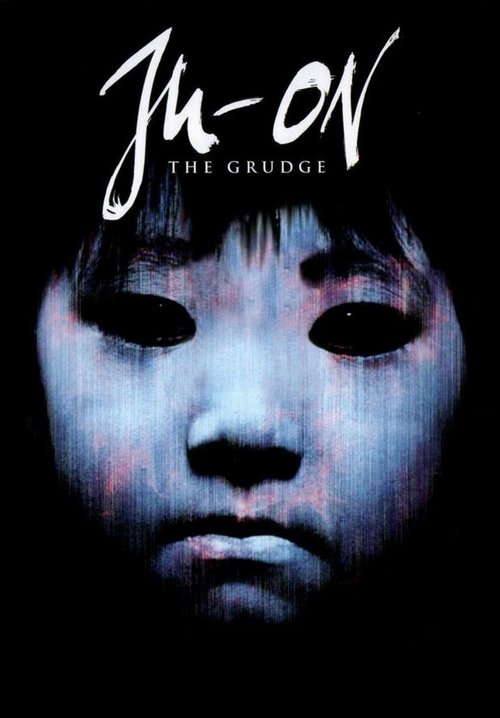
Ju-on: The Grudge (2002)
Directed by Takashi Shimizu
No — Ju-on: The Grudge is not woke, scoring 0 out of 100 on our wokeness meter.
The film opens with a social worker, a haunted house, and a curse that spreads through anyone who enters.
Consciousness Markers
The cast is entirely Japanese, but this reflects the film's Japanese setting and origin rather than a deliberate representative-casting agenda; no such framing is present.
No LGBTQ+ characters, relationships, or themes appear anywhere in the curse-driven narrative.
A female protagonist and a female spectral antagonist exist, but the film offers no feminist thesis, commentary, or agenda; women are victims and monsters, not vessels for gender politics.
The film has no racial consciousness or commentary; it is a domestic Japanese ghost story with no engagement with racial themes.
No environmental or climate themes are present in the story of a haunted house and spreading curse.
A salaryman character exists but is merely a victim; the film contains no anti-capitalist or eat-the-rich messaging.
There is no body-positive messaging; the film's bodily imagery is purely horrific and none of it concerns body image or self-acceptance.
An ill elderly woman appears, but her condition is a plot device for horror, not an exploration or celebration of neurodivergence.
The film does not revise or reinterpret any historical record; its supernatural premise is entirely fictional.
The film makes no moralizing speeches or didactic arguments; it aims only to unsettle the viewer.
Why it received this score
The film opens with a social worker, a haunted house, and a curse that spreads through anyone who enters. It is a lean mechanism for dread, assembled by Takashi Shimizu with an eye for sound and a throaty rattle. It has no interest in instructing us about contemporary virtues. The cast is Japanese because the story is Japanese. That is not representation casting; it is geography and genre custom. The ghosts are women, and the victims are often women, but the film offers no gender thesis. Kayako is a monster, not a martyr for a cause. Rika is a witness, not a symbol.
The salaryman Katsuya is a victim, not a critique of late capitalism. The ill mother Sachie is a plot device, not an invitation to celebrate neurodiversity. The film has no environmental agenda, no racial commentary, no LGBTQ subtext, no body-positive message. Its bodily horror concerns decay and violation. Any attempt to find such themes would be an act of projection. Shimizu is interested in the geometry of fear, in the sound of a ghost dragging itself down stairs. He is not interested in moral instruction. The film does not lecture. It stalks.
Seen today, Ju-on: The Grudge remains an artifact of pre-smartphone J-horror, a collection of scare set pieces linked by a curse. It was compared unfavorably to Ring at first, then reassessed as a classic. That reassessment is about craft, not politics. The film's cultural footprint includes a franchise, an American remake, sequels, a sidequel, and a prequel series. None of that changes the ledger. There is no progressive sermon here, no social consciousness of the modern kind. There is only a house, a family murdered, and a curse that passes from body to body. The film asks nothing of us except to be afraid. That is a modest request, and it succeeds.
Analysis generated by our Consciousness Algorithm


Synopsis
When a social worker is sent to check on a traumatized elderly woman whose family have moved in at the site of a notorious murder case, she unwittingly unleashes a cycle of terror that transmits via its victims.
Questions about Ju-on: The Grudge
Is Ju-on: The Grudge woke?
No — Ju-on: The Grudge is not woke, scoring 0 out of 100 on our wokeness meter. That earns it a verdict of Ultra Based.
Does Ju-on: The Grudge have any woke elements?
No. All 10 markers score zero.
How does Ju-on: The Grudge compare to other 2002 movies?
It ranks #129 of the 150 films from 2002 we've scored; their average is 12. The wokest is Far from Heaven (78).
How is the Woke Score calculated?
An AI-assisted process researches the film and its reception, scores it 0–100 on ten markers, then combines those into one 0–100 Woke Score. It measures a specific set of 2020s cultural themes, not film quality.