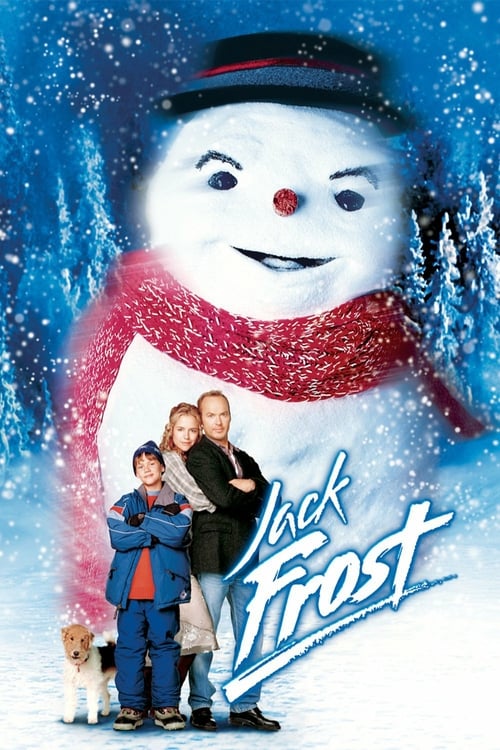
Jack Frost (1998)
Directed by Troy Miller
No — Jack Frost is not woke, scoring 0 out of 100 on our wokeness meter.
Jack Frost arrives in 1998 with a magical harmonica, a dead rock musician, and a snowman sculpted by Jim Henson's Creature Shop that Roger Ebert described as the most repulsive single creature in the history of special effects.
Consciousness Markers
The cast is entirely white and the film makes no effort at inclusive or color-conscious casting; characters are default demographic.
No LGBTQ+ characters, themes, or subtext.
The mother is a supportive wife and no feminist themes or gender-role critique are present.
No engagement with race, racism, or racial identity.
The snowman's melting is a plot device for emotional stakes, not climate advocacy.
The father's music career and record-deal ambitions are treated as personal/family conflict, not a critique of capitalism.
No body-positivity themes or body-diverse representation.
Charlie's grief and depression are portrayed as bereavement, not neurodivergence or neurodiversity advocacy.
No historical revisionism; it is a contemporary fantasy.
The film has sentimental moralizing about family and fatherhood, but no modern social-justice lecture or preachy progressive messaging.
Why it received this score
Jack Frost arrives in 1998 with a magical harmonica, a dead rock musician, and a snowman sculpted by Jim Henson's Creature Shop that Roger Ebert described as the most repulsive single creature in the history of special effects. The premise is straightforward. A father who cannot keep his promises dies in a car crash on a snowy Colorado road, returns one year later inside a snowman, and spends a warm Christmas Eve melting while teaching his eleven-year-old son to stop grieving and rejoin the hockey team. It grossed $34.6 million against a budget that may have reached $85 million. Critics were unkind. Audiences gave it a B+ and moved on.
The film's moral universe is entirely domestic. Jack's absences are framed as a personal failing of fatherhood, not as a symptom of an economic order that demands his labor. The record deal is a plot device, nothing more. Gabby exists to be supportive and to be persuaded. Charlie's depression is bereavement, plainly rendered, requiring no clinical vocabulary. When the snowman melts, it is because the weather turned warm, which is a seasonal inconvenience and not a planetary indictment. The cast is uniformly white, and the film offers no comment on this, which is itself a kind of comment, though not the kind that concerns us here.
There is sentiment here, and a great deal of it. There is moralizing about family, about promises, about the time a father wastes chasing a career. None of it is addressed to the audience as instruction. The film wants us to cry, not to amend our politics. It is a relic of a prelapsarian Hollywood, cheerful and bogus, as Janet Maslin put it, and it lectures no one about anything except the importance of showing up to your son's hockey game.
Analysis generated by our Consciousness Algorithm
Part of


Synopsis
A father who can't keep his promises dies in a car accident. One year later, he returns as a snowman, who has one final chance to put things right with his son before he is gone forever.
Questions about Jack Frost
Is Jack Frost woke?
No — Jack Frost is not woke, scoring 0 out of 100 on our wokeness meter. That earns it a verdict of Ultra Based.
Does Jack Frost have any woke elements?
No. All 10 markers score zero.
How does Jack Frost compare to other 1998 movies?
It ranks #110 of the 118 films from 1998 we've scored; their average is 12. The wokest is Show Me Love (60).
How is the Woke Score calculated?
An AI-assisted process researches the film and its reception, scores it 0–100 on ten markers, then combines those into one 0–100 Woke Score. It measures a specific set of 2020s cultural themes, not film quality.