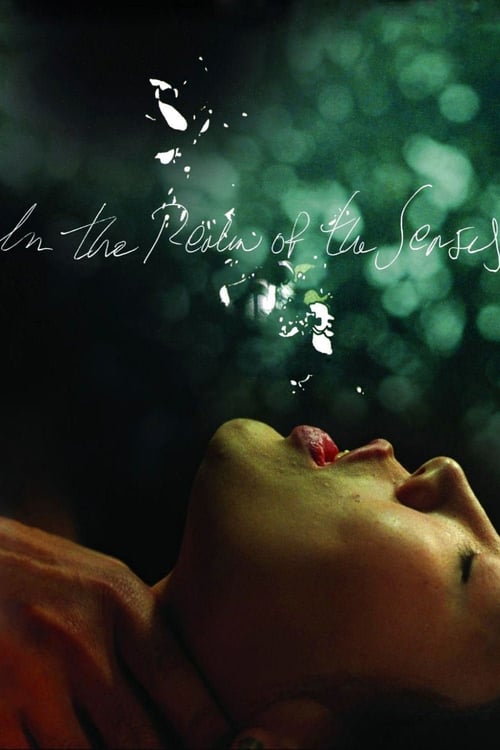
In the Realm of the Senses (1976)
Directed by Nagisa Ōshima
No — In the Realm of the Senses is not woke, scoring 0 out of 100 on our wokeness meter.
In 1976, Nagisa Oshima took a 1936 tabloid murder, the Sada Abe affair, and rendered it with an explicitness no Japanese studio could legally produce.
Consciousness Markers
The cast is entirely Japanese, reflecting the film's setting and origin; no modern diversity casting agenda is present.
No LGBTQ+ themes or characters appear in the film.
While centered on a woman's sexual obsession, the film does not advance a modern feminist agenda or critique patriarchal structures.
The film does not engage with racial consciousness or systemic racism.
No environmental or climate-related themes are present.
The film does not critique capitalism or wealth inequality.
Explicit nudity and sex are present, but not in service of body positivity or fat acceptance.
No neurodivergent characters or themes are depicted.
The film is a fictionalized account of a true event, but it does not revise history to fit modern ideological narratives.
The film is an artful exploration of obsession, not a didactic lecture on social issues.
Why it received this score
In 1976, Nagisa Oshima took a 1936 tabloid murder, the Sada Abe affair, and rendered it with an explicitness no Japanese studio could legally produce. The production was registered as French, the footage shipped abroad for processing, and the resulting artifact has been argued over ever since by people who cannot agree on whether it is art or pornography. This critic finds the question tedious. What the film actually is, is a long, patient study of two people dismantling themselves in a rented room, and it has no interest in instructing anyone about how to live.
Eiko Matsuda and Tatsuya Fuji spend much of the running time unclothed and in congress, and the film treats this with a solemnity bordering on the liturgical. There is no sermon here about bodies, no affirmation, no lesson about desire as liberation. Sada is possessive, jealous, and finally lethal, and the camera watches her without defending her. Kichi leaves his wife and household for her, and the film declines to frame his abandonment as anything but appetite. The ending, in which she severs his penis and walks the streets for four days carrying it, arrives as an inevitability, not a moral.
For a viewer arriving with a checklist of contemporary social concerns, the pickings are lean. The cast is Japanese because the story is Japanese. There is no engagement with racial hierarchy, no environmental subtext, no critique of capital, no vocabulary borrowed from the last decade of Anglo-American cultural criticism. Oshima testified that nothing expressed is obscene and that what is obscene is what is hidden, a statement about censorship and not about justice. The film remains what it was: an act of formal defiance from a director who wanted to widen what cinema could show, and who had no interest in telling us what to think afterward.
{"thematic_tags": ["true_story"]}
Analysis generated by our Consciousness Algorithm

Synopsis
A passionate telling of the story of Sada Abe, a woman whose affair with her master led to an obsessive and ultimately destructive sexual relationship.
Questions about In the Realm of the Senses
Is In the Realm of the Senses woke?
No — In the Realm of the Senses is not woke, scoring 0 out of 100 on our wokeness meter. That earns it a verdict of Ultra Based.
Does In the Realm of the Senses have any woke elements?
No. All 10 markers score zero.
How does In the Realm of the Senses compare to other 1976 movies?
It ranks #29 of the 30 films from 1976 we've scored; their average is 13. The wokest is 1900 (77).
How is the Woke Score calculated?
An AI-assisted process researches the film and its reception, scores it 0–100 on ten markers, then combines those into one 0–100 Woke Score. It measures a specific set of 2020s cultural themes, not film quality.