I Want Your Sex (2026)
Directed by Gregg Araki · $635K domestic
Partly · Woke-Adjacent
How we score movies →Consciousness Markers
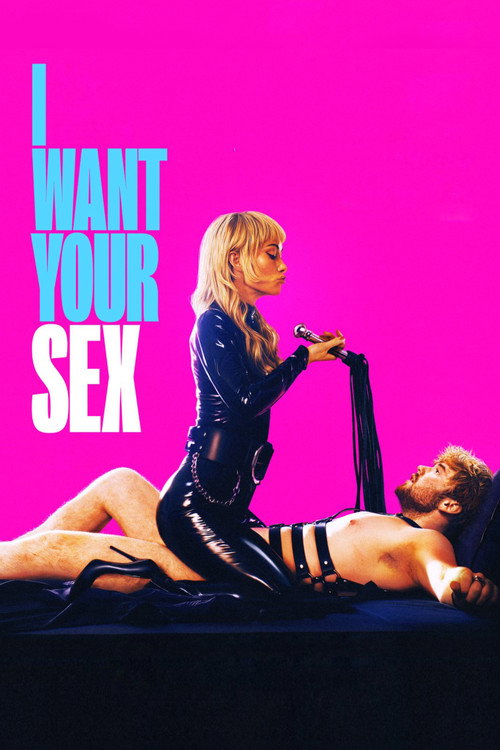
The entire power architecture of the film rests on a deliberate gender inversion: an imperious older woman dominates a submissive younger man in a workplace context that explicitly parodies traditional harassment dynamics. The reversal is the joke, but it is also the argument.
Multiple critics specifically noted that Olivia Wilde's monologues function as Araki addressing the audience directly to scold Gen Z about sexual repression. When your character's dialogue is described by reviewers as the director grabbing a microphone, the lecture energy is not subtle.
The ensemble is assembled with clear intentionality: Daveed Diggs, Margaret Cho, and Chase Sui Wonders fill roles that are pointedly against type, and the casting choices read as a curatorial statement. It stops short of earnest diversity signaling, landing instead in the territory of camp provocation.
Araki's status as a New Queer Cinema architect permeates the film's sensibility, camp register, and leather-inflected aesthetics. The central love story is heterosexual, however, which places a ceiling on this score regardless of the auteur's biography.
The contemporary art world is subjected to some satirical pressure, with its pretensions and power hierarchies serving as the backdrop for the film's BDSM comedy. This is more a skewering of cultural elites than a critique of capital itself.
The cast is diverse and the film is aware of it, but race is not a subject the film addresses, interrogates, or even glances at directly. The score reflects presence without commentary.
No evidence of climate themes, environmental messaging, or ecological consciousness anywhere in the film's premise, research, or reception.
The film is sex-positive in the Araki tradition, but sex positivity and body positivity are distinct categories. No evidence of body image themes appears in the available research.
No evidence of neurodivergence themes, characters, or framing in any available material about the film.
The film is set in a contemporary milieu with no historical dimension to revise or reframe.
Synopsis
When fresh-faced Elliot lands an exciting job for renowned artist, icon and provocateur Erika Tracy, his fantasies come true as Erika taps him to become her sexual muse. But Elliot soon finds himself out of his depth as Erika takes him on a journey more profound than he ever could have imagined, into a world of sex, obsession, power, betrayal and murder.
Why it received this score
Gregg Araki, the poet laureate of 1990s queer cinema nihilism, has arrived in 2026 with a film whose thesis can be summarized as: young people should have more sex. This is, to be fair, a position. Araki and co-writer Karley Sciortino have constructed an elaborate satirical apparatus around it, complete with a dominatrix art-world doyenne, a wide-eyed male ingenue, and a supporting cast that includes Charli XCX and Johnny Knoxville playing deadpan homicide detectives. The film is committed to its own absurdity in a way that is genuinely enjoyable for stretches. The gender-inverted workplace power dynamic, in which Olivia Wilde's imperious artist commands a younger male assistant into erotic servitude, functions as both parody and argument, a self-aware flip of every HR seminar the audience has ever sat through.
The progressive sensibilities here are of an unusual vintage. This is not the careful, affirmative representation cinema that has dominated the past decade. It is something older and more abrasive: the sex-positive provocation of a filmmaker who came up in an era when transgression meant something different. The diverse ensemble is assembled with the curatorial eye of someone who understands casting as a statement, but the film is far too interested in its own erotic comedy to pause and explain its choices to you. That is, by contemporary standards, almost restrained. Araki's New Queer Cinema DNA is present in every frame, but the straightest film of his career turns out to be the one most invested in heterosexual power games.
Where the film accumulates its social consciousness score is in its lecture energy, and critics were not wrong to notice. Wilde's monologues on Gen Z's alleged retreat from physical intimacy carry the unmistakable rhythm of a filmmaker with a point to make and a limited tolerance for subtlety. The art-world setting provides a thin veneer of satire over what is occasionally just a scolding. Araki has always been a moralist in provocateur's clothing, and here the clothing is somewhat less outrageous than in his prime. The result is a film that is more interesting to describe than to disagree with, which is perhaps the most damning thing you can say about a provocation.
Analysis generated by our Consciousness Algorithm
Critic Reviews
“As usual, Araki gets mileage out of his bold art direction and color-saturated images, but the film’s greatest strength is its cast, including memorable supporting players who keep things humming. ”
“This silly-sexy slice of pop-noir art world satire serves as Araki’s manifesto about the power and creative energy of the erotic, and it just might be the hottest, and most refreshingly honest, rom-com of the summer (replete with blooper reel).”
“Araki and Karley Sciortino’s script finds the comedy between the sheets and the vulnerability it takes to open oneself up to experimentation. It’s an outrageous story, but one that’ll provoke a few cheeky conversations and plenty of laughs. ”
“It’s certainly a return to what many know him for – vibrant colours, unfettered sex, madcap plotting – but it’s also missing that same sense of infectiously boisterous energy. The parts are here but there’s nothing to truly animate them, just the vague hope that maybe nostalgia might be enough.”