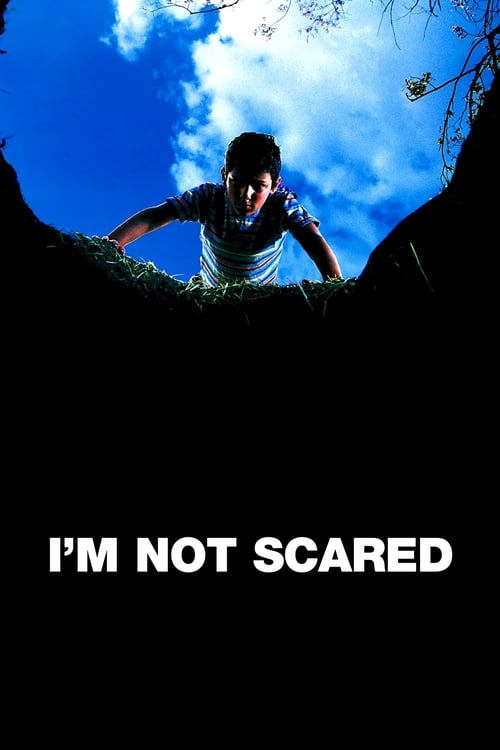
I'm Not Scared (2003)
Directed by Gabriele Salvatores
No — I'm Not Scared is not woke, scoring 0 out of 100 on our wokeness meter.
Gabriele Salvatores opens on wheat, heat, and children on bicycles, which is the correct order of operations for a film about a nine-year-old who finds a chained boy in a hole.
Consciousness Markers
The cast is composed of Italian and Spanish actors, with local non-professionals playing the children. This is natural, regionally-appropriate casting rather than any deliberate representation agenda.
There are no LGBTQ+ characters, themes, or subtext anywhere in the film.
A girl is nearly coerced into exposing herself and Michele's mother defies an attacker, but these are narrative beats about childhood cruelty and maternal instinct, not a feminist thesis.
The film concerns class and regional divides between northern and southern Italy, with no engagement of race or racial identity.
The scorched wheat fields and record heat are atmospheric texture for a childhood summer, not an environmentalist statement.
The kidnapping of a wealthy northern child for ransom touches on class resentment, but the film treats it as crime and moral horror rather than an eat-the-rich polemic.
No body-positivity themes are present.
The captive boy's trauma and disorientation are depicted as psychological damage, not framed through a neurodivergence lens.
The film is set during Italy's Years of Lead and loosely inspired by real kidnappings, but it dramatizes rather than revises or reinterprets history for ideological ends.
This is a tense coming-of-age thriller that shows rather than tells, with no preachy moralizing or direct-address messaging.
Why it received this score
Gabriele Salvatores opens on wheat, heat, and children on bicycles, which is the correct order of operations for a film about a nine-year-old who finds a chained boy in a hole. The setting is southern Italy in 1978, during the Years of Lead, and the camera observes the scorched fields with the patience of someone who has decided not to make a speech about them. The heat is heat. The countryside is countryside. Michele Amitrano's discovery is a discovery, and the film lets it stay one.
Consider what the film declines to do. A girl is nearly made to undress by a pack of boys, and the scene plays as childhood cruelty rather than a thesis on gender. Michele's mother shouts down a grown man who has struck her son, and her fury reads as maternal instinct, not doctrine. The kidnapping itself is a crime committed by neighbors who resent the wealth of Milan, and the film frames it as moral horror instead of an argument about redistribution. The captive Filippo is traumatized, not diagnosed. The cast is drawn from local non-professionals, which is regional authenticity, not a casting initiative.
That leaves craft. Italo Petriccione's cinematography won prizes, Giuseppe Cristiano had never acted before, and the whole enterprise sits comfortably in a tradition of Italian coming-of-age cinema that predates the current enthusiasm for instruction. The ledger is blank. We record it without complaint, though the evening did feel somewhat under-scheduled. Ninety percent on Rotten Tomatoes, which is the sort of figure that usually accompanies a message. Here it accompanies wheat, and a boy running across a field toward a father who is about to shoot him by accident. We sat through it, we took notes, and we found nothing to argue with. That is its own kind of rarity, and we note it with the weary respect it deserves.
THEMATIC TAGS: true_story, book_adaptation. The film is loosely inspired by the real kidnapping wave of the anni di piombo, and it adapts Niccolò Ammaniti's 2001 novel of the same name. It won no Academy Awards, spawned no sequels, remade nothing, and features no superheroes, unless we count a nine-year-old with a bicycle, which we do not.
{"thematic_tags": ["true_story", "book_adaptation"]}
Analysis generated by our Consciousness Algorithm


Synopsis
In a tiny community enclosed by wheat fields, the adults shelter indoors, while six children venture out on their bikes across the scorched, deserted countryside. Exploring a dilapidated and uninhabited farmhouse, nine-year-old Michele discovers a secret so momentous, so terrible, that he dares not tell anyone about it...
Questions about I'm Not Scared
Is I'm Not Scared woke?
No — I'm Not Scared is not woke, scoring 0 out of 100 on our wokeness meter. That earns it a verdict of Ultra Based.
Does I'm Not Scared have any woke elements?
No. All 10 markers score zero.
How does I'm Not Scared compare to other 2003 movies?
It ranks #131 of the 150 films from 2003 we've scored; their average is 12. The wokest is Mona Lisa Smile (60).
How is the Woke Score calculated?
An AI-assisted process researches the film and its reception, scores it 0–100 on ten markers, then combines those into one 0–100 Woke Score. It measures a specific set of 2020s cultural themes, not film quality.