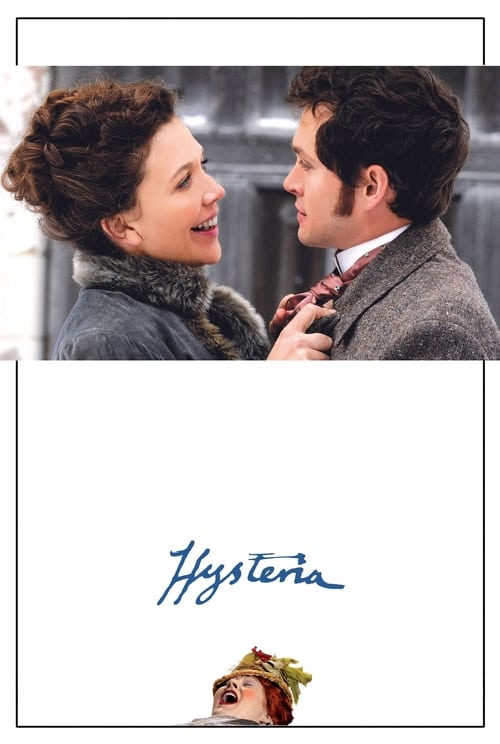
Hysteria (2011)
Directed by Tanya Wexler
No — Hysteria is not especially woke, scoring 28 out of 100 on our wokeness meter.
Two physicians in Victorian London massage their female patients into paroxysms and call it medicine, and the device that eventually spares their wrists becomes the film's modest hero.
Consciousness Markers
The film is centrally concerned with women's sexual health, the medical control of female bodies, and a feminist character who runs a settlement house and challenges Victorian patriarchal authority.
The trial speech and critiques of Victorian medical misogyny carry some lecturing energy, but the light romantic-comedy tone keeps it from becoming overtly preachy.
The film offers a fictionalized, feminist-inflected account of the vibrator's invention and the history of hysteria, based on a disputed historical thesis.
The cast is almost entirely white and conventional for a British period piece, though the film does center women in leading roles and has a female director.
Charlotte's settlement-house work and the film's mild critique of medical profiteering gesture at class inequality, but anti-capitalism is not a central concern.
There is no concrete LGBTQ+ theme or representation in the film's plot or research summary.
The film does not engage with racial themes or racial representation; its social critique is framed around gender and class.
There is no climate or environmental theme in the film.
The film destigmatizes female sexual pleasure, but it does not engage with modern body-positivity themes such as body image or size acceptance.
There is no neurodivergence theme or representation in the film.
Why it received this score
Two physicians in Victorian London massage their female patients into paroxysms and call it medicine, and the device that eventually spares their wrists becomes the film's modest hero. Hysteria arrived in 2011 with a wink, a period wardrobe, and a director, Tanya Wexler, who keeps the enterprise brisk and polite. The comedy is gentle. The history is shakier than the film cares to admit, resting on Rachel Maines' 1999 thesis about the vibrator's clinical origins, a claim later contested by historians who found the evidence thinner than advertised. The movie does not linger on the footnotes.
What it does linger on is gender. Maggie Gyllenhaal's Charlotte runs a settlement house in the East End, argues with her father, and treats the era's medical men as the smug custodians of a diagnosis invented to manage inconvenient women. The film is genuinely interested in female sexual health, in the way a society medicalized pleasure and called the result illness. Her arrest and trial give the third act its pulpit, and Mortimer's courtroom speech about hysteria being too common to be a disease lands with the sincerity of a lecture delivered from a comfortable distance. The tone stays light enough that the sermonizing never fully takes over.
The cast is white, British, and exactly what a 2011 costume picture would assemble, with women placed firmly at the center. Class gets a passing nod through Charlotte's charity work and a grumble about profiteering, but the film's concerns are gender first and everything else a distant second. It is a pleasant, well-mannered provocation, and it knows it.
Analysis generated by our Consciousness Algorithm


Synopsis
Two doctors in Victorian England use manual stimulation of female genitalia to cure their patients' ills, leading to the invention of the vibrator.
Questions about Hysteria
Is Hysteria woke?
No — Hysteria is not especially woke, scoring 28 out of 100 on our wokeness meter. That earns it a verdict of Based.
Does Hysteria have any woke elements?
2 of the 10 markers register at 30 or above, led by Feminist Agenda (70) and Lecture Energy (30). On Feminist Agenda: The film is centrally concerned with women's sexual health, the medical control of female bodies, and a feminist character who runs a settlement house and challenges Victorian patriarchal authority.
How does Hysteria compare to other 2011 movies?
It ranks #14 of the 245 films from 2011 we've scored; their average is 11. The wokest is Paul (68).
How is the Woke Score calculated?
An AI-assisted process researches the film and its reception, scores it 0–100 on ten markers, then combines those into one 0–100 Woke Score. It measures a specific set of 2020s cultural themes, not film quality.