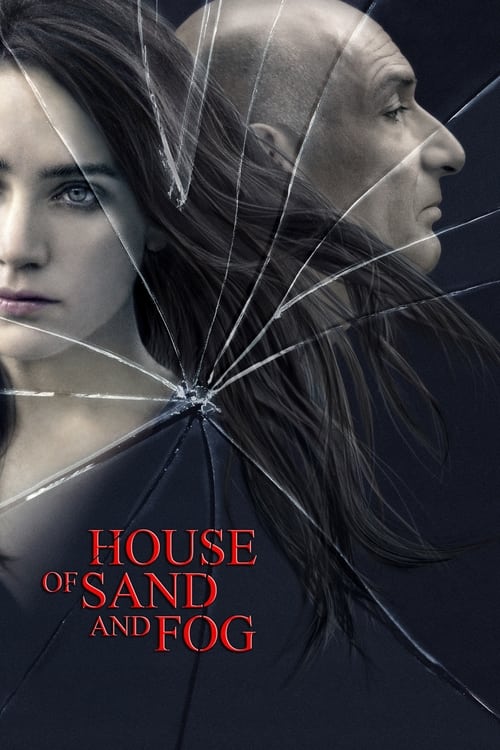
House of Sand and Fog (2003)
Directed by Vadim Perelman
No — House of Sand and Fog is not woke, scoring 19 out of 100 on our wokeness meter.
Vadim Perelman's 2003 adaptation of the Andre Dubus III novel arranges two decent people on a collision course over a California bungalow and lets the machinery of tragedy do its slow, grinding work.
Consciousness Markers
An Iranian immigrant family sits at the emotional center, played by authentically Iranian actors (Shohreh Aghdashloo, Jonathan Ahdout), though this casting is organic to the source novel rather than a diversity mandate.
The story dramatizes xenophobia and the immigrant experience in a post-9/11 frame, including Lester's explicitly xenophobic rage, though critics noted the film declines to interrogate the racism underpinning the conflict.
The film presents an escalating moral dilemma and tragedy without overt preaching, though its operatic fatalism carries a faint instructive weight.
Kathy is a female protagonist with agency and a sympathetic arc, but the film offers no feminist thesis or gendered critique.
Real estate speculation and county bureaucracy drive the plot, but the film is a moral tragedy rather than an eat-the-rich polemic.
No LGBTQ+ characters or themes of any kind appear in the film.
No environmental or climate themes are present.
No body positivity themes or messaging.
Kathy's addiction and recovery are depicted, but addiction is not framed as neurodivergence and no such themes are present.
No historical revisionism; the film is a contemporary fictional drama.
Why it received this score
Vadim Perelman's 2003 adaptation of the Andre Dubus III novel arranges two decent people on a collision course over a California bungalow and lets the machinery of tragedy do its slow, grinding work. The Behrani family, Iranian exiles clinging to the remnants of a dignified past, occupy the film's emotional center with an authenticity that feels earned. Shohreh Aghdashloo and Ben Kingsley perform the cultural specifics without apology or explanation. That the casting is faithful to the source novel is a matter of record, and we shall not belabor it.
The film's engagement with race is real but incomplete. Lester Burdon's climactic xenophobic rage gives the story a post-9/11 charge, and the Behranis' quiet humiliation at the hands of county bureaucracy dramatizes the immigrant experience with genuine weight. Critics at the time observed that the movie declines to examine the racism underpinning the whole fiasco, preferring operatic fatalism to social analysis. The result is a film that gestures toward cultural consciousness without committing to it.
Elsewhere the pickings are thin. Kathy is a woman with agency and a sympathetic arc, but no gendered thesis emerges. The county's mistake and the Behrani family's speculative renovation supply mild commentary on property and bureaucracy, though the film is a moral tragedy, not a polemic against wealth. There is no environmental messaging, no body positivity, no neurodivergent framing, no historical revisionism, and no LGBTQ content whatsoever. The film's instructive weight is faint, a whisper of sermonizing buried under all that doom. It ends as it must, with a policeman asking who owns the house. Nobody does.
Analysis generated by our Consciousness Algorithm


Synopsis
Behrani, an Iranian immigrant buys a California bungalow, thinking he can fix it up, sell it again, and make enough money to send his son to college. However, the house is the legal property of former drug addict Kathy. After losing the house in an unfair legal dispute with the county, she is left with nowhere to go. Wanting her house back, she hires a lawyer and befriends a police officer. Neither Kathy nor Behrani have broken the law, so they find themselves involved in a difficult moral dilemma.
Questions about House of Sand and Fog
Is House of Sand and Fog woke?
No — House of Sand and Fog is not woke, scoring 19 out of 100 on our wokeness meter. That earns it a verdict of Ultra Based.
Does House of Sand and Fog have any woke elements?
2 of the 10 markers register at 30 or above, led by Representation Casting (45) and Racial Consciousness (35). On Representation Casting: An Iranian immigrant family sits at the emotional center, played by authentically Iranian actors (Shohreh Aghdashloo, Jonathan Ahdout), though this casting is organic to the source novel rather than a diversity mandate.
How does House of Sand and Fog compare to other 2003 movies?
It ranks #28 of the 150 films from 2003 we've scored; their average is 12. The wokest is Mona Lisa Smile (60).
How is the Woke Score calculated?
An AI-assisted process researches the film and its reception, scores it 0–100 on ten markers, then combines those into one 0–100 Woke Score. It measures a specific set of 2020s cultural themes, not film quality.