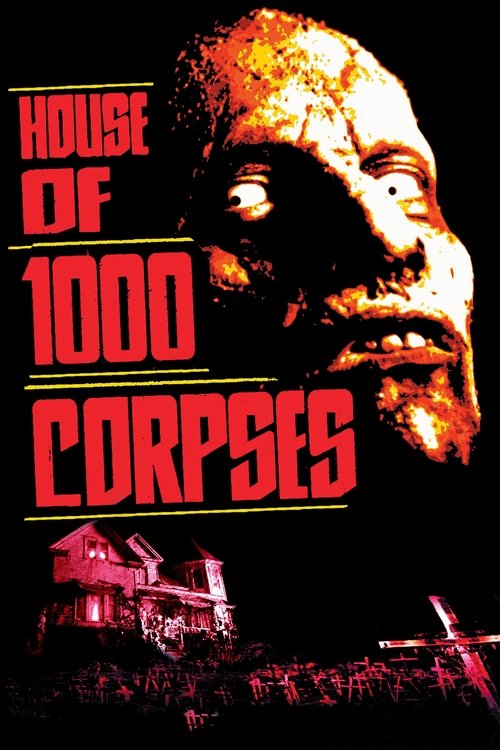
House of 1000 Corpses (2003)
Directed by Rob Zombie
No — House of 1000 Corpses is not woke, scoring 0 out of 100 on our wokeness meter.
Rob Zombie's directorial debut arrived in 2003 carrying the smell of a haunted-house attraction that escaped its lot.
Consciousness Markers
The cast is overwhelmingly white and assembled for genre effect rather than any deliberate inclusive or representative casting agenda.
There are no LGBTQ+ characters, relationships, or themes in the film.
Female characters exist mainly as victims, tormentors, or objects of horror spectacle; the film advances no feminist critique or agenda.
Race is not a thematic concern, and the film contains no racial consciousness or commentary.
Environmental themes or climate concerns are entirely absent.
The film has no economic critique or anti-capitalist message; its violence is sadistic and familial rather than class-based.
Deformity and bodily difference are used for shock and horror, not body-positive representation.
Mental illness and psychopathy appear as horror tropes, not as neurodivergent identity or advocacy.
The 1977 setting is atmospheric period detail, not a revisionist historical argument.
The film is a campy, sadistic horror ride with no preachy or lecture-like messaging.
Why it received this score
Rob Zombie's directorial debut arrived in 2003 carrying the smell of a haunted-house attraction that escaped its lot. Universal balked at the rating and shelved it. Lions Gate recut it and released it. Critics sharpened their knives. The film then did the one thing nobody in the room expected, which was to find a congregation. Two decades on, the Firefly family sits in the horror canon beside the Sawyer clan it so openly imitates.
We have combed the picture for contemporary moral instruction and come up empty. The cast is white and assembled for genre effect. Women exist as victims, tormentors, and spectacle. Race never enters the frame as a concern. The violence is domestic and sadistic, with no economic grievance underneath it to satisfy the class-conscious viewer. Tiny's deformities are played for shock, not dignity. Psychopathy is a plot device, not an identity to be affirmed. The 1977 setting is period dressing, offering no argument about the past. Nobody at any point explains the correct way to live.
The film's only politics are aesthetic. Zombie loves the grime of 1970s drive-in horror, the ranting cadence of the Manson tapes, and the private joke of naming his killers after Groucho Marx characters. Captain Spaulding sells fried chicken and murder to tourists. That is the whole thesis. It asks the audience to endure, and to cheer a little, which Zombie later admitted was the point.
A picture this dedicated to unpleasantness leaves the classifier with nothing to classify. Zero, and content there.
Analysis generated by our Consciousness Algorithm
Part of


Synopsis
Two teenage couples traveling across the backwoods of Texas searching for urban legends of serial killers end up as prisoners of a bizarre and sadistic backwater family of serial killers.
Questions about House of 1000 Corpses
Is House of 1000 Corpses woke?
No — House of 1000 Corpses is not woke, scoring 0 out of 100 on our wokeness meter. That earns it a verdict of Ultra Based.
Does House of 1000 Corpses have any woke elements?
No. All 10 markers score zero.
How does House of 1000 Corpses compare to other 2003 movies?
It ranks #131 of the 150 films from 2003 we've scored; their average is 12. The wokest is Mona Lisa Smile (60).
Is House of 1000 Corpses the most woke Firefly movie?
No. It ranks #3 of the 3 Firefly films we've scored; the wokest is 3 from Hell (4).