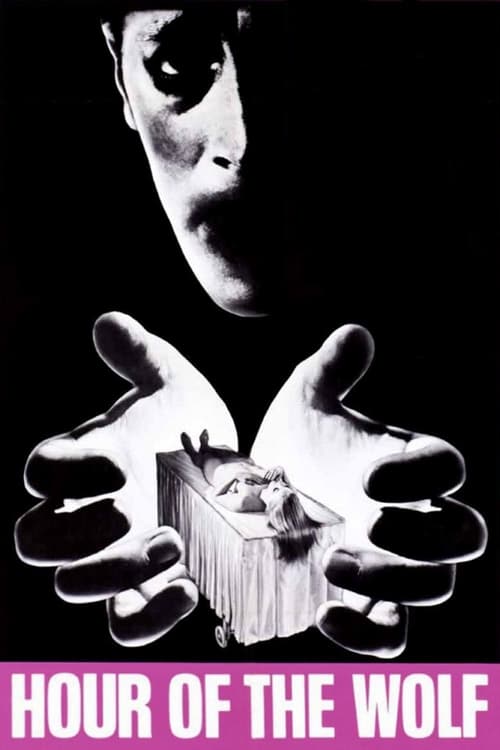
Hour of the Wolf (1968)
Directed by Ingmar Bergman
No — Hour of the Wolf is not woke, scoring 6 out of 100 on our wokeness meter.
Hour of the Wolf arrives from 1968, which is to say from a time before the current vocabulary existed, and Ingmar Bergman's island nightmare of an artist coming apart has aged into something almost innocent.
Consciousness Markers
The castle aristocrats are read by some critics as vampire-like figures who consume the artist, hinting at a class reading, but the film treats them as manifestations of Johan's psyche rather than as a systemic economic critique.
Scholars note a subtext of repressed homosexuality and a cross-dressing scene where Lindhorst applies cosmetics and dresses Johan in a silk robe, but sexuality is framed as a symptom of disintegration rather than as identity or representation.
Alma is given a framing narration and considerable interiority, and the film probes the couple's power imbalance, but she is written as a devoted, self-sacrificing wife rather than as any vehicle for a feminist argument.
Bergman's film is thematically dense but deliberately ambiguous, surreal and unresolved; it preaches nothing and offers no moral instruction.
The cast is entirely Scandinavian and reflects Bergman's stock company of the period; there is no deliberate diverse or inclusive casting.
The film is set on a remote island with an all-white European cast and engages no racial themes whatsoever.
No environmental or climate content; the island setting is purely a psychological and folkloric backdrop.
Veronica's naked body appears in a scene of horror and mockery; there is no body-positive framing.
The film concerns an artist's insanity, but it is treated as Gothic disintegration and horror, not as modern neurodivergence in any affirmative sense.
The narrative is a fictional psychological fable with no historical revisionism of any kind.
Why it received this score
Hour of the Wolf arrives from 1968, which is to say from a time before the current vocabulary existed, and Ingmar Bergman's island nightmare of an artist coming apart has aged into something almost innocent. Max von Sydow's Johan Borg and Liv Ullmann's Alma occupy a remote German island, a castle full of aristocratic grotesques, and a marriage under siege from within. The cast is the director's familiar Scandinavian repertory, assembled for reasons of temperament and availability, not for any statement about who ought to be on screen. There is no argument here about the world. There is only a man losing his grip on it.
Faint signals do surface for the diligent. Alma narrates and is granted real interiority, and the film studies the imbalance between a self-absorbed husband and the wife who stays awake beside him, though she remains a devoted and self-sacrificing figure with no thesis attached to her suffering. Lindhorst powders Johan's face, dresses him in silk, and the scholars have had decades of quiet fun with what that means, but the film treats such confusion as a symptom of collapse, not as identity to be affirmed. The castle's aristocrats consume the artist in a manner that invites a class reading, yet they are figments of a single man's loathing, not a system.
The film's refusals are instructive. It engages no racial questions, no environmental anxieties, no affirmative relationship with the body, and its insanity is Gothic affliction, not a category of identity. Veronica's naked body is presented for horror and mockery, not celebration. Bergman, being Bergman, explains nothing and instructs no one, leaving the demons unresolved and the audience to sit with the ambiguity. A serious film, certainly. A morally improving one, arguably. But it keeps its politics to itself, and the ledger stays mostly empty.
Analysis generated by our Consciousness Algorithm


Synopsis
While vacationing on a remote German island with his younger pregnant wife, an artist has an emotional breakdown while confronting his repressed desires.
Questions about Hour of the Wolf
Is Hour of the Wolf woke?
No — Hour of the Wolf is not woke, scoring 6 out of 100 on our wokeness meter. That earns it a verdict of Ultra Based.
Does Hour of the Wolf have any woke elements?
Very few. None of the 10 markers reaches 30, the level where a marker counts as present; the highest is Eat the Rich at 12.
How does Hour of the Wolf compare to other 1968 movies?
It ranks #9 of the 23 films from 1968 we've scored; their average is 7. The wokest is Night of the Living Dead (27).
How is the Woke Score calculated?
An AI-assisted process researches the film and its reception, scores it 0–100 on ten markers, then combines those into one 0–100 Woke Score. It measures a specific set of 2020s cultural themes, not film quality.