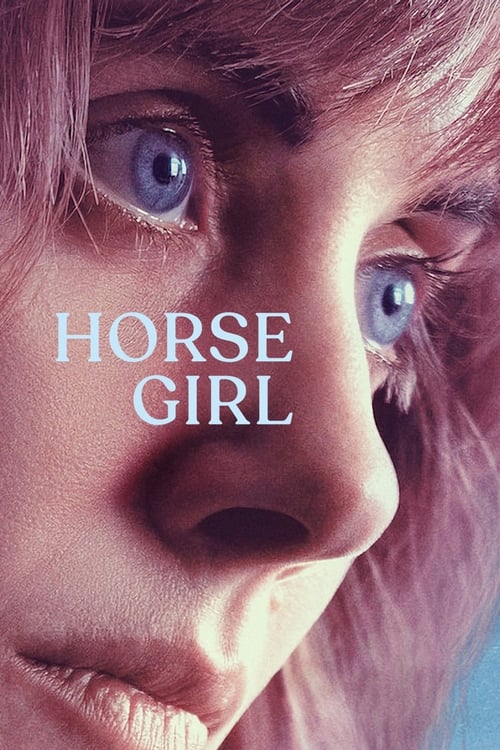
Horse Girl (2020)
Directed by Jeff Baena
No — Horse Girl is not woke, scoring 11 out of 100 on our wokeness meter.
Horse Girl arrived at Sundance in January 2020 and landed on Netflix a week and a half later, a small psychological drama from Jeff Baena and Alison Brie, who wrote it together while Brie took the lead.
Consciousness Markers
The film is a sustained, empathetic depiction of a woman experiencing delusions, sleepwalking, and a family history of mental illness, though it frames this as psychological drama rather than activist neurodivergence advocacy.
The cast is predominantly white with a few supporting minority players (John Ortiz), but the film makes no particular effort at diverse or comment-worthy casting.
The film centers on a female protagonist and was co-written by its star, but it is a psychological character study rather than a work advancing any feminist thesis.
The film is deliberately ambiguous and refuses to moralize or deliver a message, offering almost no didactic energy.
No LGBTQ+ characters, themes, or subtext appear anywhere in the narrative.
Race is entirely absent as a theme; the story is a white, suburban character piece with no racial commentary.
No environmental or climate themes are present.
The film contains no economic critique or class-based messaging.
Body image and body-positivity themes are not addressed.
The film engages no historical subject matter and revises nothing.
Why it received this score
Horse Girl arrived at Sundance in January 2020 and landed on Netflix a week and a half later, a small psychological drama from Jeff Baena and Alison Brie, who wrote it together while Brie took the lead. Sarah works at a crafts store, keeps a horse, watches supernatural crime shows, and lives with a roommate who means well. Her mother died by suicide. Then the nosebleeds start, the missing time, the dreams of a white room, and a growing conviction that she is a clone, or an abductee, or both. The film declines to settle the question, which is either its courage or its evasion depending on the hour.
Brie plays the unraveling with a commitment that borders on the clinical, and the film treats her delusions with patience instead of pity. This is the closest the movie comes to a social thesis, and it is a modest one: a portrait of mental illness rendered with empathy and without a pamphlet. The cast is white and suburban, the concerns are interior, and nobody stops the plot to explain what it all means. There is no economic critique, no environmental sermon, no historical revision, no identity arithmetic. The camera watches a woman fall apart and asks us to sit with it.
Which leaves us with a film of very low cultural temperature. It is sincere, strange, and stubbornly unresolved, and it refuses the moralizing that would make it legible to a committee. Whether Sarah ascends to a spaceship or simply stops taking her medication is left to us, and the ambiguity is the point. A quiet character piece about a woman, a horse, and a possible abduction. It will not be teaching anyone anything, and it seems at peace with that.
Analysis generated by our Consciousness Algorithm


Synopsis
A socially awkward woman with a fondness for arts and crafts, horses, and supernatural crime shows finds her increasingly lucid dreams trickling into her waking life.
Questions about Horse Girl
Is Horse Girl woke?
No — Horse Girl is not woke, scoring 11 out of 100 on our wokeness meter. That earns it a verdict of Ultra Based.
Does Horse Girl have any woke elements?
1 of the 10 markers register at 30 or above, led by Neurodivergence (30). On Neurodivergence: The film is a sustained, empathetic depiction of a woman experiencing delusions, sleepwalking, and a family history of mental illness, though it frames this as psychological drama rather than activist neurodivergence advocacy.
How does Horse Girl compare to other 2020 movies?
It ranks #136 of the 227 films from 2020 we've scored; their average is 21. The wokest is One Night in Miami... (83).
How is the Woke Score calculated?
An AI-assisted process researches the film and its reception, scores it 0–100 on ten markers, then combines those into one 0–100 Woke Score. It measures a specific set of 2020s cultural themes, not film quality.