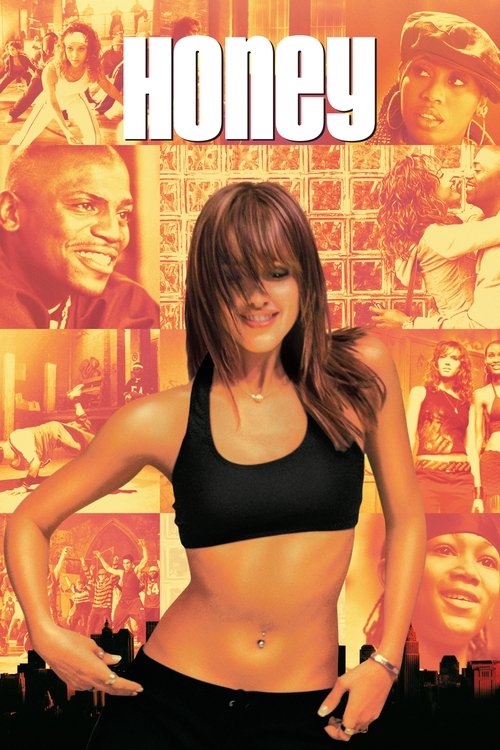
Honey (2003)
Directed by Bille Woodruff
No — Honey is not especially woke, scoring 23 out of 100 on our wokeness meter.
Honey arrives from 2003, a year when a dance film could still be assembled from a star, a soundtrack, and a montage, and nobody demanded an apology for it.
Consciousness Markers
The cast is led by a Latina (Jessica Alba) and features a predominantly Black ensemble (Mekhi Phifer, Romeo Miller, Joy Bryant) plus numerous hip-hop artists, though this diversity is organic to a Harlem-set hip-hop dance film rather than a deliberate modern casting statement.
Honey rejects a director's sexual advances, calls out his hypocrisy, and insists on earning her studio 'on her own merits,' giving the film a clear female-empowerment spine, though it remains a conventional star vehicle rather than an ideological statement.
The film is set in Harlem and centers Black and Latino youth and community mentorship, but it never explicitly interrogates race or racial justice, treating the setting as backdrop rather than message.
The film carries a light moral about community, mentorship, and self-respect, but critics noted it avoids being 'overly preachy,' keeping its messaging soft and secondary to the dance numbers.
There is a mild theme of choosing happiness and community over fame and money, and Honey refuses the director's offer to buy her studio, but this is personal integrity rather than an anti-capitalist critique.
No LGBTQ+ characters, themes, or subtext appear anywhere in the film.
No environmental or climate themes are present.
No body-positivity themes or messaging are present.
No neurodivergent characters or themes are depicted.
The film makes no historical claims and does not revise any historical narrative.
Why it received this score
Honey arrives from 2003, a year when a dance film could still be assembled from a star, a soundtrack, and a montage, and nobody demanded an apology for it. Jessica Alba plays the title character, a bartender and record store clerk who teaches at a Harlem community center and dreams of choreographing hip-hop videos. The film is a star vehicle in the oldest sense, reportedly written for Aaliyah before her death, then handed to Alba, and it carries that slightly borrowed quality throughout. The dance numbers are energetic. The plot is a straight line.
On the matter of representation, the film is diverse in a way that feels incidental: a Latina lead surrounded by a predominantly Black cast, with Missy Elliott and a parade of R&B cameos wandering through. Nobody announces this. It is simply who lives in the neighborhood. The feminist current is more deliberate. Honey slaps a leering director, rejects his offer to purchase her a studio, and declares she will earn it on her own merits. That is empowerment as plot mechanics, not as sermon. A faint gesture toward choosing community over money surfaces near the end, though the film declines to indict capital in any serious way. It wants Honey to own a building, not to abolish the market. Elsewhere the ledger is bare: no queer presence, no body politics, no neurodivergence, no climate anxiety, no revision of history.
The moral arrives gently, about mentorship and self-respect, and critics at the time agreed it avoided preaching. A. O. Scott found the wholesome side of hip-hop without the lecturing, which is roughly the highest compliment available to a film like this. What remains is a modest, likable, thoroughly formulaic picture that launched three sequels and a durable small-screen afterlife. It asks very little of its audience and gives back roughly the same. That is not a crime. It is a business model.
Analysis generated by our Consciousness Algorithm
Part of


Synopsis
Honey Daniels dreams of making a name for herself as a hip-hop choreographer. When she's not busy hitting downtown clubs with her friends, she teaches dance classes at a nearby community center in Harlem, N.Y., as a way to keep kids off the streets. Honey thinks she's hit the jackpot when she meets a hotshot director casts her in one of his music videos. But, when he starts demanding sexual favors from her, Honey makes a decision that will change her life.
Questions about Honey
Is Honey woke?
No — Honey is not especially woke, scoring 23 out of 100 on our wokeness meter. That earns it a verdict of Based.
Does Honey have any woke elements?
2 of the 10 markers register at 30 or above, led by Feminist Agenda (45) and Representation Casting (45). On Feminist Agenda: Honey rejects a director's sexual advances, calls out his hypocrisy, and insists on earning her studio 'on her own merits,' giving the film a clear female-empowerment spine, though it remains a conventional star vehicle rather than an ideological statement.
How does Honey compare to other 2003 movies?
It ranks #21 of the 150 films from 2003 we've scored; their average is 12. The wokest is Mona Lisa Smile (60).
How is the Woke Score calculated?
An AI-assisted process researches the film and its reception, scores it 0–100 on ten markers, then combines those into one 0–100 Woke Score. It measures a specific set of 2020s cultural themes, not film quality.