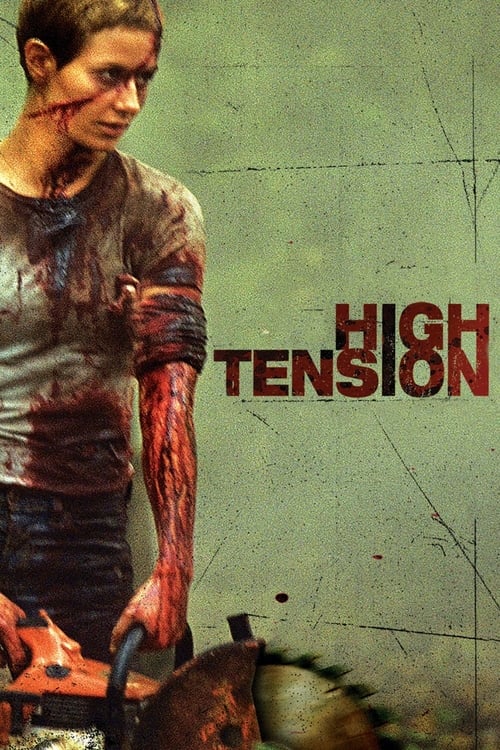
High Tension (2003)
Directed by Alexandre Aja
No — High Tension is not woke, scoring 10 out of 100 on our wokeness meter.
High Tension arrives from the grimy end of the New French Extremity, a 2003 slasher in which Alexandre Aja demonstrates that a rural farmhouse, a straight razor, and a truck can accomplish nearly everything a moral lecture cannot.
Consciousness Markers
The twist hinges on Marie's obsessive same-sex desire for Alex, complete with a forced kiss, but it deploys the regressive 'predatory lesbian' trope rather than affirming representation.
Two women anchor the film and Alex survives as a resourceful final girl, but this is standard slasher machinery rather than a feminist agenda.
A French-Romanian production with a predominantly European cast; the two female leads are incidental to the story rather than a deliberate diversity statement.
No racial themes or commentary of any kind.
No environmental themes.
No economic or class critique; the violence is purely psychological and personal.
No body-positivity themes; the film is instead a Grand Guignol of dismemberment.
Marie's psychosis is framed as monstrous villainy, not as neurodivergent identity or advocacy.
No historical subject matter to revise.
The film offers no moral instruction or messaging; it is a stripped-down exercise in gore and suspense.
Why it received this score
High Tension arrives from the grimy end of the New French Extremity, a 2003 slasher in which Alexandre Aja demonstrates that a rural farmhouse, a straight razor, and a truck can accomplish nearly everything a moral lecture cannot. The film opens with two young women, Marie and Alex, driving to a secluded family home for a weekend of study. What follows is a sustained act of butchery: decapitation by bookcase, a throat opened with a razor, a boy running into a cornfield, a concrete saw at the end of it all. There is no cause here, no system to indict, no planet to save. The violence is intimate, psychological, and entirely without a thesis.
Then comes the twist, and with it the film's only brush with contemporary social sensibility, delivered badly. Marie is revealed as the killer, a delusional woman whose obsession with Alex has curdled into slaughter. The revelation leans on the predatory lesbian, a trope so old it predates the razor. A forced kiss, a demand to be loved, a crowbar driven into the chest. This is not affirmation. It is pathology dressed as desire, and the film treats it as a monster to be chained to a hospital bed. Alex survives as a resourceful final girl, which is the standard furniture of the genre and nothing more.
Beyond this, the ledger is blank. There is no racial commentary, no environmental sermon, no class critique, no body-positive rejoinder, no advocacy for the neurodivergent, no history to revise, and no lecture to deliver. Marie's psychosis is framed as villainy, not identity. The film's only instruction is anatomical. It wants us to flinch, and it succeeds. A sommelier of social consciousness would find the cellar nearly empty here. What remains is craft, gore, and a certain grim discipline.
Analysis generated by our Consciousness Algorithm


Synopsis
Best friends Marie and Alexia decide to spend a quiet weekend at Alexia's parents' secluded farmhouse. But on the night of their arrival, the girls' idyllic getaway turns into an endless night of horror.
Questions about High Tension
Is High Tension woke?
No — High Tension is not woke, scoring 10 out of 100 on our wokeness meter. That earns it a verdict of Ultra Based.
Does High Tension have any woke elements?
1 of the 10 markers register at 30 or above, led by LGBTQ+ Themes (30). On LGBTQ+ Themes: The twist hinges on Marie's obsessive same-sex desire for Alex, complete with a forced kiss, but it deploys the regressive 'predatory lesbian' trope rather than affirming representation.
How does High Tension compare to other 2003 movies?
It ranks #59 of the 150 films from 2003 we've scored; their average is 12. The wokest is Mona Lisa Smile (60).
How is the Woke Score calculated?
An AI-assisted process researches the film and its reception, scores it 0–100 on ten markers, then combines those into one 0–100 Woke Score. It measures a specific set of 2020s cultural themes, not film quality.