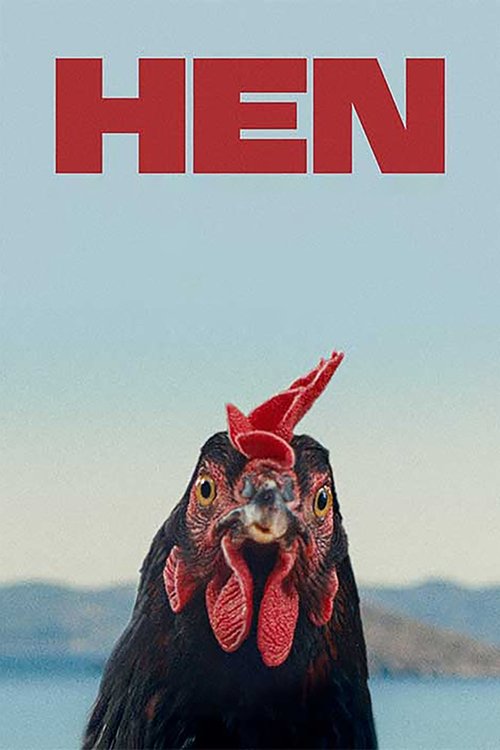
Hen (2026)
Directed by György Pálfi
No — Hen is not especially woke, scoring 32 out of 100 on our wokeness meter.
György Pálfi's Hen arrives as a film about a chicken that is also, inescapably, a film about everything else.
Consciousness Markers
The film constructs a consistent structural critique of capitalist extraction: factory farming as commodification of animal life, a greedy restaurant owner who views the hen's eggs as property, and a human-smuggling operation framed as just another profit-driven enterprise. The critique is embedded in the premise.
The hen's central drive to protect her eggs is explicitly framed by critics as an allegory for bodily autonomy and motherhood under oppressive economic structures. The film does not wave a banner, but the allegory is deliberate and sustained.
The parallel drawn between factory-farmed chickens and undocumented migrants crammed into smugglers' holds is real and intentional, but the film frames exploitation as a systemic and economic condition rather than a racially conscious argument in the modern activist sense.
The factory farming opening sequence is a sustained, uncomfortable argument delivered via close-up rather than dialogue. Critics uniformly praise the film for avoiding overt preachiness, but the camera's low-angle perspective functions as a silent editorial.
The cast reflects the film's Greek setting and international co-production context organically. There is no evidence of deliberate diversity casting as a progressive statement; the ensemble exists because the story is set in Greece.
No LGBTQ+ themes, characters, or framing appear anywhere in the film or its critical reception.
No climate change themes, environmental activism, or ecological messaging appear in the film or its reception.
No body positivity themes are present. The film's engagement with bodies is existential and unsentimental, not affirmational.
No neurodivergence themes or characters appear in any reviewed material.
The film is a contemporary fable with no historical revisionism or reframing of past events.
Why it received this score
György Pálfi's Hen arrives as a film about a chicken that is also, inescapably, a film about everything else. A Hungarian auteur, having found his domestic funding options foreclosed by political circumstance, decamps to Greece and makes a fable in which a hen escapes an industrial farm and wanders into a seaside taverna that doubles as a node in a human-smuggling operation. The structural rhyme between caged animals and caged people is not subtle. It is not meant to be. Pálfi simply refuses to explain it to you, which is the closest the film comes to good manners.
The anti-capitalist undercurrents run through the film's architecture rather than its dialogue. The greedy restaurant owner who covets the hen's eggs is not coded as a villain in any theatrical sense; he is simply a man who has learned to treat living things as inventory. The smugglers operate on the same logic. The factory farm that opens the film operates on the same logic. The film has one argument and it makes it in three registers simultaneously, which is either economical or relentless depending on your tolerance for thematic consistency. The bodily autonomy reading, foregrounded by critics who noted the egg-laying sequence as an act of non-consensual extraction, gives the feminist allegory enough weight to register without tipping into a posture. The hen, for her part, does not appear to be making a political statement. She is simply trying to keep her eggs.
What keeps Hen from collapsing under its own allegorical cargo is the decision to use eight trained live chickens and no CGI, a choice that functions as both ethical commitment and formal discipline. You cannot sentimentalize an animal that is genuinely, physically present. The film's social consciousness is real and its targets are legitimate, but it earns its seriousness by staying at ground level, literally, and letting the audience do the uncomfortable work of drawing the lines upward. A 100% score on Rotten Tomatoes for a film about a hen navigating a criminal enterprise is the kind of cultural data point that resists easy interpretation. We file it and move on.
Analysis generated by our Consciousness Algorithm
Synopsis
Escaping from a chicken farm, a hen finds refuge in the courtyard of a crumbling restaurant. There, she discovers love, confronts the pecking order, and fights to protect her eggs from a greedy owner. Her droll yet touching quest for motherhood mirrors the messy compromises and silent struggles of human lives.
Questions about Hen
Is Hen woke?
No — Hen is not especially woke, scoring 32 out of 100 on our wokeness meter. That earns it a verdict of Based.
Does Hen have any woke elements?
2 of the 10 markers register at 30 or above, led by Eat the Rich (40) and Feminist Agenda (35). On Eat the Rich: The film constructs a consistent structural critique of capitalist extraction: factory farming as commodification of animal life, a greedy restaurant owner who views the hen's eggs as property, and a human-smuggling operation framed as just another profit-driven enterprise.
How does Hen compare to other 2026 movies?
It ranks #223 of the 800 films from 2026 we've scored; their average is 23. The wokest is Between Us (89).
How is the Woke Score calculated?
An AI-assisted process researches the film and its reception, scores it 0–100 on ten markers, then combines those into one 0–100 Woke Score. It measures a specific set of 2020s cultural themes, not film quality.