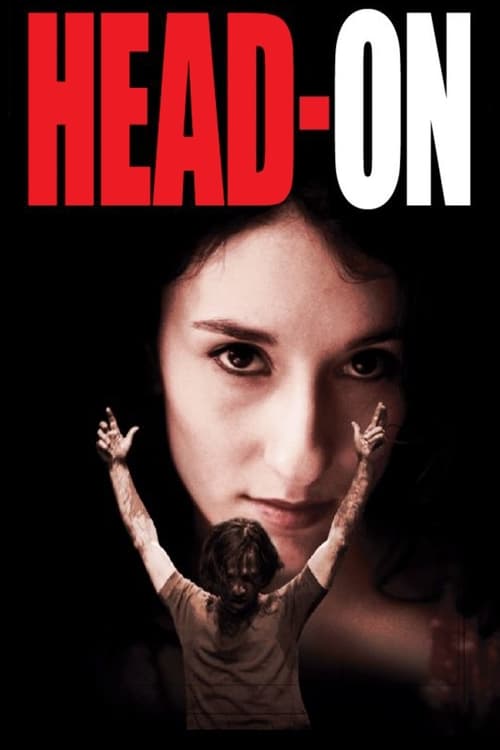
Head-On (2004)
Directed by Fatih Akin
No — Head-On is not woke, scoring 17 out of 100 on our wokeness meter.
Fatih Akin's Head-On arrives from 2004, a decade before the culture decided that every film must double as a position paper.
Consciousness Markers
The film authentically centers Turkish-German immigrant characters and features a predominantly Turkish-German cast, but this representation is organic to its story rather than a modern diversity-casting initiative.
Sibel rebels against her restrictive and abusive male relatives and seeks sexual autonomy, but the film is a tragic character drama rather than a feminist polemic.
The film explores Turkish-German immigrant identity and cultural conflict, but it does not frame these issues through modern racial-justice consciousness or systemic-racism critique.
The film is raw, character-driven, and avoids preachy or didactic messaging.
There are no LGBTQ+ themes, characters, or subtext in the film.
There is no environmental or climate-related content in the film.
The film does not engage with anti-capitalist or eat-the-rich themes.
There is no body-positivity messaging or related thematic content.
The film depicts addiction, suicide attempts, and mental distress, but these are not framed as neurodivergence in the modern sense.
The film is a fictional contemporary drama and does not revise or reinterpret historical events.
Why it received this score
Fatih Akin's Head-On arrives from 2004, a decade before the culture decided that every film must double as a position paper. It follows Cahit, a Turkish-German widower pickling himself in cocaine and alcohol, and Sibel, a young woman who proposes a marriage of convenience to escape relatives who broke her nose for holding a man's hand. The arrangement curdles into love, then a killing, then prison, then a bleak Istanbul. This is a tragedy about two people colliding, not a thesis about anything.
Representation here is organic. The cast is predominantly Turkish-German because the story lives inside that community, not because a spreadsheet demanded it. Sibel fights the men who control her and claims her own sexual autonomy, gestures a modern marketing department would dress up as empowerment. Akin treats them as desperation. The film watches immigrant life caught between the traditional and the modern without converting lived friction into a sermon about systemic injustice. Identity is the texture, not the argument.
The cupboard is otherwise bare. No queer threads. No climate anxiety. No eat-the-rich posturing, no body-positivity messaging, no clinical vocabulary for the addiction and self-harm on display. Grief and addiction are rendered as human wreckage, never as a diagnosis to be celebrated or pathologized in the current fashion. History goes unrevised, there being no history to revise. The film trusts its audience to feel something without being told what to feel. It is raw, unkempt, and entirely uninterested in approving of itself. A rare specimen, and a quiet rebuke to the age that followed it.
Analysis generated by our Consciousness Algorithm

Synopsis
With the intention to break free from the strict familial restrictions, a suicidal young woman sets up a marriage of convenience with a forty-year-old addict, an act that will lead to an outburst of envious love.
Questions about Head-On
Is Head-On woke?
No — Head-On is not woke, scoring 17 out of 100 on our wokeness meter. That earns it a verdict of Ultra Based.
Does Head-On have any woke elements?
2 of the 10 markers register at 30 or above, led by Feminist Agenda (35) and Representation Casting (35). On Feminist Agenda: Sibel rebels against her restrictive and abusive male relatives and seeks sexual autonomy, but the film is a tragic character drama rather than a feminist polemic.
How does Head-On compare to other 2004 movies?
It ranks #39 of the 178 films from 2004 we've scored; their average is 12. The wokest is Tropical Malady (62).
How is the Woke Score calculated?
An AI-assisted process researches the film and its reception, scores it 0–100 on ten markers, then combines those into one 0–100 Woke Score. It measures a specific set of 2020s cultural themes, not film quality.