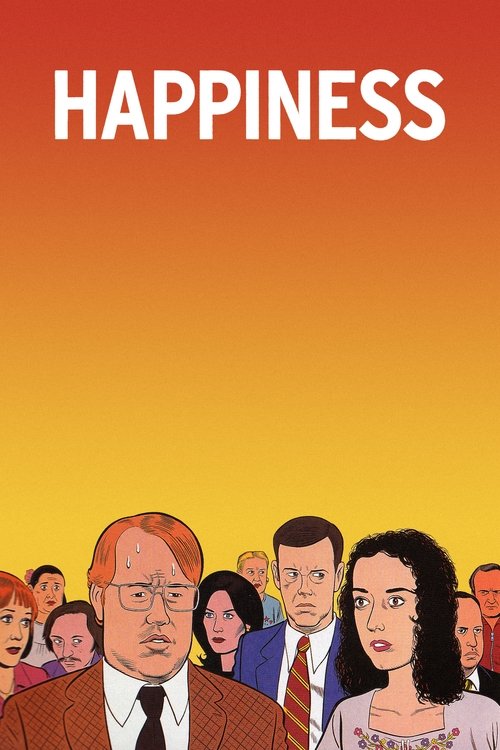
Happiness (1998)
Directed by Todd Solondz
No — Happiness is not woke, scoring 5 out of 100 on our wokeness meter.
Todd Solondz's Happiness (1998) is a black comedy of suburban New Jersey misery, assembled from pedophilia, loneliness, obscene phone calls, and the quiet desperation of people who mistake comfort for joy.
Consciousness Markers
Solondz is a provocateur rather than a preacher; the film confronts depravity without moralizing or delivering an explicit message to the audience.
Three sisters anchor the narrative, but the film treats their lives as grotesque satire rather than advancing any feminist thesis.
The film skewers upper-middle-class suburban complacency and consumer comfort, but offers no economic critique or 'eat the rich' framing.
The ensemble is overwhelmingly white suburban New Jersey; a few Russian immigrant characters appear as natural story elements rather than as deliberate representational casting.
Immigrant students and a Russian taxi driver figure in Joy's storyline, but race is never examined or commented upon as a social issue.
No LGBTQ+ characters or themes appear anywhere in the film.
No environmental or climate themes whatsoever.
Camryn Manheim's character exists without any body-positivity commentary; the film makes no statement on body image.
Joy is characterized as sensitive and adrift, but no neurodivergent identity or framing is present.
The film is a contemporary fictional satire with no historical subject matter to revise.
Why it received this score
Todd Solondz's Happiness (1998) is a black comedy of suburban New Jersey misery, assembled from pedophilia, loneliness, obscene phone calls, and the quiet desperation of people who mistake comfort for joy. The Criterion Collection has since granted it respectability, but the film itself remains hostile to respectability. Its ensemble is overwhelmingly white, and the few immigrant characters who drift through the frame exist as texture, not as representational statements. There are no LGBTQ themes. The film's gaze is cruel and level, and it does not seek to correct anyone. In its place is a grim curiosity about what people will do when no one is watching.
Three sisters anchor the narrative, yet the film treats their lives as grotesque satire instead of feminist argument. Camryn Manheim's character exists without any body-image commentary. Joy's sensitivity is not framed as neurodivergence. The Russian students and the taxi driver in her story are plot devices, not occasions for racial analysis. Climate concerns are absent. The film does skewer upper-middle-class complacency, but it offers no economic critique and no call to eat the rich. Its target is human weakness, not capital.
Lecture energy is minimal. Solondz is a provocateur, not a preacher. He confronts depravity without moralizing, which is why the film was refused by Sundance, dropped by October Films, and released unrated. A viewer looking for contemporary social instruction will find almost none. History is not revised because history is not its subject. That is not a failure of nerve. It is a different kind of nerve. Happiness remains a time capsule of 1998 transgression, indifferent to the vocabulary that later audiences might bring to it.
Analysis generated by our Consciousness Algorithm
Synopsis
The lives of several individuals intertwine as they go about their lives in their own unique ways, engaging in acts which society as a whole might find disturbing in a desperate search for human connection.
Questions about Happiness
Is Happiness woke?
No — Happiness is not woke, scoring 5 out of 100 on our wokeness meter. That earns it a verdict of Ultra Based.
Does Happiness have any woke elements?
Very few. None of the 10 markers reaches 30, the level where a marker counts as present; the highest is Lecture Energy at 12.
How does Happiness compare to other 1998 movies?
It ranks #82 of the 118 films from 1998 we've scored; their average is 12. The wokest is Show Me Love (60).
How is the Woke Score calculated?
An AI-assisted process researches the film and its reception, scores it 0–100 on ten markers, then combines those into one 0–100 Woke Score. It measures a specific set of 2020s cultural themes, not film quality.