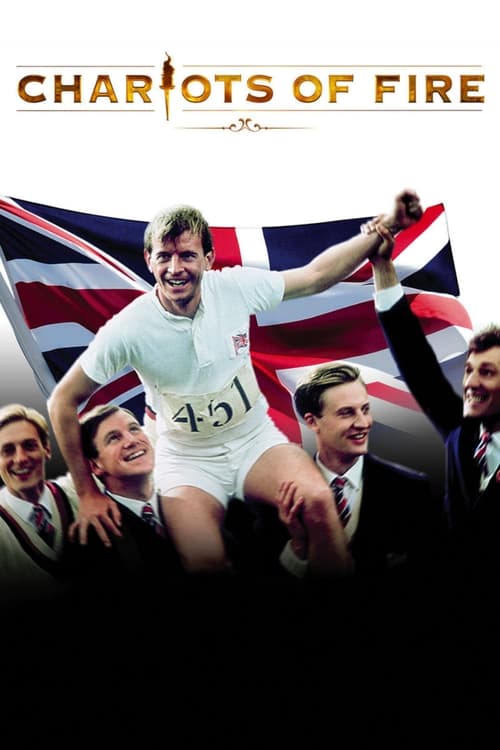
Chariots of Fire (1981)
Directed by Hugh Hudson
No · Ultra Based
How we score movies →Consciousness Markers
The film features protagonists of different religious and class backgrounds, acknowledging real social divisions. However, the cast is predominantly white and male, with female characters relegated to supporting romantic roles without independent agency.
Some class consciousness appears in Abrahams' struggle against upper-class exclusion and institutional bias. However, the film celebrates individual merit overcoming barriers rather than critiquing systemic capitalism itself.
The film acknowledges antisemitism as a real historical obstacle for Harold Abrahams. This is serious treatment of prejudice, but operates as historical documentation rather than modern progressive consciousness.
The film contains earnest moralizing about faith, perseverance, and individual excellence, but trusts viewers to absorb these themes through narrative and visual storytelling rather than explicit preachiness.
Minimal feminist content. Women appear as love interests and emotional support rather than as characters with their own ambitions, arcs, or agency within the narrative.
The film presents a conventional historical narrative grounded in the actual 1924 Olympics. It does not attempt to deconstruct or reframe historical events through modern critical lenses.
No LGBTQ+ representation or themes present. The film is entirely heteronormative in its depiction of relationships and desire.
No climate-related themes or environmental consciousness present in the film.
Athletes are depicted as idealized specimens. No commentary on body diversity, disability, or acceptance of non-athletic physiques.
No representation or thematic engagement with neurodivergence or cognitive diversity.


Synopsis
In the class-obsessed and religiously divided UK of the early 1920s, two determined young runners train for the 1924 Paris Olympics. Eric Liddell, a devout Christian born to Scottish missionaries in China, sees running as part of his worship of God's glory and refuses to train or compete on the Sabbath. Harold Abrahams overcomes anti-Semitism and class bias, but neglects his beloved sweetheart in his single-minded quest.
Why it received this score
Chariots of Fire stands as a period piece entirely innocent of contemporary progressive sensibilities, which is to say it was made in 1981 and had the good sense to stay there. The film treats antisemitism and class prejudice as historical obstacles worthy of serious acknowledgment rather than as platforms for modern social consciousness, a distinction that reveals the chasm between earnest moral seriousness and what we now understand as cultural awareness. Harold Abrahams and Eric Liddell overcome genuine social barriers through talent and conviction, but the film presents their triumphs as personal achievements rather than indictments of systemic injustice awaiting modern correction.
The narrative universe of Chariots of Fire is almost entirely male and uniformly pale, which reflects the historical 1924 Olympics with perfect accuracy and therefore makes no particular cultural statement. Women exist as romantic interests and cheerleaders, their own ambitions and interior lives rendered irrelevant by the demands of the plot. There is no interrogation of gender, no celebration of bodies outside the athletic ideal, no recognition that human variation might be something other than an obstacle to overcome. The film's sole concession to social consciousness involves its portrayal of antisemitism as real and damaging, yet even this operates as historical documentation rather than as a prompt for viewers to examine present prejudices.
What emerges from sustained attention to Chariots of Fire is a film committed to the universality of human striving rather than to the specificity of marginalized experience. It believes in merit, in faith, in the transcendence available through physical discipline and spiritual conviction. These are admirable sentiments, even now, but they are not the sentiments that have come to define progressive cultural production in the 2020s. The film asks us to admire its characters for their individual excellence, not to examine the systems that would have excluded them. In this refusal, it remains entirely of its era.
Analysis generated by our Consciousness Algorithm
Critic Reviews
“Chariots of Fire is one of the best films of recent years, a memory of a time when men still believed you could win a race if only you wanted to badly enough.”
“The filmmaking is immaculate and the emotional wallop undeniable.”
“A bold, intelligent, romantic film with all the lineaments of a classic, and a score by Vangelis as instantly hummable as the music for Jaws.”
“This film is all shiny inspirational veneer. It leads you to issues but it won't let you think...It may be good for you, but it's not entertainment. And it may not be good for you: lurking at the penumbra of the film's sunny celebration of brotherhood is the faint but unmistakable shadow of anti-Semitism. [26 Sept 1981]”