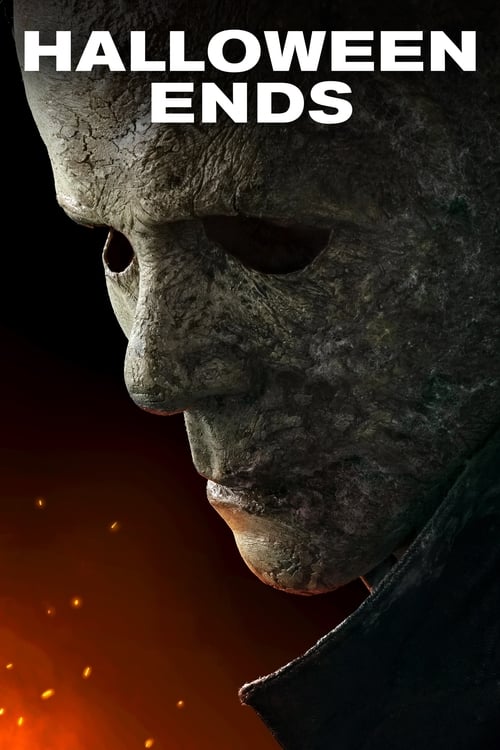
Halloween Ends (2022)
Directed by David Gordon Green
No — Halloween Ends is not woke, scoring 12 out of 100 on our wokeness meter.
Halloween Ends arrives with the weight of a trilogy on its shoulders and the stated ambition of being, of all things, a love story.
Consciousness Markers
Laurie Strode's arc of 'liberating herself from fear and rage' and the grandmother-granddaughter survivor dynamic carry a mild empowerment flavor, but this is the franchise's long-standing final-girl tradition rather than a deliberate feminist statement.
The cast is overwhelmingly white, with a handful of minority performers (Omar Dorsey, Keraun Harris, Destiny Mone) in minor or villainous supporting roles and no emphasis on diverse casting as a selling point.
The film gestures at themes of trauma, mob scapegoating, and how a community creates its own monsters, but it delivers these through plot and gore rather than preachy monologue.
No LGBTQ+ characters, relationships, or themes appear anywhere in the film.
Race is never a subject of the film; the small-town mob violence and outcast themes are framed entirely around trauma and class, not racial identity.
No environmental or climate content whatsoever.
No economic critique; the salvage yard and hospital settings are mere backdrops for slasher set-pieces.
No body-positivity themes; the film's physicality is entirely about violence and gore.
Corey's descent into psychopathy is framed as supernatural 'infection' by Michael's evil, not as neurodivergence or mental-health advocacy.
The film is fictional and makes no historical claims to revise.
Why it received this score
Halloween Ends arrives with the weight of a trilogy on its shoulders and the stated ambition of being, of all things, a love story. The film delivers, instead, a study of a small Illinois town that has decided to eat its young, or at least its babysitters. Corey Cunningham, cleared by a judge but convicted by his neighbors, becomes the vessel for the community's need to blame something. The film is interested in scapegoats, in trauma passed down like a family heirloom, and in the way a mob manufactures the monster it fears. These are old themes, handled with a straight face and a body count.
Laurie Strode's arc carries a faint glow of self-liberation. She writes a memoir, she reopens herself to romance, she tells the masked figure that he is merely a man. The final girl has been doing this work since 1978, and the granddaughter who stands beside her in the final act is a familiar arrangement. There is a grandmother-granddaughter survivor dynamic here, and it registers as empowerment in the loosest sense. It is not a thesis. It is inheritance.
Elsewhere the film is barren ground for contemporary cultural markers. Race never enters the frame as a subject, and the cast leans overwhelmingly white, with a few minority performers scattered into minor or antagonistic parts and no effort to sell diversity as a feature. There is no queer content, no climate anxiety, no economic critique, no body-positive gesture. Corey's descent is framed as supernatural infection, a contagion passed from one killer to another, which leaves no room for mental-health advocacy. The film gestures at mob violence and communal guilt, and it does so through stabbing rather than sermon. A modest specimen. The mask is kept, the shredder runs, and the credits roll on a franchise that has learned nothing and forgotten nothing.
Analysis generated by our Consciousness Algorithm
Part of
Franchise · Film 11 of 11
Are the Halloween Movies Woke?
Series average 6; this film scores 12.
Studio · Blumhouse
Are Blumhouse Movies Woke?
89 films, average 18 (Ultra Based). This film is 6 points below the Blumhouse average.
Studio · Universal
Are Universal Movies Woke?
469 films, average 14 (Ultra Based). This film is 2 points below the Universal average.


Synopsis
Four years after the events of Halloween in 2018, Laurie has decided to liberate herself from fear and rage and embrace life. But when a young man is accused of killing a boy he was babysitting, it ignites a cascade of violence and terror that will force Laurie to finally confront the evil she can’t control, once and for all.
Questions about Halloween Ends
Is Halloween Ends woke?
No — Halloween Ends is not woke, scoring 12 out of 100 on our wokeness meter. That earns it a verdict of Ultra Based.
Does Halloween Ends have any woke elements?
Very few. None of the 10 markers reaches 30, the level where a marker counts as present; the highest is Feminist Agenda at 22.
How does Halloween Ends compare to other 2022 movies?
It ranks #136 of the 223 films from 2022 we've scored; their average is 22. The wokest is Bros (92).
Is Halloween Ends the most woke Halloween movie?
No. It ranks #2 of the 11 Halloween films we've scored; the wokest is Halloween III: Season of the Witch (15).