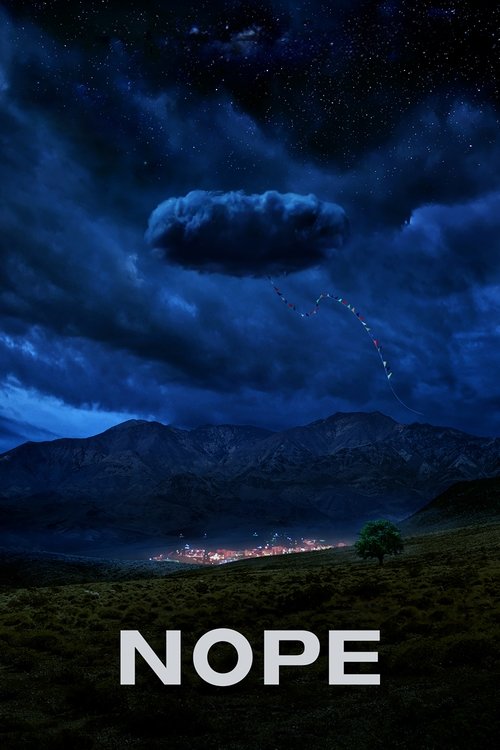
Nope (2022)
Directed by Jordan Peele
Yes · Woke
How we score movies →Consciousness Markers
The film engages deliberately with racial themes, critical race theory, and the historical positioning of Black people as outsiders in American society. Racial exploitation and spectacle form the core of the thematic architecture.
Black protagonists in leading roles within a science fiction horror film, deliberately centering Black characters in a genre typically dominated by white leads. The casting choice is intentional and foundational to the narrative.
Significant commentary on capitalist exploitation, the commodification of Black bodies, and the predatory nature of the entertainment industry's spectacle machinery.
Dense symbolic layering and thematic complexity create an intellectually heavy viewing experience, though meaning is conveyed through allegory and visual motif rather than direct preachy instruction.
The film reimagines genre conventions and Western tropes through a racial lens, but does not substantially revise or reinterpret historical events themselves.
Keke Palmer's character is resourceful and capable, but feminist ideology is not foregrounded thematically. Her strength emerges from narrative necessity rather than explicit ideological commitment.
No evidence of LGBTQ+ themes, representation, or character arcs in the film.
No evidence of climate-focused messaging, environmental activism, or ecological themes in the film.
No evidence of body positivity messaging, discussion of body image standards, or related themes.
No evidence of neurodivergent representation or thematic engagement.


Synopsis
Residents in a lonely gulch of inland California bear witness to an uncanny, chilling discovery.
Why it received this score
Nope arrives as a carefully constructed meditation on spectacle and exploitation, filtered through the particular lens of Black American vulnerability to commodification. Jordan Peele's third feature positions its two Black protagonists not as saviors or sidekicks to white leads, but as the central figures navigating a predatory force from above, a choice that carries deliberate historical weight. The film layers this racial consciousness throughout its visual and narrative architecture, invoking the Western genre while simultaneously interrogating it, asking uncomfortable questions about who gets to be the hero and who gets consumed by the machinery of entertainment and capitalism.
The social commentary operates at a level of intellectual density that borders on the exhausting. Every frame contains symbolic resonance, every character name and visual motif connects to larger thematic networks about exploitation, media spectacle, and the commodification of Black bodies. There is ambition here, and genuine thematic sophistication. Yet the film also demonstrates the particular fatigue that accompanies heavily laden allegory: the viewer must work assiduously to excavate meaning, and the work itself becomes part of the viewing experience in ways both productive and draining.
What prevents this from achieving a higher score is the relative absence of explicit engagement with other progressive markers. The film does not prioritize feminist ideology despite its capable female lead, contains no LGBTQ+ representation, and avoids climate or neurodivergence themes entirely. It is, in the end, a film primarily concerned with one specific axis of social consciousness, pursued with considerable intelligence but limited in scope. This is not a weakness, precisely, but rather a limitation that keeps it from the upper registers of contemporary social consciousness cinema.
Analysis generated by our Consciousness Algorithm
Critic Reviews
“The darkly beautiful sci-fi film manages to feel bold and original while paying homage to countless great movies.”
“For Hollywood’s armies of unsung craftsfolk, Nope turns the blockbuster rules on their head: an expansive science-fiction thriller whose heroes rise up and claim their heroism from behind the scenes. For the rest of us, it’s an outrageously good time.”
“This is a movie that knows the power of images. It has learned, from the greats of the genre, that what we fear most is what can’t be seen, what’s merely implied.”
“Every so often an obviously talented person makes a bad movie, and that’s what we have in Nope. The talent is there, the movie is dead on the screen.”