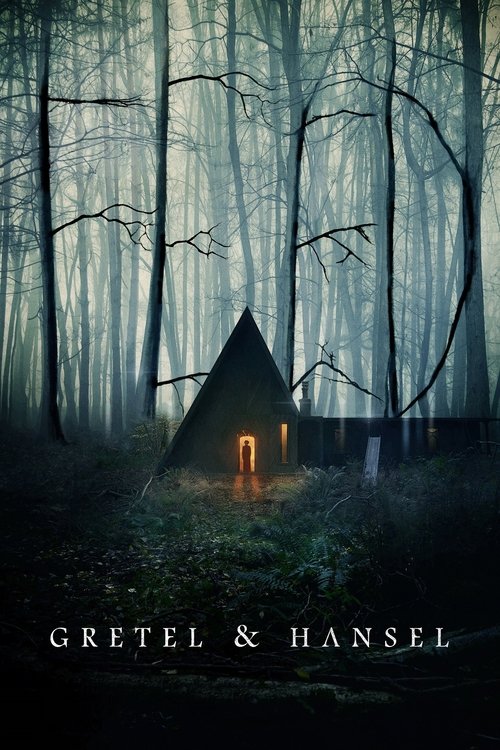
Gretel & Hansel (2020)
Directed by Osgood Perkins
No — Gretel & Hansel is not woke, scoring 17 out of 100 on our wokeness meter.
Osgood Perkins offers us a fairy tale drained of whimsy and refilled with dread, which is a respectable artistic choice and an unremarkable political one.
Consciousness Markers
The title was deliberately reordered to 'Gretel & Hansel' because the film reframes the tale as Gretel's coming-of-age into power, and she rejects a housekeeping job when the master probes her virginity. The NYT called it 'essentially the story of a young woman coming into her power,' a genuine female-centric re-centering, though without overt activist framing.
Predominantly white fairy-tale cast, with Charles Babalola as a Black huntsman and a few non-white background knights. Diverse faces exist without any thematic comment or reimagining of the source culture.
The film is atmospheric and eerie rather than preachy; its 'trusting the darkness' refrain and coming-of-age arc carry light thematic weight without direct moralizing at the audience.
No LGBTQ+ characters, relationships, or subtext whatsoever in this grim fairy-tale retelling.
No engagement with racial themes or history; the story is a European folk tale with no racial commentary.
No climate or environmental themes present.
The children's poverty and desperation are fairy-tale plot devices rather than a critique of capitalism or class structures.
No body-positivity themes; bodies here are sites of horror (emaciated figures, child-eating witch).
No neurodivergence themes or characters.
The film reimagines a Grimm fairy tale, not historical events, so there is no revisionist-history content.
Why it received this score
Osgood Perkins offers us a fairy tale drained of whimsy and refilled with dread, which is a respectable artistic choice and an unremarkable political one. The film reorders its title to "Gretel & Hansel" and hands the story to the elder sibling, a sixteen-year-old girl learning that power can be hers if she stops scrubbing floors for men who ask impertinent questions about her virginity. This is a genuine re-centering of a familiar tale, and the New York Times said so, so we can all agree it happened. It is a coming-of-age story about a young woman, which is not nothing. It is also not a movement.
The dark wood is full of atmosphere and very little else. The witch is a witch, the children are hungry, and the poverty that drives them into the trees is a plot device older than the Brothers Grimm themselves. No one here is dismantling a system. The horror is personal, the evil is supernatural, and the film's only sermon is a refrain about trusting the darkness, delivered with the confidence of a fortune cookie. A huntsman of African descent appears, helps the children, and exits, which satisfies the casting ledger without disturbing the story's European bones. The bodies on screen are emaciated, burned, and eaten. This is not a film with a wellness message.
What remains is a mood piece, slow and lovely and occasionally tedious, the kind of movie a person watches with admiration and then forgets by spring. It has progressive gestures, gently applied. It has no agenda to speak of, which in this climate feels almost quaint. I respect its restraint. I also checked my watch.
Analysis generated by our Consciousness Algorithm


Synopsis
A long time ago in a distant fairy tale countryside, a young girl leads her little brother into a dark wood in desperate search of food and work, only to stumble upon a nexus of terrifying evil.
Questions about Gretel & Hansel
Is Gretel & Hansel woke?
No — Gretel & Hansel is not woke, scoring 17 out of 100 on our wokeness meter. That earns it a verdict of Ultra Based.
Does Gretel & Hansel have any woke elements?
1 of the 10 markers register at 30 or above, led by Feminist Agenda (42). On Feminist Agenda: The title was deliberately reordered to 'Gretel & Hansel' because the film reframes the tale as Gretel's coming-of-age into power, and she rejects a housekeeping job when the master probes her virginity.
How does Gretel & Hansel compare to other 2020 movies?
It ranks #94 of the 227 films from 2020 we've scored; their average is 21. The wokest is One Night in Miami... (83).
How is the Woke Score calculated?
An AI-assisted process researches the film and its reception, scores it 0–100 on ten markers, then combines those into one 0–100 Woke Score. It measures a specific set of 2020s cultural themes, not film quality.