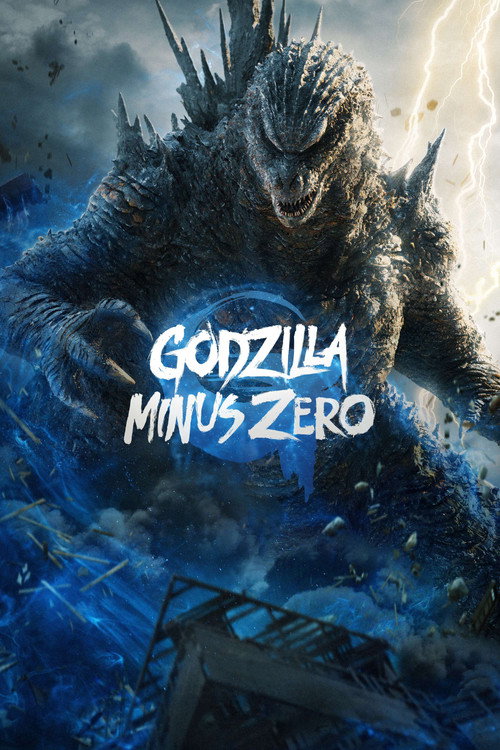
Godzilla Minus Zero (2026)
Directed by Takashi Yamazaki
No — Godzilla Minus Zero is not especially woke, scoring 28 out of 100 on our wokeness meter.
Takashi Yamazaki's Godzilla Minus Zero arrives as the second installment in the Minus series and the first film in the franchise's seventy-year history to earn an R-rating in North America, a distinction the production wears with the quiet gravity of a man who has prepared a very serious PowerPoint presentation about a very large lizard.
Consciousness Markers
The film consciously reframes the WWII Pacific theater from a Japanese civilian perspective, resists Hollywood conventions of American military heroism, and has generated substantive critical debate about whether it rehabilitates or honestly interrogates Imperial Japan's historical role. Director Yamazaki explicitly positioned the film as a corrective counterpoint to Oppenheimer's Western framing.
The film explicitly frames the U.S. military as refusing to risk its own pilots while requiring Japanese veterans to operate dangerous equipment, and critics have debated whether centering Japanese civilians as victims constitutes a selective reading of wartime history. There is a clear national-consciousness posture here, even if it is not framed in the vocabulary of American identity politics.
Anti-war and anti-nuclear messaging is explicit and acknowledged by critics across multiple outlets. The film earns some credit for delivering these messages through spectacle and metaphor rather than speechifying characters, but the intent is unambiguous and the R-rating for trauma depictions signals a deliberate moral weight.
Dr. Aoyama, a female meteorologist, works alongside male scientists in the Disaster Response Bureau, and the film foregrounds a non-traditional family unit built on mutual survival. The gender dynamics are present but not the point.
The film features an all-Japanese cast in a Japanese production set in postwar Japan. This is cultural accuracy, not conscious DEI casting, and the distinction matters.
No LGBTQ+ characters, themes, or subtext are present anywhere in the available evidence.
No climate change themes, ecological messaging, or environmental allegory are present. Godzilla is a nuclear metaphor, not a carbon footprint metaphor.
No anti-capitalist themes are present. The enemy is a monster, not a corporation.
No body positivity themes are present in any evidence reviewed.
No neurodivergence themes, characters, or framing are present in any evidence reviewed.
Why it received this score
Takashi Yamazaki's Godzilla Minus Zero arrives as the second installment in the Minus series and the first film in the franchise's seventy-year history to earn an R-rating in North America, a distinction the production wears with the quiet gravity of a man who has prepared a very serious PowerPoint presentation about a very large lizard. The film is, by any reasonable measure, a technically accomplished and emotionally sincere piece of work. It is also, by the metrics we are professionally obligated to apply here, a film with opinions. Many opinions. Held firmly.
The most legible of these opinions concerns the United States military, which is depicted in the 1949 occupation setting as a body content to provide prototype superweapons to Japanese veterans while declining to risk its own personnel in operating them. Critics have noted this as a pointed departure from the collaborative internationalism of Hollywood kaiju productions, and they are correct to note it. Yamazaki has described the film as a deliberate thematic response to Oppenheimer, positioning the Japanese civilian experience of nuclear devastation as the corrective other side of that coin. This is a coherent artistic argument. It is also, depending on your tolerance for corrective historical framing, either a necessary act of cultural reclamation or a selective edit of a more complicated past. The film does not appear to lose sleep over this ambiguity. The film has monsters to attend to.
On the remaining axes of cultural awareness, Godzilla Minus Zero is comparatively restrained. Dr. Aoyama contributes meaningfully to the scientific response effort without the film pausing to remark upon this. The non-traditional family at the story's center is presented as a human solution to human devastation, not as a thesis statement. There are no corporate villains, no climate allegories, no speeches about identity. The lecture energy present in the anti-war messaging is real but largely structural, embedded in the film's premise rather than delivered through characters who stop to explain what we should be feeling. For a franchise that began as a direct metaphor for Hiroshima and Nagasaki, this is, if anything, a model of restraint.
Analysis generated by our Consciousness Algorithm
Synopsis
War reduced Japan to zero, and Godzilla plunged it into minus. Two years have passed since then, and the country has faced agonizing struggles to achieve recovery and finally reclaim its daily life. Just as humanity managed to cling to a hard-won peace, a new threat strikes, crushing hope in an instant. There is no third time. Everything ends here.
Questions about Godzilla Minus Zero
Is Godzilla Minus Zero woke?
No — Godzilla Minus Zero is not especially woke, scoring 28 out of 100 on our wokeness meter. That earns it a verdict of Based.
Does Godzilla Minus Zero have any woke elements?
2 of the 10 markers register at 30 or above, led by Revisionist History (42) and Racial Consciousness (32). On Revisionist History: The film consciously reframes the WWII Pacific theater from a Japanese civilian perspective, resists Hollywood conventions of American military heroism, and has generated substantive critical debate about whether it rehabilitates or honestly interrogates Imperial Japan's historical role.
How does Godzilla Minus Zero compare to other 2026 movies?
It ranks #243 of the 800 films from 2026 we've scored; their average is 23. The wokest is Between Us (89).
How is the Woke Score calculated?
An AI-assisted process researches the film and its reception, scores it 0–100 on ten markers, then combines those into one 0–100 Woke Score. It measures a specific set of 2020s cultural themes, not film quality.