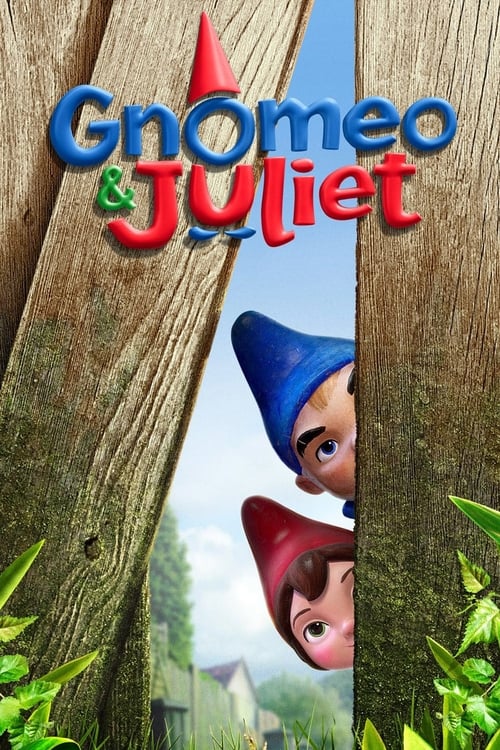
Gnomeo & Juliet (2011)
Directed by Kelly Asbury
No — Gnomeo & Juliet is not woke, scoring 3 out of 100 on our wokeness meter.
Gnomeo & Juliet arrives from 2011 with the confidence of a film that has nothing on its mind and no intention of acquiring anything.
Consciousness Markers
Juliet is given a mildly independent streak and Dolly Gnome announces lawnmower races, but the plot remains a traditional damsel-and-rescue romance with no feminist thesis.
The voice cast is overwhelmingly white British talent (McAvoy, Blunt, Caine, Smith, Walters, Statham), with no deliberate diverse or color-conscious casting choices.
There are no LGBTQ+ characters, relationships, or themes; the romance is a conventional heterosexual pairing of the title gnomes.
The film engages no racial themes whatsoever; the conflict is between blue-hatted and red-hatted gnomes over a garden feud.
No environmental or climate messaging appears; the gardens are simply the setting for a family feud.
There is no critique of wealth, class, or capitalism; the Terrafirminator is a consumer product gag, not a satirical target.
No body-image or body-acceptance themes are present among the garden ornaments.
Paris is described as 'nerdy,' but this is a comic archetype rather than any depiction of neurodivergence.
The film loosely rewrites Romeo and Juliet to a happy ending, but this is a comedic adaptation of fiction, not a revisionist reframing of historical events.
The film is a breezy, gag-driven family comedy with no preachy messaging or moralizing monologues.
Why it received this score
Gnomeo & Juliet arrives from 2011 with the confidence of a film that has nothing on its mind and no intention of acquiring anything. Shakespeare's tragedy is relocated to two feuding Stratford-upon-Avon gardens, where blue-hatted and red-hatted ornaments conduct a proxy war of lawnmower races and petty vandalism. The title pair fall in love, a plastic flamingo offers counsel, and a weaponized mower called the Terrafirminator eventually flattens the real estate. It is brisk, silly, and content to be so.
The cast is a wall of white British stage talent, assembled by voice alone with no evident interest in color-conscious choices. The romance is a conventional heterosexual pairing, and Juliet's independence extends about as far as sneaking out of the garden before the plot hands her a tower and a glue pot. Dolly Gnome calls a race, which is the film's entire gesture toward female agency. Racial themes do not appear; the blue and red hats signify nothing beyond horticultural allegiance. Nor does the environment enter the frame, since the gardens are simply turf to be contested. The Terrafirminator is a joke about consumer products, not a satire of them, and no one eats any rich.
Body acceptance and neurodivergence are absent, and Paris's nerdiness is a comic type, not a condition. The film rewrites a fictional tragedy into a happy ending, a liberty taken with literature, not history. As for sermonizing, there is none; the gnomes marry, the flamingo finds his mate, and the credits roll. A gentle artifact from a less anxious moment in family entertainment.
Analysis generated by our Consciousness Algorithm


Synopsis
A version of Shakespeare's play, set in the world of warring indoor and outdoor gnomes. Garden gnomes Gnomeo and Juliet have as many obstacles to overcome as their quasi namesakes when they are caught up in a feud between neighbors. But with plastic pink flamingos and lawnmower races in the mix, can this young couple find lasting happiness?
Questions about Gnomeo & Juliet
Is Gnomeo & Juliet woke?
No — Gnomeo & Juliet is not woke, scoring 3 out of 100 on our wokeness meter. That earns it a verdict of Ultra Based.
Does Gnomeo & Juliet have any woke elements?
Very few. None of the 10 markers reaches 30, the level where a marker counts as present; the highest is Feminist Agenda at 5.
How does Gnomeo & Juliet compare to other 2011 movies?
It ranks #195 of the 245 films from 2011 we've scored; their average is 11. The wokest is Paul (68).
How is the Woke Score calculated?
An AI-assisted process researches the film and its reception, scores it 0–100 on ten markers, then combines those into one 0–100 Woke Score. It measures a specific set of 2020s cultural themes, not film quality.