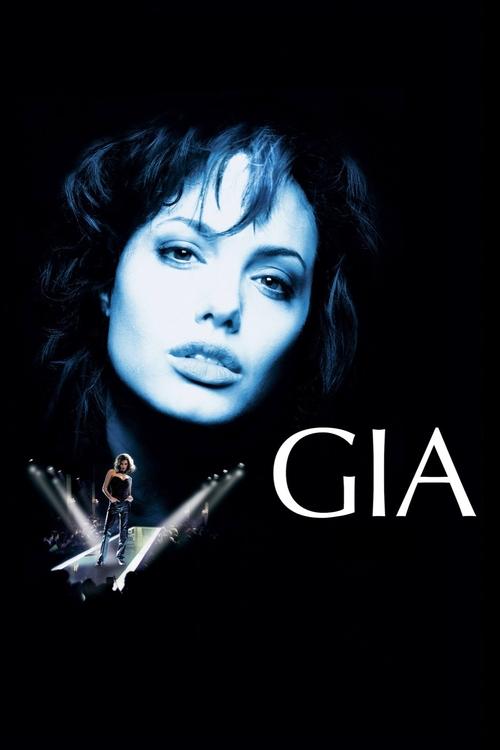
Gia (1998)
Directed by Michael Cristofer
No — Gia is not woke, scoring 17 out of 100 on our wokeness meter.
Gia is a 1998 HBO biographical drama about the supermodel Gia Carangi, and its cultural sensibilities are best described as period-appropriate.
Consciousness Markers
Gia's passionate affair with make-up artist Linda is a central, sustained storyline, giving the film genuine same-sex relationship content, though it is presented as biography rather than advocacy.
The film touches on the fashion industry's exploitation of a young woman, but frames it as personal tragedy rather than a systemic feminist critique.
The film is a character-driven tragedy that largely avoids preaching, with only mild cautionary messaging about drugs and the fashion industry.
The modeling industry is shown as predatory and commodifying, but the film offers no explicit economic critique or eat-the-rich messaging.
The cast is overwhelmingly white, reflecting the real-life fashion world of the late 1970s; no deliberate diverse or color-conscious casting is present.
Race is not a theme; the narrative is entirely focused on a white protagonist's personal decline.
No environmental or climate content whatsoever.
Despite its modeling-world setting, the film does not engage body-positivity themes or challenge beauty standards as a message.
No neurodivergence themes are present; addiction and loneliness are the focus.
The film is a straightforward biographical account of Gia Carangi's life, not a revisionist reframing of history.
Why it received this score
Gia is a 1998 HBO biographical drama about the supermodel Gia Carangi, and its cultural sensibilities are best described as period-appropriate. The film has no interest in color-conscious casting, racial themes, climate anxiety, body positivity, or neurodivergence. Its gaze is fixed on one white woman's meteoric rise and slow, drug-addled fall. The fashion industry appears as a predatory machine, but the screenplay treats that predation as atmosphere, not as an argument for economic restructuring. There is no eat-the-rich sermon, only the quiet suggestion that modeling can be bad for you.
The same-sex affair between Gia and Linda, a make-up artist, is the film's emotional center. It is sustained, physical, and treated with genuine seriousness. The relationship is not framed as a political statement. It is simply the love story that happens, and the film lets it end badly for reasons of character and addiction. This gives the film a measure of progressive weight, though it is the weight of honest biography, not advocacy. The feminist angle is similarly muted. Gia's exploitation by the fashion world registers, but the film reads it as personal misfortune, not systemic indictment.
The cautionary material about drugs and loneliness is present but restrained. There is no lecturing, no on-the-nose sermonizing about the perils of heroin. The film prefers to let Angelina Jolie's performance carry the ruin. As a cultural artifact, Gia is a curious specimen: a mainstream 1990s cable biopic that happens to contain a central queer romance, yet otherwise keeps its social consciousness in a locked drawer. It is not a film that wants to teach us anything. It wants us to watch a beautiful woman fall apart, and it does so with a straight face.
Analysis generated by our Consciousness Algorithm


Synopsis
Gia Carangi meteorically rises to modeling fame in the late 1970s but becomes overconsumed by persistent loneliness and drug addiction.
Questions about Gia
Is Gia woke?
No — Gia is not woke, scoring 17 out of 100 on our wokeness meter. That earns it a verdict of Ultra Based.
Does Gia have any woke elements?
1 of the 10 markers register at 30 or above, led by LGBTQ+ Themes (48). On LGBTQ+ Themes: Gia's passionate affair with make-up artist Linda is a central, sustained storyline, giving the film genuine same-sex relationship content, though it is presented as biography rather than advocacy.
How does Gia compare to other 1998 movies?
It ranks #26 of the 118 films from 1998 we've scored; their average is 12. The wokest is Show Me Love (60).
How is the Woke Score calculated?
An AI-assisted process researches the film and its reception, scores it 0–100 on ten markers, then combines those into one 0–100 Woke Score. It measures a specific set of 2020s cultural themes, not film quality.