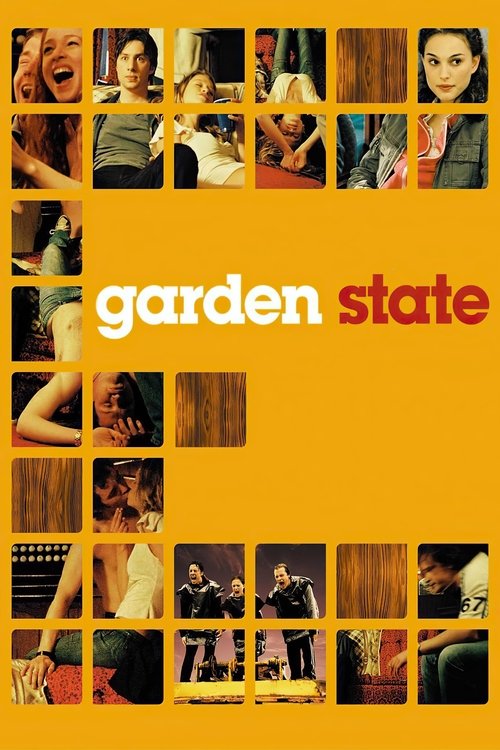
Garden State (2004)
Directed by Zach Braff
No — Garden State is not woke, scoring 13 out of 100 on our wokeness meter.
Garden State arrives in 2004 with a mix CD, a muted color palette, and the solemn belief that a quarry scream can repair a nervous system.
Consciousness Markers
The protagonist's depression and long-term psychiatric medication are central, and a love interest has epilepsy and compulsive lying. However, the portrayal is character-driven rather than a modern neurodivergence advocacy statement.
The cast is predominantly white, with minor supporting roles for Method Man and Ato Essandoh. Diversity is incidental rather than a deliberate representational statement.
The film offers some life-affirming monologues but avoids preachy social commentary, keeping its tone personal and introspective.
No LGBTQ+ characters, themes, or subtext are present.
The film is widely cited as a defining example of the Manic Pixie Dream Girl trope, in which a female character exists primarily to inspire the male protagonist. This is not a feminist agenda.
The film does not engage with racial themes, systemic racism, or racial identity.
No environmental or climate-related themes appear in the film.
There is no critique of capitalism or wealth inequality; a friend's invention merely serves as a quirky plot point.
The film does not address body image, size acceptance, or related themes.
The film is a contemporary fictional story with no historical revisionism.
Why it received this score
Garden State arrives in 2004 with a mix CD, a muted color palette, and the solemn belief that a quarry scream can repair a nervous system. Zach Braff's Andrew returns to New Jersey for his mother's funeral and stops his lithium, which the film treats as an act of courage and not a medical decision requiring follow-up. Natalie Portman's Sam is a compulsive liar with epilepsy and an adopted brother, and she exists to thaw Andrew's emotional frost. This is the Manic Pixie Dream Girl template being minted in real time. The film's gender imagination is not liberatory. It is archival.
The demographic texture is that of a 2004 New Jersey indie. Method Man appears as a bellhop, Ato Essandoh as Sam's adopted brother, and both remain incidental. No queer presence or subtext appears. Race is not engaged as a subject. Climate concerns are absent. Jesse's silent Velcro fortune is a quirky plot device, not a class critique. Bodies are not a subject. The film has no historical revisionist project. Its cultural awareness is mostly a matter of casting a few nonwhite faces in the orbit of a white protagonist and moving on.
Where the film does carry some modern charge is in its portrait of mental health. Andrew's long-term psychiatric medication and Sam's epilepsy and compulsive lying are central, but the film treats them as character texture, not as a platform. A few life-affirming monologues arrive with personal sincerity, and the film avoids sermonizing. The result is a gentle, self-serious time capsule: a movie about feeling numb that became a landmark for a trope it never examines. We are left with the soundtrack, the sweater, and the uneasy sense that the film's emotional education was mostly for its male lead.
Analysis generated by our Consciousness Algorithm
Part of


Synopsis
Andrew returns to his hometown for his mother’s funeral, a journey that reconnects him with old friends. The trip coincides with his decision to stop taking his powerful antidepressants. A chance meeting with Sam—a girl also struggling with various maladies—opens up the possibility of rekindling emotional connections, confronting his psychologist father, and perhaps beginning a new life.
Questions about Garden State
Is Garden State woke?
No — Garden State is not woke, scoring 13 out of 100 on our wokeness meter. That earns it a verdict of Ultra Based.
Does Garden State have any woke elements?
Very few. None of the 10 markers reaches 30, the level where a marker counts as present; the highest is Neurodivergence at 25.
How does Garden State compare to other 2004 movies?
It ranks #57 of the 178 films from 2004 we've scored; their average is 12. The wokest is Tropical Malady (62).
How is the Woke Score calculated?
An AI-assisted process researches the film and its reception, scores it 0–100 on ten markers, then combines those into one 0–100 Woke Score. It measures a specific set of 2020s cultural themes, not film quality.