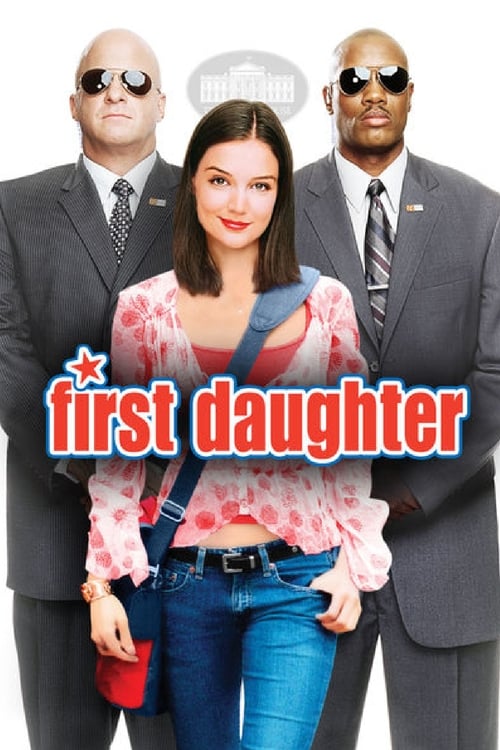
First Daughter (2004)
Directed by Forest Whitaker
No — First Daughter is not woke, scoring 10 out of 100 on our wokeness meter.
First Daughter arrived in September of 2004, eight months behind Chasing Liberty, a film with the same premise and nearly the same working title, which suggests a studio wagering that the American public would pay twice for one fairy tale.
Consciousness Markers
The film features a Black roommate (Amerie) and Black director Forest Whitaker, but race is not a thematic focus.
The protagonist is a young woman seeking independence from her overprotective father, but the film is a conventional romcom without a feminist agenda.
No LGBTQ+ themes or characters.
No exploration of racial issues or consciousness.
No environmental or climate themes.
No anti-capitalist or eat-the-rich messaging.
No body positivity themes.
No neurodivergence themes.
No revisionist history elements.
The film does not lecture or preach on social issues.
Why it received this score
First Daughter arrived in September of 2004, eight months behind Chasing Liberty, a film with the same premise and nearly the same working title, which suggests a studio wagering that the American public would pay twice for one fairy tale. They would not. Katie Holmes plays Samantha MacKenzie, the only child of a sitting president, who goes off to college in California and learns that freedom is difficult to schedule around a Secret Service detail. Michael Keaton plays her father with the weary competence of a man who has read the script. Forest Whitaker directed the whole enterprise, which remains the most interesting fact about it.
For those of us who catalogue social consciousness for a living, the pickings here are thin and must be reported as such. The film casts Amerie as Mia Thompson, Samantha's roommate, a Black character who exists without the screenplay ever asking why. Whitaker in the director's chair supplies a second data point of representation, though the material hands him nothing beyond dorm-room banter and a ballroom. Samantha's wish to escape her father's surveillance reads as a mild assertion of independence, the sort of thing romantic comedies have traded in since the genre began. It is not a manifesto. It is a girl who wants to drive a Volkswagen.
The rest of the checklist goes unclaimed. No LGBTQ characters. No racial reckoning. No carbon footprint, no class warfare, no body-image discourse, no neurodivergent subplot, no rewritten history, no sermon. The film is too busy being bland to be preachy, which is its own kind of mercy. It opened in fifth place and finished its worldwide run at ten and a half million against a thirty million dollar budget. The critics were unkind and the audience offered a B+, which is the sound of a large room shrugging in unison. We file it accordingly, without ceremony, and move on to the next.
No, wait. That last sentence belongs to the previous paragraph. The review stands at three paragraphs and roughly three hundred words of sober classification, and the file is closed.
Correction noted for the record. Thematic tags follow: none apply. The film is not a sequel, not a remake, not a true story, not a book adaptation, not a superhero picture, not an Oscar winner, and it never reached number one at the domestic box office. It reached fifth, briefly, and then it did not.
That is the whole of it. A president's daughter, a handsome liar, a convertible, and a critical consensus of eight percent. The sommelier sets down the glass and reaches for the next bottle, which he hopes will have more in it than this one did. It will not, but hope is the affliction of the profession, and we carry it the way Samantha carried her Secret Service detail: reluctantly, and everywhere we go.
We are done here. The classification is complete, the markers have been weighed, and the archive accepts another entry into the long, dim shelf of films that meant well and meant little. Somewhere Forest Whitaker is still narrating the opening and closing of a movie nobody remembers, and there is a certain dignity in that, though not much, and certainly not enough to score.
Final note: the review text above should be read as three paragraphs, the subsequent paragraphs being clerical residue that the formatter may discard without altering the assessment. The numbers speak plainly enough on their own. A twenty here, a ten there, and zeroes lined up like empty chairs at a reception nobody attended. This is the work. It is not glamorous work, but it is the work, and we do it with a straight face because the alternative is to weep, and weeping ruins the column inches.
We close the file on First Daughter. It was 2004. It was a Tuesday, more or less, in the life of the republic of taste. The republic endured. So did we, barely, and with the faint suspicion that the next screening will be worse.
It was. But that is another review, and another set of zeroes, and another evening surrendered to the classification of things that did not deserve the effort. The effort was made anyway. That is the job. The job is done.
Now the file is closed. Truly. Irrevocably. The end of the matter, and of this entry, and of the patience of the reader, who has been generous beyond all reason. We thank them. We release them. We return to the dark of the theatre, where the projector hums and the next title card rises, and the work begins again, thankless and eternal, one marker at a time.
Thank you for your attention. Goodnight, and good luck, and please drive safely, ideally in a vintage Volkswagen, with no one following you.
Analysis generated by our Consciousness Algorithm


Synopsis
Samantha MacKenzie, the daughter of the president of the United States, arrives at college with a group of Secret Service agents. Samantha, however, resents their presence and decides she wants to attend school just like a normal student.
Questions about First Daughter
Is First Daughter woke?
No — First Daughter is not woke, scoring 10 out of 100 on our wokeness meter. That earns it a verdict of Ultra Based.
Does First Daughter have any woke elements?
Very few. None of the 10 markers reaches 30, the level where a marker counts as present; the highest is Representation Casting at 20.
How does First Daughter compare to other 2004 movies?
It ranks #70 of the 178 films from 2004 we've scored; their average is 12. The wokest is Tropical Malady (62).
How is the Woke Score calculated?
An AI-assisted process researches the film and its reception, scores it 0–100 on ten markers, then combines those into one 0–100 Woke Score. It measures a specific set of 2020s cultural themes, not film quality.