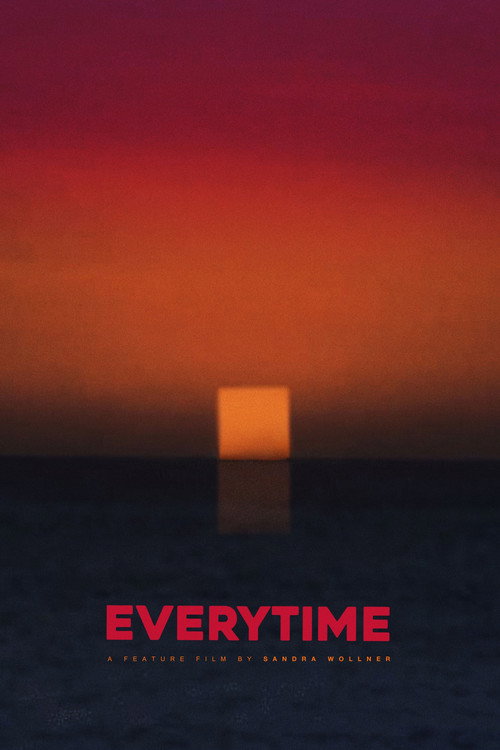
Everytime (2026)
Directed by Sandra Wollner
No — Everytime is not woke, scoring 8 out of 100 on our wokeness meter.
Sandra Wollner's Everytime arrives at Cannes bearing the hallmarks of the serious European art film: grief, sun-bleached cinematography, fractured family dynamics, and a runtime that does not apologize for itself.
Consciousness Markers
The film's emotional and narrative weight is carried by its female characters, a mother and daughter, and it is directed by a woman operating firmly in the art-house tradition. The framing does not appear ideologically feminist; the male teenage character holds equal narrative gravity.
The central trio is female-led and includes a Spanish actor in a German-Austrian production, suggesting some degree of intentional diversity. There is no evidence this was ideologically driven, and the casting reads as organic to the story's geography and character dynamics.
Critics specifically and repeatedly note that Wollner avoids moralizing adolescent behavior, which is itself a meaningful signal. The secular, atheistic framing of grief carries a faint philosophical position, but the film appears to present rather than argue. The score reflects the residual weight of a Cannes-selected art film that cannot entirely escape having a point of view.
No LGBTQ+ themes, characters, or subtext are present in any available material about the film.
No evidence of racial consciousness as a thematic concern. The film's central preoccupation is grief, guilt, and memory across a culturally mixed but not racially interrogated ensemble.
No climate themes, environmental messaging, or ecological subtext are present or noted in any critical or marketing material.
No anti-capitalist critique is present. The film operates entirely within the register of personal grief and psychological aftermath, with no interest in systemic economic critique.
No body positivity themes or messaging of any kind are present in the film.
No neurodivergent characters or themes are identified in any available material.
The film is a contemporary drama with no historical setting or revisionist historical framing whatsoever.
Why it received this score
Sandra Wollner's Everytime arrives at Cannes bearing the hallmarks of the serious European art film: grief, sun-bleached cinematography, fractured family dynamics, and a runtime that does not apologize for itself. It won the Un Certain Regard Prize, which is the festival's way of saying the film is good but you will not be eating popcorn. Critics have reached for words like "devastating" and "immaculate." For our purposes, the film is notable primarily for what it declines to do.
The narrative, such as it is, concerns a mother, her daughter, and a teenage boy united by a tragedy that the film reveals slowly and without the courtesy of a clear timeline. The past and present overlap, as the synopsis helpfully warns us they will. What is striking, from a cultural taxonomy standpoint, is the film's almost aggressive disinterest in contemporary progressive machinery. Wollner presents adolescent substance use and risk-taking in Berlin without a single shot that asks us to locate the systemic cause. The grief is personal. The guilt is personal. The secular framing of loss, while philosophically pointed, functions as an artistic stance rather than a sermon. The film has a worldview. It does not hand you a pamphlet.
The female-led ensemble and the presence of a Spanish actor in a German-Austrian co-production register faintly on the representation dial, though assigning ideological intent here would be a significant overreach. The cast was assembled to serve the story's emotional geography, not to satisfy a diversity checklist. By the standards of contemporary prestige cinema, Everytime is something of a relic: a film that trusts its audience to feel things without being instructed to. This is, apparently, still possible.
Analysis generated by our Consciousness Algorithm
Synopsis
A tragedy brings a mother, daughter, and teenage boy together. Struggling with blame and forgiveness, the unlikely trio take a trip to Tenerife for a family holiday that never happened. Under the glow of the sun, past and present quietly start to overlap.
Questions about Everytime
Is Everytime woke?
No — Everytime is not woke, scoring 8 out of 100 on our wokeness meter. That earns it a verdict of Ultra Based.
Does Everytime have any woke elements?
Very few. None of the 10 markers reaches 30, the level where a marker counts as present; the highest is Feminist Agenda at 12.
How does Everytime compare to other 2026 movies?
It ranks #442 of the 800 films from 2026 we've scored; their average is 23. The wokest is Between Us (89).
How is the Woke Score calculated?
An AI-assisted process researches the film and its reception, scores it 0–100 on ten markers, then combines those into one 0–100 Woke Score. It measures a specific set of 2020s cultural themes, not film quality.