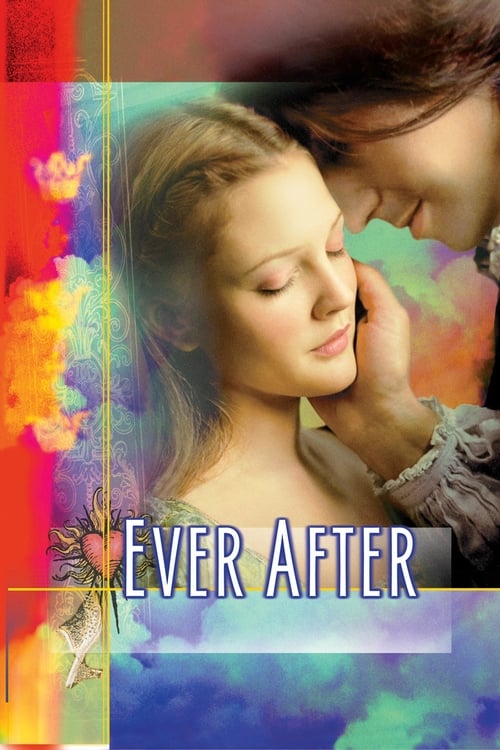
EverAfter (1998)
Directed by Andy Tennant
No — EverAfter is not especially woke, scoring 29 out of 100 on our wokeness meter.
Ever After arrives from 1998 wearing a corset and a conscience.
Consciousness Markers
The film reimagines Cinderella as a physically capable, book-reading heroine who challenges arranged marriage and class/gender constraints, though its feminism is late-1990s girl-power rather than modern intersectional.
Themes of class, equality, and women's agency are present but delivered through story and character rather than preachy monologues.
The cast is entirely white European, with no meaningful racial or ethnic diversity in principal or supporting roles.
No LGBTQ+ characters, relationships, or themes are present.
The story addresses classism and servitude but does not engage with race or racial identity.
No environmental or climate themes appear.
It critiques aristocratic cruelty and class hierarchy, but not capitalism or wealth as a system.
No body-positivity themes or diverse body representation are present.
No neurodivergent characters or themes are present.
The film is a fairy-tale retelling with anachronistic historical figures, not a revisionist historical narrative.
Why it received this score
Ever After arrives from 1998 wearing a corset and a conscience. Andy Tennant's retelling of the Cinderella tale sets the story in Renaissance France and strips out the magic, the pumpkin, and the singing mice, leaving behind a heroine who quotes Thomas More, dives into beehives for wax, and hits a crown prince with an apple. Drew Barrymore plays Danielle with a scrubbed, earnest energy, and the film surrounds her with Leonardo da Vinci, the Brothers Grimm, and a great deal of château. It is historical fiction in the loosest possible sense, the kind that invites a philosopher to tea and calls it accuracy.
The social consciousness here is real but small and unmistakably of its moment. Danielle resists an arranged marriage, reads books, and argues her way into a prince's regard, which is a sturdy girl-power proposition circa 1998, and it stops there. The villains are cruel aristocrats, not an economic system. Servitude is a personal misfortune, never a structural indictment. Race goes unmentioned in a France that the film imagines as uniformly white. No queer lives stir in the margins. No one discusses bodies, brains, or the weather in any framing that would satisfy a modern syllabus. The film wants equality of opportunity for one exceptional woman and considers the matter closed.
Its messaging arrives through plot and character instead of sermons, which keeps the preaching to a minimum and the costume budget generous. We are left with a pleasant artifact, well-tailored, mildly ahead of its time, and largely uninterested in the cultural battles that would arrive two decades later. The glass slipper fits. That is the whole argument.
Analysis generated by our Consciousness Algorithm


Synopsis
Danielle, a vibrant young woman, was forced into servitude after the death of her father when she was a young girl. Danielle's stepmother, Rodmilla, is a heartless woman who forces Danielle to do the cooking and cleaning, while she tries to marry off the eldest of her two daughters to the prince. But Danielle's life takes a wonderful turn when, under the guise of a visiting royal, she meets the charming Prince Henry.
Questions about EverAfter
Is EverAfter woke?
No — EverAfter is not especially woke, scoring 29 out of 100 on our wokeness meter. That earns it a verdict of Based.
Does EverAfter have any woke elements?
1 of the 10 markers register at 30 or above, led by Feminist Agenda (40). On Feminist Agenda: The film reimagines Cinderella as a physically capable, book-reading heroine who challenges arranged marriage and class/gender constraints, though its feminism is late-1990s girl-power rather than modern intersectional.
How does EverAfter compare to other 1998 movies?
It ranks #9 of the 118 films from 1998 we've scored; their average is 12. The wokest is Show Me Love (60).
How is the Woke Score calculated?
An AI-assisted process researches the film and its reception, scores it 0–100 on ten markers, then combines those into one 0–100 Woke Score. It measures a specific set of 2020s cultural themes, not film quality.