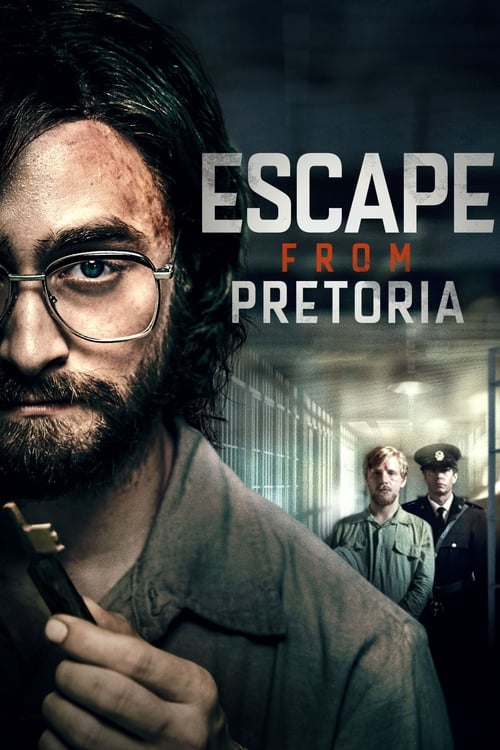
Escape from Pretoria (2020)
Directed by Francis Annan
No — Escape from Pretoria is not woke, scoring 17 out of 100 on our wokeness meter.
Escape from Pretoria arrives with the sober weight of a true story and the modest ambition of a procedural.
Consciousness Markers
The film is explicitly about apartheid and anti-racist political activism, but it centers white activists and treats racism as historical backdrop rather than a modern social-justice thesis.
The film delivers its anti-apartheid message through suspense and drama rather than preachy exposition, though its moral clarity is evident.
The cast is overwhelmingly white and male, reflecting the historical subjects rather than any modern diversity mandate; a black taxi driver appears briefly but without representational emphasis.
No LGBTQ+ characters, relationships, or themes are present.
The narrative is entirely male-focused, with no significant female characters or feminist themes.
No environmental or climate themes.
The struggle is against apartheid, not capitalism; no eat-the-rich or anti-capitalist critique.
No body-positivity themes.
No neurodivergence themes.
It dramatizes a true story without reinterpreting history through a modern ideological lens.
Why it received this score
Escape from Pretoria arrives with the sober weight of a true story and the modest ambition of a procedural. Daniel Radcliffe plays Tim Jenkin, one of three white South African activists jailed in 1978 for distributing anti-apartheid pamphlets, who spends his confinement carving wooden keys and memorizing the nocturnal rhythms of his guards. The film is a jailbreak picture first and a political statement second, which is a relief. It understands that a man crouched in a dark corridor, testing a key he whittled from a broom handle, is more persuasive than any speech.
On the matter of modern social consciousness, the ledger is thin. The cast is white and male because the historical record is white and male, and the film declines to correct the archive on its behalf. Apartheid supplies the moral architecture, and the racism is real and named, but the camera stays with the men who escaped, not with the system that jailed them. A black taxi driver appears near the end, accepts cash, and drives them out of Pretoria. He is a plot device with a steering wheel, and the film does not pretend otherwise. There is no romance, no feminist counter-narrative, no environmental sermon, no meditation on body image or neurodivergence. What moral instruction exists is delivered by suspense instead of dialogue, which is the least objectionable way to deliver it.
The result is a competent, slightly airless thriller that treats its politics as furniture. It respects its subjects without inflating them into symbols. That restraint is not virtue, exactly. It is temperament. The film simply prefers locks to lectures, and for that we can be mildly grateful.
Analysis generated by our Consciousness Algorithm


Synopsis
South Africa, 1978. Tim Jenkin and Stephen Lee, two white political activists from the African National Congress imprisoned by the apartheid regime, put a plan in motion to escape from the infamous Pretoria Prison.
Questions about Escape from Pretoria
Is Escape from Pretoria woke?
No — Escape from Pretoria is not woke, scoring 17 out of 100 on our wokeness meter. That earns it a verdict of Ultra Based.
Does Escape from Pretoria have any woke elements?
1 of the 10 markers register at 30 or above, led by Racial Consciousness (40). On Racial Consciousness: The film is explicitly about apartheid and anti-racist political activism, but it centers white activists and treats racism as historical backdrop rather than a modern social-justice thesis.
How does Escape from Pretoria compare to other 2020 movies?
It ranks #94 of the 227 films from 2020 we've scored; their average is 21. The wokest is One Night in Miami... (83).
How is the Woke Score calculated?
An AI-assisted process researches the film and its reception, scores it 0–100 on ten markers, then combines those into one 0–100 Woke Score. It measures a specific set of 2020s cultural themes, not film quality.