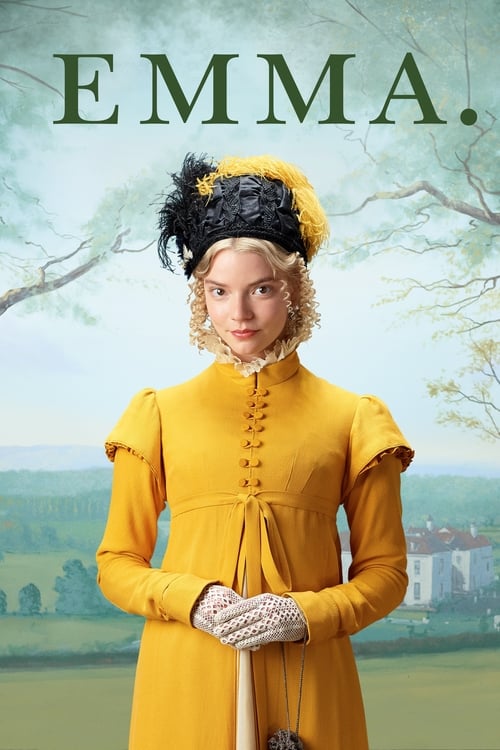
Emma. (2020)
Directed by Autumn de Wilde
No — Emma. is not woke, scoring 8 out of 100 on our wokeness meter.
Autumn de Wilde's adaptation of Jane Austen arrives dressed in pastel, ribboned within an inch of its life, and confident in its own charms.
Consciousness Markers
Emma is a headstrong, independent heroine and the film is directed by a woman from a screenplay by a woman, but this is faithful Austen material rather than a modern feminist polemic.
The cast is almost entirely white British performers; Anya Taylor-Joy's Argentine heritage is not foregrounded and she plays a white English character. No deliberate diverse casting effort is evident.
The film is a light, witty comedy of manners that shows rather than preaches; any moral lessons (Emma's comeuppance) are inherent to Austen's narrative, not delivered as modern sermonizing.
No LGBTQ+ characters or themes appear; the plot is entirely built around heterosexual courtship and marriage.
The film engages class and social rank in Regency England but has no racial consciousness or commentary whatsoever.
No environmental or climate themes are present in this period romance.
Marriage economics and class are depicted as period texture, not as a critique of capitalism or wealth.
No body positivity themes; the film adheres to conventional period beauty standards without comment.
No neurodivergent characters or themes are present or explored.
A faithful adaptation of Austen's novel with no historical revisionism or reframing of the source material.
Why it received this score
Autumn de Wilde's adaptation of Jane Austen arrives dressed in pastel, ribboned within an inch of its life, and confident in its own charms. Anya Taylor-Joy plays Emma Woodhouse as a young woman who has never been told no and cannot quite process the experience when it happens. Eleanor Catton's screenplay keeps Austen's wit intact, and the film's pleasures are real: Bill Nighy's querulous Mr Woodhouse, the nosebleed, the picnic at Box Hill. What we have here is a handsome, well-mannered period romance that knows exactly what it is and never pretends otherwise.
On the matter of contemporary social consciousness, the ledger is thin. The film observes the marriage economy of Regency England, where a woman's future is a transaction, but it observes it as texture, not as an indictment of wealth or class. No character is raced in any meaningful sense, and the cast is uniformly white British; Taylor-Joy's Argentine heritage is nowhere foregrounded, and no effort was made to widen the room. There is no queer presence, no environmental anxiety, no interest in bodies outside the conventional period ideal, and no neurodivergent interiority on offer. The feminist claim is modest and largely inherited: a headstrong heroine, a woman directing, a woman writing, all of it Austen's own furniture rearranged with taste.
The film also declines to lecture. Emma's cruelty to Miss Bates is punished by Knightley in a single quiet scene, and the lesson lands because it is dramatized, not announced. Nobody turns to the camera to explain what we should feel. This is a comedy of manners that trusts its audience, and it earns its small moral reckoning the old-fashioned way. For a viewer hunting for the anxieties of the present decade, the search will be brief and the results disappointing. For everyone else, it is a pleasant two hours in the country.
Analysis generated by our Consciousness Algorithm


Synopsis
In 1800s England, a well-meaning but selfish young woman meddles in the love lives of her friends.
Questions about Emma.
Is Emma. woke?
No — Emma. is not woke, scoring 8 out of 100 on our wokeness meter. That earns it a verdict of Ultra Based.
Does Emma. have any woke elements?
Very few. None of the 10 markers reaches 30, the level where a marker counts as present; the highest is Feminist Agenda at 20.
How does Emma. compare to other 2020 movies?
It ranks #160 of the 227 films from 2020 we've scored; their average is 21. The wokest is One Night in Miami... (83).
How is the Woke Score calculated?
An AI-assisted process researches the film and its reception, scores it 0–100 on ten markers, then combines those into one 0–100 Woke Score. It measures a specific set of 2020s cultural themes, not film quality.