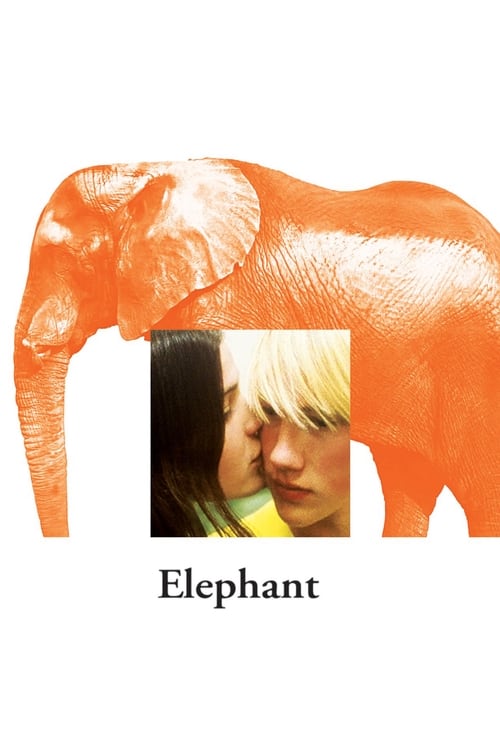
Elephant (2003)
Directed by Gus Van Sant
No — Elephant is not especially woke, scoring 23 out of 100 on our wokeness meter.
Gus Van Sant's Elephant took the Palme d'Or in 2003 and has been patiently refusing to explain itself ever since.
Consciousness Markers
Van Sant cast mostly unknown newcomers and assembled a naturally varied ensemble, including a gay-straight alliance member and students of differing body types, though the diversity is incidental rather than a stated casting mission.
A gay-straight alliance meeting and the character Acadia's involvement give the film a visible queer presence, but it is a background detail rather than a thematic focus.
Female characters (Michelle, the bulimic trio) are given interior struggles, but the film offers no feminist critique or gendered argument.
Van Sant is famously anti-didactic here, draining the violence of message and moralizing; Ebert praised it precisely for refusing the social-studies lecture.
The gunmen order weapons online, but the film pointedly refuses to assign economic or systemic blame, keeping motive vague and non-ideological.
The film depicts eating disorders and body-image distress in Michelle and the bulimic girls, but as pathology rather than a body-positive celebration.
Race is never addressed or thematized; the film's concerns are entirely elsewhere.
No environmental content whatsoever.
No neurodivergence framing is present; the shooters' psychology is deliberately left opaque rather than diagnosed.
Though inspired by Columbine, the film is a fictionalized meditation rather than a revisionist rewriting of the historical record.
Why it received this score
Gus Van Sant's Elephant took the Palme d'Or in 2003 and has been patiently refusing to explain itself ever since. It follows a handful of Portland high schoolers through an ordinary morning, tracking them down corridors and across parking lots, until two of their classmates arrive with rifles and a plan. The cast is drawn almost entirely from newcomers, which lends the whole exercise a documentary flatness. Nothing is underlined. Nobody announces the theme.
On the matter of social consciousness, the film is a curious specimen. A gay-straight alliance meeting appears, and Acadia sits through it, though the scene registers as texture instead of argument. Michelle and the three bulimic girls carry private miseries about their bodies, presented as pathology, not affirmation. Race goes unmentioned. The environment goes unmentioned. The shooters buy their weapons online, and Van Sant declines to convert that detail into a critique of commerce. Alex and Eric are bullies' targets and consumers of violent media, and the film leaves the motive sitting there, unassembled. We are given no diagnosis, no manifesto, no list of reforms. The psychology stays opaque on purpose.
Here is the joke, and it is not a joke: the film scores low on sermonizing precisely because it refuses to sermonize. Ebert admired it for draining the violence of purpose and reward, for declining the social studies lecture. A lesser filmmaker would have handed us a cause and a pamphlet. Van Sant hands us a freezer, a counting rhyme, and a cut to black. The result is a film that says almost nothing about anything and somehow says it with unbearable weight. We classify it, we score it, we move on. The corridor remains empty.
Analysis generated by our Consciousness Algorithm


Synopsis
Several ordinary high school students go through their daily routine as two others prepare for something more malevolent.
Questions about Elephant
Is Elephant woke?
No — Elephant is not especially woke, scoring 23 out of 100 on our wokeness meter. That earns it a verdict of Based.
Does Elephant have any woke elements?
2 of the 10 markers register at 30 or above, led by LGBTQ+ Themes (35) and Representation Casting (35). On LGBTQ+ Themes: A gay-straight alliance meeting and the character Acadia's involvement give the film a visible queer presence, but it is a background detail rather than a thematic focus.
How does Elephant compare to other 2003 movies?
It ranks #21 of the 150 films from 2003 we've scored; their average is 12. The wokest is Mona Lisa Smile (60).
How is the Woke Score calculated?
An AI-assisted process researches the film and its reception, scores it 0–100 on ten markers, then combines those into one 0–100 Woke Score. It measures a specific set of 2020s cultural themes, not film quality.