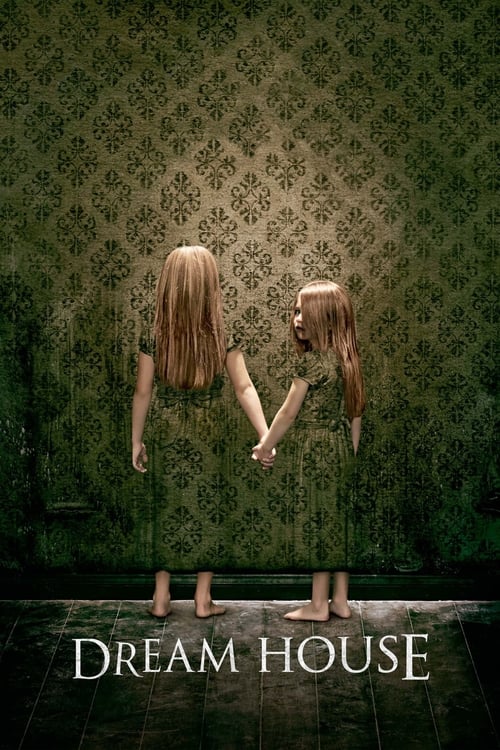
Dream House (2011)
Directed by Jim Sheridan
No — Dream House is not woke, scoring 0 out of 100 on our wokeness meter.
Dream House arrives in 2011 with a prestigious cast, a director of some reputation, and the grim determination of a studio that has stopped returning calls.
Consciousness Markers
The cast is led by Daniel Craig, Rachel Weisz, and Naomi Watts, with an entirely white principal ensemble and no diverse casting choices made with any evident intent.
No LGBTQ+ characters, themes, or subtext appear anywhere in the film.
Naomi Watts' Ann is a victim of a revenge-murder plot driven by her ex-husband's custody grievance; the film offers no feminist critique or commentary.
Race is entirely absent as a subject; the story is a suburban New England psychological thriller with no engagement with racial themes.
No environmental or climate content of any kind.
Will quits his publishing job to write a book, but this is a personal midlife pivot, not a critique of wealth, class, or capitalism.
No body-image or body-positivity themes present.
The protagonist's psychiatric hospitalization and delusions are deployed as a plot twist device, not as neurodivergent representation or advocacy.
The film is a contemporary fictional thriller with no historical subject matter to revise.
The film is a twist-driven genre thriller with no didactic messaging or moral instruction directed at the audience.
Why it received this score
Dream House arrives in 2011 with a prestigious cast, a director of some reputation, and the grim determination of a studio that has stopped returning calls. Daniel Craig plays a New York publisher who quits his job to write a book in a Connecticut house where a family was previously murdered. Rachel Weisz is his wife. Naomi Watts is the neighbor. The twist, which the trailer reportedly spoiled, is that Craig's character is the surviving husband, and the murdered family are ghosts, or projections, or something the screenplay resolves with a shrug. Jim Sheridan tried to remove his name from the picture. He was not wrong to try.
For the purposes of cultural classification, the film is a desert. The principal cast is white, and no effort was made to disturb that arrangement. There are no queer characters, no engagement with race, no climate anxiety, no critique of wealth, no body-image discourse, and no neurodivergent advocacy, despite a lengthy detour through a psychiatric facility. That last item deserves a moment of silence. Mental illness here is a plot mechanism, a lever pulled to produce a second-act revelation, then discarded. Nobody learns anything about the human mind. They learn who fired the gun.
The women in the story exist to be endangered. Watts' character is the target of a custody-motivated murder plot, which the screenplay treats as a scheduling problem for the assassin. No argument is being made. No thesis is being advanced. No audience is being instructed. This is a thriller assembled from parts, and its only ideological commitment is to the second-act twist. We score it accordingly. A film this incurious about the world is, in its own modest way, a kind of achievement.
Analysis generated by our Consciousness Algorithm

Synopsis
Publisher Will Atenton quits a lucrative job in New York to relocate his wife, Libby, and their daughters to a quaint town in New England. However, as they settle into their home the Atentons discover that a woman and her children were murdered there, and the surviving husband is the town's prime suspect. With help from a neighbor who was close to the murdered family, Will pieces together a horrifying chain of events.
Questions about Dream House
Is Dream House woke?
No — Dream House is not woke, scoring 0 out of 100 on our wokeness meter. That earns it a verdict of Ultra Based.
Does Dream House have any woke elements?
No. All 10 markers score zero.
How does Dream House compare to other 2011 movies?
It ranks #216 of the 245 films from 2011 we've scored; their average is 11. The wokest is Paul (68).
How is the Woke Score calculated?
An AI-assisted process researches the film and its reception, scores it 0–100 on ten markers, then combines those into one 0–100 Woke Score. It measures a specific set of 2020s cultural themes, not film quality.