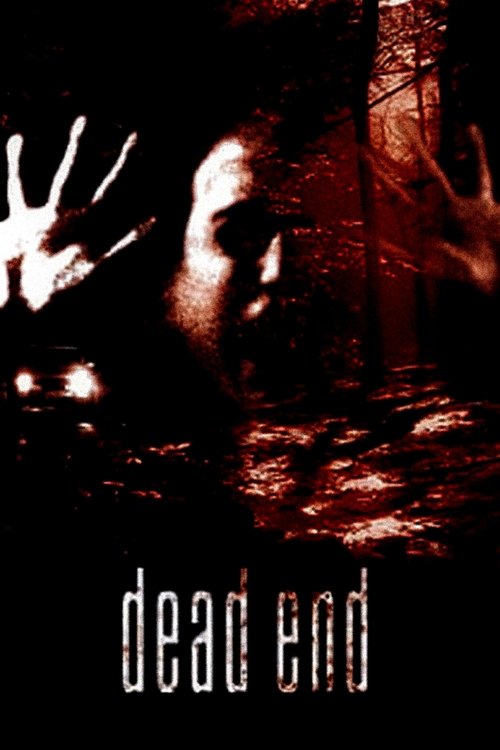
Dead End (2003)
Directed by Jean-Baptiste Andrea
No — Dead End is not woke, scoring 0 out of 100 on our wokeness meter.
Dead End arrives from 2003, which is to say from the far side of a cultural frontier.
Consciousness Markers
The cast is uniformly white with no diverse or commented-upon representation; the ensemble is a conventional horror-family unit.
No LGBTQ+ characters, themes, or subtext appear anywhere in the film.
Female characters (Laura, Marion) are victims and plot devices within a conventional horror framework; no feminist critique or agenda is present.
The film engages no racial themes or commentary whatsoever.
No environmental or climate themes; the forest setting is purely atmospheric.
No economic critique or class commentary; the family's dysfunction is personal, not systemic.
No body-positivity themes; the film trades in gore and corpse imagery instead.
Characters descend into madness as a supernatural plot mechanism, not as neurodivergent representation.
No historical subject matter to revise; the film is a contemporary supernatural thriller.
A pulpy Twilight Zone-style horror with no didactic messaging or moralizing.
Why it received this score
Dead End arrives from 2003, which is to say from the far side of a cultural frontier. A French production shot in Los Angeles County, it concerns the Harrington family, who take a shortcut on Christmas Eve and find themselves trapped on a road that will not end, pursued by a hearse and a woman in white holding a dead infant. The premise is pulp, the register is pulp, and the film holds no interest in anything beyond the mechanics of dread. Peter Bradshaw called it macabre in the approved manner. He was correct, and that manner belongs to a period before the current vocabulary of approval had been assembled.
The cast is white, the family is white, and nobody remarks upon it, because there is nothing to remark upon. Laura and Marion exist to be terrorized, shot, and driven mad; the screenplay hands them suffering without ever handing them an argument. No character mentions race, class, sexuality, or the environment. The Harringtons' cruelty toward one another is domestic and specific. Frank dislikes his in-laws, Laura resents her marriage, and the rot stays inside the car. There is no system to indict, only a family, and the film declines to promote one into the other.
What remains is craft. The gore stays mostly offscreen, the dialogue is pitched at a satisfyingly pulpy level, and Lin Shaye's descent into shotgun-wielding hysteria won her a Best Actress prize at a comedy festival, which tells us most of what we need to know about the film's moral seriousness. The madness here is a supernatural device, the bodies are props, and the ending is a shrug in a hospital corridor. Judged by the standards of contemporary social consciousness, Dead End is a blank page. It is not a failure of nerve. It is simply a film made before the ledger was opened.
Analysis generated by our Consciousness Algorithm


Synopsis
On Christmas Eve, while driving to see his in-laws with his family, Frank Harrington decides to try a shortcut for the first time in 20 years. It turns out to be the biggest mistake of his life.
Questions about Dead End
Is Dead End woke?
No — Dead End is not woke, scoring 0 out of 100 on our wokeness meter. That earns it a verdict of Ultra Based.
Does Dead End have any woke elements?
No. All 10 markers score zero.
How does Dead End compare to other 2003 movies?
It ranks #131 of the 150 films from 2003 we've scored; their average is 12. The wokest is Mona Lisa Smile (60).
How is the Woke Score calculated?
An AI-assisted process researches the film and its reception, scores it 0–100 on ten markers, then combines those into one 0–100 Woke Score. It measures a specific set of 2020s cultural themes, not film quality.